onsemi NCP1117ST33T3G

- Part No.:
- NCP1117ST33T3G
- Manufacturer:
- onsemi
- Package:
- TO-261-4, TO-261AA
- Datasheet:
-
 NCP1117ST33T3G.pdf
- Description:
- IC REG LINEAR 3.3V 1A SOT223
- Quantity:
-
Unit Price:$0
Ext Price:$0
- Payment:
-

- Shipping:
-


NCP1117ST33T3G Information
- Specifications
- Product Details
- Comparison
- Tags
- Product attributes
- Attribute value
- Manufacturer:
- onsemi
- Series:
- -
- Package/Case:
- TO-261-4, TO-261AA
- Packaging:
- Tape & Reel (TR)
- Product Status:
- Active
- Output Configuration:
- Positive
- Output Type:
- Fixed
- Number of Regulators:
- 1
- Voltage - Input (Max):
- 20V
- Voltage - Output (Min/Fixed):
- 3.3V
- Voltage - Output (Max):
- -
- Voltage Dropout (Max):
- 1.2V @ 800mA
- Current - Output:
- 1A
- Current - Quiescent (Iq):
- 10 mA
- Current - Supply (Max):
- -
- PSRR:
- 64dB (120Hz)
- Control Features:
- -
- Protection Features:
- Over Current, Over Temperature
- Operating Temperature:
- 0°C ~ 125°C
- Grade:
- -
- Qualification:
- -
- Mounting Type:
- Surface Mount
- Supplier Device Package:
- SOT-223
- Datasheet:
-
NCP1117ST33T3G.pdf
NCP1117ST33T3G — 3.3V/1A Commercial LDO, SOT-223
The NCP1117ST33T3G is a fixed 3.3V LDO from onsemi, rated for 1A output in a SOT-223 package. Input range up to 20V, dropout of 1.07V at 800mA, ±1% accuracy. It's a commercial-grade workhorse — no AEC-Q100, no reverse-battery spec.
But if you're building a bench supply, a consumer device, or an industrial controller that doesn't live under a car hood, it does the job at a fraction of what an automotive LDO costs.
The 1117 family has been around for decades. TI, ST, Diodes Inc, and onsemi all make versions. The NCP1117ST33T3G is onsemi's active-production 3.3V fixed variant. For lower quiescent current, the NCP1117LPST33T3G drops Iq from 10mA to 700µA.
The trade-off in one sentence: 10mA quiescent current. The NCV4264 pulls 33µA. The NCV4266 pulls 60µA. The NCP1117 pulls 10mA. For a mains-powered device, that's irrelevant. For a battery-powered device, it's a dealbreaker.
What Are the Technical Specifications of NCP1117ST33T3G?
| Parameter | Value |
|---|---|
| Type | Commercial LDO Linear Voltage Regulator |
| Output Voltage | 3.3V fixed (±1% initial accuracy) |
| Maximum Output Current | 1A (1.5A internal current limit) |
| Input Voltage Range | Up to 20V (3.5V min for regulation at light load) |
| Dropout Voltage | 1.07V typ @ 800mA; 1.2V max |
| Quiescent Current | 6–10mA typ (varies with load) |
| PSRR | 64dB @ 120Hz |
| Line Regulation | 0.8mV typ |
| Load Regulation | 4.3mV typ (10mA to 1A) |
| Protection | Current limit (1.5A), safe operating area (SOA), thermal shutdown |
| Operating Temperature | 0°C to +125°C (not rated for sub-zero) |
| Package | SOT-223-3 (TO-261-4), 6.7×3.7mm |
| Output Capacitor | 10µF tantalum min; stable with MLCC if ESR requirements met |
| Qualification | Commercial/Industrial (not AEC-Q100) |
| Manufacturer | onsemi |
Key numbers that matter. 1A output in SOT-223 sounds impressive until you do the thermal math. At 1A with a 5V input (1.7V dropout), the NCP1117 dissipates 1.7W. With RθJA of 70–90°C/W on reasonable copper, that's a 119–153°C rise. Junction hits 144–178°C at 25°C ambient. Thermal shutdown trips near 175°C.
The takeaway: you can't run 1A at high dropout without serious PCB copper or a heatsink. This LDO is happiest when the input voltage sits close to the output.
The second thing: 10mA Iq. An NCV4264 at 33µA draws 0.3% of that. For a USB-powered gadget, who cares. For a battery-backed RTC, it's 300× the drain on your coin cell.
When Should You Use (and NOT Use) the NCP1117?
Use NCP1117 when:
- Post-regulation from 5V to 3.3V in mains-powered equipment. Drop 5V to 3.3V at 500–800mA with 1.7V dropout. That's the NCP1117's sweet spot. Set-top boxes, routers, printers, and industrial HMI panels all use this pattern.
- You need 1A and cost is the primary driver. This is a commodity LDO. It costs less than an automotive NCV part, less than a low-noise LP series, and far less than a buck converter. For high-volume consumer products, those cents add up.
- Replacement for legacy LM1117-3.3 designs. Same pinout, same package, same 3.3V/1A spec. If your BOM calls for an LM1117MPX-3.3 and TI lead times are 26 weeks, the NCP1117ST33T3G drops in.
- Bench power supplies and prototyping. The 1117 is the LDO you reach for on a breadboard. Through-hole adapter boards exist. The 3.3V fixed version powers 90% of MCU dev boards without a second thought.
Don't use NCP1117 when:
- Battery-powered or always-on operation. 10mA quiescent current means 240mAh per day just to keep the LDO alive. For battery devices, use the NCV4264 (33µA) or NCP1117LP (700µA).
- Automotive or outdoor environments. 0°C minimum operating temperature and no reverse-battery protection. A cold morning takes this part below its rated range. A reversed jump-start destroys it. Use the NCV4264 or NCV4266 for anything with wheels.
- Input voltage above 15V at high current. At 12V in and 1A out, the dropout is 8.7V × 1A = 8.7W. SOT-223 can't dissipate that. You need a buck converter or a much larger package (TO-220 + heatsink).
- Precision analog or RF rails. 64dB PSRR at 120Hz is adequate for digital logic, but a 12-bit ADC or a PLL will see the ripple. Step up to the LP5912-3.3 for low-noise applications.
What Are the Alternatives to NCP1117ST33T3G?
| Model | Type | Key Difference | Best For |
|---|---|---|---|
| NCP1117LPST33T3G | Commercial LDO (onsemi) | Pin-compatible, same 1A/3.3V/SOT-223, Iq drops to 700µA | Drop-in low-power upgrade, same cost ballpark |
| LM1117MPX-3.3/NOPB | Commercial LDO (TI) | 800mA/3.3V, SOT-223, dropout 1.2V, Iq 5–10mA | TI second-source; 800mA vs 1A (check your load) |
| LD1117S33CTR | Commercial LDO (ST) | 950mA/3.3V, SOT-223, dropout 1.1V, similar Iq | ST second-source, slightly lower current ceiling |
| AP1117E33G-13 | Commercial LDO (Diodes Inc) | 1A/3.3V, SOT-223, dropout ~1.1V | True 1A alternative at possibly lower cost |
| NCV4264-2CST33T3G | Automotive LDO (onsemi) | 100mA/3.3V, SOT-223-3, Iq 33µA, AEC-Q100, 45V input | Automotive-grade; same package, completely different mission |
NCP1117 vs NCV automotive LDOs — the decision in two questions. First: does your device run from a battery? If yes, the 1117's 10mA Iq rules it out. Second: does it live outdoors or in a vehicle? If yes, the 0°C floor and lack of reverse-battery protection rule it out.
If both answers are no — a mains-powered, indoor, consumer or industrial product — the NCP1117 gives you 1A output at the lowest cost in its class.
What Are the Typical Applications of NCP1117?
Consumer electronics post-regulation. A 5V USB or barrel-jack supply feeds the NCP1117, which drops it to a clean 3.3V for the main MCU, Wi-Fi module, and sensor array. 800mA typical load, 1.7V dropout, 1.36W dissipation. Spread across a 4-layer board's ground plane, the SOT-223 stays under 100°C junction rise.
Router, set-top box, and smart home hub power tree. These devices almost all run the same pattern: 12V or 5V wall adapter → 3.3V LDO for the SoC → additional rails for DDR, I/O, and RF. The NCP1117 at 3.3V/1A is the workhorse for the main logic rail.
Industrial HMI and PLC auxiliary rails. Factory-floor HMIs and PLC I/O modules don't face -40°C cold starts, but need reliable regulation for 5–10 year service lives. The NCP1117's SOA protection and thermal shutdown cover the basics. For 24V industrial inputs, add a pre-regulator to drop the voltage into range.
3D printer controller boards. Most open-source 3D printer controllers (RAMPS, SKR, MKS) use a 1117-family LDO to generate 3.3V from a 5V or 12V rail for the MCU. The NCP1117ST33T3G fits the same SOT-223 footprint and costs pennies.
Why Buy NCP1117 from ICMASS?
We stock the whole 1117 family. Fixed 1.8V, 2.5V, 3.3V, 5.0V, and the adjustable version. If your design uses multiple rails, one order covers all of them.
Genuine onsemi parts with traceability. The 1117 is one of the most counterfeited LDOs in the market. A remarked clone might output 3.3V at 100mA but drop to 2.8V at 800mA because the pass transistor is undersized. We ship factory-original parts with date-code traceability.
Cross-reference: 1117 variants from TI, ST, and Diodes Inc. Not sure which 1117 your BOM actually needs? We'll match the exact manufacturer part number, or recommend the active-production equivalent if your original has gone EOL.
Shenzhen warehouse, global DHL/FedEx. Same-day shipping before 15:00 CST. Contact us for a quote on your volume.
Frequently Asked Questions About NCP1117ST33T3G
Q1: Can NCP1117ST33T3G replace an LM1117MPX-3.3?
A: Yes, in most designs. Same package (SOT-223), same 3.3V output, same pinout. The NCP1117 is rated for 1A vs the LM1117's 800mA, giving you slightly more headroom. Both drop about 1.1–1.2V at rated load. Check the output capacitor requirements: both need a 10µF tantalum on the output with some ESR for stability.
Q2: Why does the NCP1117 get so hot at 1A?
A: It's simple physics. 1A × dropout voltage = watts of heat. At 5V in, 3.3V out, and 1A load, the NCP1117 dissipates 1.7W. The SOT-223 package has a junction-to-ambient thermal resistance of 70–90°C/W. That's a 119–153°C rise. At 25°C ambient, the junction reaches 144–178°C. The fix: keep the input voltage close to the output, maximize PCB copper area on the tab, or use a small heatsink on the SOT-223 body.
Q3: What's the difference between NCP1117ST33T3G and NCP1117LPST33T3G?
A: The LP version drops quiescent current from 10mA to 700µA. Everything else is the same. Same 3.3V/1A, same SOT-223, same pinout. If your device is always on or has any battery life consideration, use the LP version. The standard NCP1117 makes sense only when cost is the sole driver and the device is mains-powered.
Q4: Can I use NCP1117 in a car?
A: Not recommended. The minimum operating temperature is 0°C, and there's no reverse-battery protection. A winter cold-start drops the cabin temperature below freezing. Connect a jump-starter backwards and the NCP1117 is destroyed. For automotive, use the NCV4264 (100mA), NCV4266 (150mA, with EN), or NCV8664 (150mA, lowest Iq). All are AEC-Q100 qualified with -42V reverse-battery protection.
Q5: Does the NCP1117 need a heatsink?
A: Depends on the power dissipation. At <0.5W, PCB copper alone is enough. Above 1W, you need significant copper area or a heatsink. The SOT-223's exposed tab is designed to be soldered to a copper plane. With 500mm² of 1oz copper, RθJA drops to about 50°C/W. At 1W dissipation, that's a 50°C rise — fine at 40°C ambient. At 2W, you're at 100°C rise + 40°C ambient = 140°C junction. Getting close to the 150°C limit.
Q6: What output capacitor should I use with NCP1117?
A: 10µF tantalum minimum on the output. A 22µF X7R ceramic with a small series resistor also works. The NCP1117 needs some ESR for loop stability. Modern MLCCs with sub-10mΩ ESR can push the control loop into oscillation. If using a ceramic capacitor, add a 0.5–1Ω resistor in series, or use a capacitor specifically characterized for LDO stability.
Q7: NCP1117 vs NCV4264 — which one for a 3.3V rail?
A: Two questions decide it. How much current? Is it automotive? If you need 100mA or less and it's going in a vehicle, the NCV4264 wins (33µA Iq, 45V input, AEC-Q100). If you need 1A and it's a commercial/indoor product, the NCP1117 wins (lower cost, 10× the current). They share a package but not a use case.
Q8: Is the NCP1117 available in a through-hole version?
A: The NCP1117ST33T3G is SMD only (SOT-223). For through-hole, use the LM1117T-3.3 (TO-220) or LD1117V33 (TO-220). The SOT-223 is easy to hand-solder and widely used on SMD adapter boards. If you're breadboarding, get a SOT-223 breakout board rather than searching for a DIP-packaged 1117 — they're rare and cost 5× more.
Related Products
| Image |

|
| Part Number | NCP1117ST33T3G |
| Manufacturer | onsemi |
| Series | - |
| Package/Case | TO-261-4, TO-261AA |
| Packaging | Tape & Reel (TR) |
| Product Status | Active |
| Output Configuration | Positive |
| Output Type | Fixed |
| Number of Regulators | 1 |
| Voltage - Input (Max) | 20V |
| Voltage - Output (Min/Fixed) | 3.3V |
| Voltage - Output (Max) | - |
| Voltage Dropout (Max) | 1.2V @ 800mA |
| Current - Output | 1A |
| Current - Quiescent (Iq) | 10 mA |
| Current - Supply (Max) | - |
| PSRR | 64dB (120Hz) |
| Control Features | - |
| Protection Features | Over Current, Over Temperature |
| Operating Temperature | 0°C ~ 125°C |
| Grade | - |
| Qualification | - |
| Mounting Type | Surface Mount |
| Supplier Device Package | SOT-223 |
User Guide
- Purchase & Inquiry
- Package
- Shipping Information
- Customer Review
You may place an order without registering to IC-MAX.COM
We strongly suggest you sign in before purchasing as you can track your order in real time.
For your convenience, we accept multiple payment methods in USD, including PayPal, Credit Card, and wire transfer.
RFQ (Request for Quotations)
It is recommended to request for quotations to get the latest prices and inventories about the part.
Our sales will reply to your request by email within 24 hours.
1. You'll receive an order information email in your inbox. (Please remember to check the spam folder if you didn't hear from us).
2. Since inventories and prices may fluctuate to some extent, the sales manager is going to reconfirm the order and let you know if there are any updates.
-
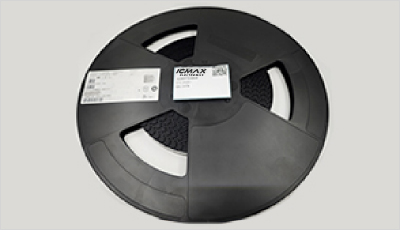
- Step1:Prepare product
-
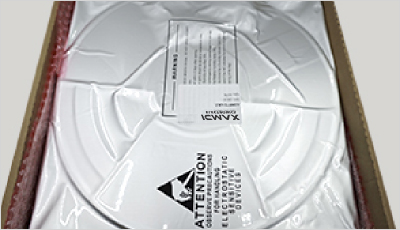
- Step2:Vacuum packaging
-
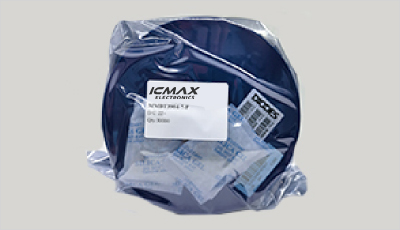
- Step3:Anti-static bag
-
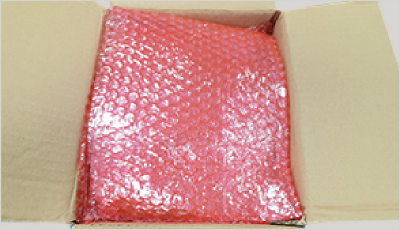
- Step4:Individual package
-
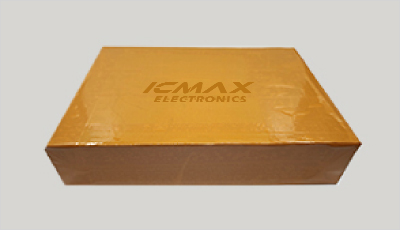
- Step5:Packaging box
-
- Step6:Barcode shipping label
Shipping starts at $40, but some countries will exceed $40. For example (South Africa, Brazil, India, Pakistan, Israel, etc.)
The basic freight (for package ≤0.5kg or corresponding volume) depends on the time zone and country.
Currently, our products are shipped through DHL, FedEx, SF, and UPS.
Delivery TimeOnce the goods are shipped, estimated delivery time depends on the shipping methods you chose:
FedEx International, 5-7 business days.
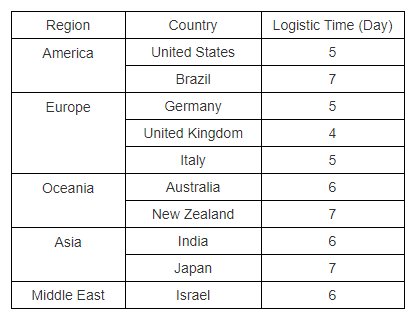
The following are some common countries' logistic time.
- Hot Sale
- Related Categories
- Include Parts
- Popular Search
- Voltage Regulators - Linear, Low Drop Out (LDO) Regulators(66836)
- Voltage Regulators - Linear Regulator Controllers(325)
- Voltage Regulators - Linear + Switching(1473)
- Voltage Regulators - DC DC Switching Regulators(35756)
- Voltage Reference(8428)
- V/F and F/V Converters(139)
- Thermal Management(515)
- Supervisors(41287)
- Special Purpose Regulators(4820)
- RMS to DC Converters(144)
The following parts include "NCP1117ST33T3G" in Silicon Labs NCP1117ST33T3G.
- Part Number
- Manufacturer
- Package
- Description
- MIC5504-1.8YM5-TR Microchip Technology TO-261-4, TO-261AA IC REG LINEAR 3.3V 1A SOT223
- MIC5504-3.3YM5-TR Microchip Technology TO-261-4, TO-261AA IC REG LINEAR 3.3V 1A SOT223
- MIC5365-3.0YC5-TR Microchip Technology TO-261-4, TO-261AA IC REG LINEAR 3.3V 1A SOT223
- MIC5365-1.8YC5-TR Microchip Technology TO-261-4, TO-261AA IC REG LINEAR 3.3V 1A SOT223
- MIC5365-2.5YC5-TR Microchip Technology TO-261-4, TO-261AA IC REG LINEAR 3.3V 1A SOT223
- MIC5365-3.3YC5-TR Microchip Technology TO-261-4, TO-261AA IC REG LINEAR 3.3V 1A SOT223
- MIC5365-3.3YD5-TR Microchip Technology TO-261-4, TO-261AA IC REG LINEAR 3.3V 1A SOT223
- MIC5317-3.3YM5-TR Microchip Technology TO-261-4, TO-261AA IC REG LINEAR 3.3V 1A SOT223
- TLV1117LV33DCYR Texas Instruments TO-261-4, TO-261AA IC REG LINEAR 3.3V 1A SOT223
- MIC5317-3.3YMT-TZ Microchip Technology TO-261-4, TO-261AA IC REG LINEAR 3.3V 1A SOT223
The following parts are popular search parts in Test and Measurement.
Inventory:31,737
Please send an inquiry. Send us your inquiry, and we will respond immediately.

- 1500+ Daily average RFQ Volume

- 20,000.000 Standard Product Unit

- 1800+ Worldwide Manufacturers

- 15,000+ In-stock Warehouse