onsemi MURA220T3G

- Part No.:
- MURA220T3G
- Manufacturer:
- onsemi
- Category:
- Single Diodes
- Package:
- DO-214AC, SMA
- Datasheet:
-
 MURA220T3G.pdf
- Description:
- DIODE GEN PURP 200V 2A SMA
- Quantity:
-
Unit Price:$0
Ext Price:$0
- Payment:
-

- Shipping:
-


MURA220T3G Information
- Specifications
- Product Details
- Comparison
- Tags
- Product attributes
- Attribute value
- Manufacturer:
- onsemi
- Series:
- -
- Package/Case:
- DO-214AC, SMA
- Packaging:
- Tape & Reel (TR)
- Product Status:
- Active
- Technology:
- Standard
- Voltage - DC Reverse (Vr) (Max):
- 200 V
- Current - Average Rectified (Io):
- 2A
- Voltage - Forward (Vf) (Max) @ If:
- 950 mV @ 2 A
- Speed:
- Fast Recovery =< 500ns, > 200mA (Io)
- Reverse Recovery Time (trr):
- 35 ns
- Current - Reverse Leakage @ Vr:
- 2 µA @ 200 V
- Capacitance @ Vr, F:
- -
- Grade:
- -
- Qualification:
- -
- Mounting Type:
- Surface Mount
- Supplier Device Package:
- SMA
- Operating Temperature - Junction:
- -65°C ~ 175°C
- Datasheet:
-
MURA220T3G.pdf
MURA220T3G — 2A 200V Ultrafast Rectifier by ON Semiconductor
The MURA220T3G is a 2A, 200V surface-mount ultrafast recovery rectifier from ON Semiconductor (onsemi). Reverse recovery time is 35ns max — roughly 20× faster than a standard 1N400x-series rectifier. Forward voltage drop is 0.95V at full 2A load, which is competitive for a 200V-class silicon rectifier.
From our Shenzhen distribution data (2025–2026), the MURA220T3G sits in a sweet spot: it's one of the most consistently stocked ultrafast rectifiers in the SMA package. We rarely see supply gaps on this part — ON Semi runs it in volume, and the AEC-Q101 qualification means it feeds both industrial and automotive pipelines.
If you're designing an SMPS output stage, a DC-DC converter freewheeling path, or a PFC boost diode that needs to switch cleanly at 50–200kHz, this is the part most engineers reach for first. It's not the cheapest 2A rectifier you can buy, but it's the one that won't surprise you with hot SMD pads and mysterious EMI spikes at 2AM.
What Are the Technical Specifications of MURA220T3G?
| Parameter | Value | Notes |
|---|---|---|
| Manufacturer | ON Semiconductor (onsemi) | AEC-Q101 qualified |
| Repetitive Peak Reverse Voltage (VRRM) | 200V | — |
| Average Forward Current (IO) | 2A | At TL = 150°C |
| Peak Forward Surge Current (IFSM) | 40A | 8.3ms single half-sine |
| Max Forward Voltage (VF) | 0.95V @ 2A, 25°C | 0.77V @ 2A, TJ = 150°C |
| Reverse Recovery Time (trr) | 35ns max | IF = 0.5A, IR = 1A, IRR = 0.25A |
| Max Reverse Leakage (IR) | 2μA @ 200V, 25°C | 50μA @ 200V, 150°C |
| Package | SMA (DO-214AC) | 4.57 × 2.92 mm footprint |
| Junction Temperature Range | -65°C to +175°C | — |
| Thermal Resistance (θJA) | 216°C/W | On standard FR-4 PCB |
| ESD Rating (HBM) | >4000V (Class 3) | — |
| Soldering Temperature | 260°C max, 10s | MSL Type 1 |
| Diode Configuration | Single | Cathode band marking |
| Technology | Glass-passivated silicon PN junction | Ultrafast recovery |
Key Numbers That Matter
- trr = 35ns: This is what separates an ultrafast from a standard rectifier. A 1N4007 takes 1500–2000ns to turn off. The MURA220T3G does it in 35ns. At 100kHz switching frequency, that's the difference between clean rectification and a diode that's still conducting when it should be blocking. Heat builds fast when trr is a significant fraction of your switching period.
- VF drops from 0.95V to 0.77V at 150°C: The forward voltage has a negative temperature coefficient — it gets lower as the junction heats up. This is a double-edged sword. Lower VF means less conduction loss at operating temperature, but it also means you can't parallel diodes blindly; the hotter one hogs current.
- θJA = 216°C/W on standard PCB: At 2A with 0.95V VF, you're dissipating 1.9W. That's a 410°C junction rise on a bare minimum pad — impossible. You need copper area. A 1cm² copper pour brings effective θJA down to roughly 80–100°C/W, which is manageable for 1–2W.
When Should You Use (and NOT Use) the MURA220T3G?
Use MURA220T3G when:
- Your rail voltage is above 100V. Below 100V, Schottky rectifiers win on both VF and switching speed. Above 100V, Schottkys thin out or become expensive. At 200V, the MURA220T3G is in its element.
- You need AEC-Q101 traceability. If your design feeds into automotive or needs the paperwork trail that comes with automotive-qualified parts, this is one of the few ultrafast rectifiers in SMA that carries the Q101 badge.
- Your switching frequency is 50–200kHz. At these frequencies, the 35ns trr is a small fraction of the switching period. Below 20kHz, a standard recovery diode works fine and costs less. Above 300kHz, even 35ns starts to hurt, and you should look at SiC or GaN.
- You're replacing a failed rectifier in an existing design. The MURA220T3G is a common drop-in for failed UF4004, ES2J, and generic "2A ultrafast" rectifiers in SMPS secondary stages. Pin-compatible, known behavior.
Don't use MURA220T3G when:
- Your DC rail is 30V or below. Use a Schottky — SS34 (3A/40V) or SS54 (5A/40V). You'll get half the VF and essentially zero reverse recovery. The MURA220T3G's 200V rating is wasted, and you're paying for voltage headroom you don't need.
- You need sub-20ns recovery. At 35ns, the MURA220T3G is ultrafast by silicon standards, but SiC Schottky diodes (like the C3D02060E) offer effectively zero reverse recovery. If your converter runs above 300kHz or you're chasing every last fraction of a percent in efficiency, SiC is the upgrade path.
- Your continuous current exceeds 1.5A on a small PCB. The 2A rating assumes adequate thermal management. On a dense board with minimal copper, derate to 1–1.2A or step up to a DPAK package part like the MURS220T3G, which has lower θJA.
- You need soft recovery for low EMI. The MURA220T3G has a standard ultrafast recovery characteristic — it snaps off cleanly but not softly. If your layout has long traces or significant parasitic inductance, the turn-off ring can be aggressive. The Vishay UF540x series or ON Semi's own MURS series offer soft recovery variants that trade a slightly higher trr for dramatically reduced ringing.
What Are the Alternatives to MURA220T3G?
| Parameter | MURA220T3G | ES2J | UF4004 | MURS220T3G |
|---|---|---|---|---|
| Manufacturer | onsemi | Various | Various | onsemi |
| VRRM | 200V | 600V | 400V | 200V |
| IF | 2A | 2A | 1A | 2A |
| trr | 35ns | 35ns | 50ns | 35ns (soft) |
| VF @ rated I | 0.95V | 1.7V | 1.0V | 0.94V |
| Package | SMA | SMA (DO-214AC) | DO-41 (axial) | SMB |
| AEC-Q101 | Yes | No | No | Yes |
| Typical Use | General ultrafast | High-voltage SMPS | Through-hole designs | Soft recovery / low EMI |
Pick MURA220T3G when: You need a 200V-rated, AEC-Q101-qualified part with industry-standard SMA footprint. Safe choice for production — ON Semi doesn't discontinue these without years of notice.
Pick ES2J when: Your rail voltage exceeds 200V. The ES2J handles 600V at the same 2A and 35ns. The tradeoff: VF is nearly double at 1.7V, so conduction losses jump. Only go this route if you actually need the voltage headroom.
Pick UF4004 when: You need through-hole mounting and 1A is enough. The UF4004 is the axial-lead workhorse of the ultrafast world. If you're hand-soldering prototypes or repairing through-hole boards, this is your part — not the MURA220T3G.
Pick MURS220T3G when: You're fighting EMI in a tight layout. The MURS variant has the same 200V/2A/35ns core specs but with controlled soft recovery that reduces turn-off ringing. From our experience, engineers who switch from MURA to MURS in noise-sensitive designs typically see a 6–10dB reduction in conducted EMI at the switching node — which can mean the difference between passing and failing CISPR 22 on the first EMC sweep.
How Much Does MURA220T3G Cost and Is It in Stock?
| Parameter | Details |
|---|---|
| Part Number | MURA220T3G |
| Package | SMA (DO-214AC) |
| Condition | New, original ON Semiconductor (onsemi) |
| Lead Time | In stock, ship from Shenzhen |
| Packing | Tape & Reel (5000 pcs/reel) |
Volume pricing for the MURA220T3G is stable — it's a mature, high-volume part. Small-quantity pricing varies, but at 1k+ volumes you're looking at a fraction of what you'd pay for an equivalent SiC diode. Contact ICMASS for current pricing on your specific quantity. We stock original ON Semi ultrafast rectifiers with full traceability back to the factory reel.
For production quantities, we can also quote the pin-compatible MURS220T3G (soft recovery) and MURA140T3G (1A/400V) as alternative sourcing options from the same SMA platform.
What Are the Typical Applications of MURA220T3G?
SMPS Output Rectification
The most common use: secondary-side rectification in flyback and forward converters with output voltages up to 48V. The 200V rating provides comfortable margin for reflected primary voltage plus leakage spike, and the 35ns recovery keeps switching losses manageable at 65–130kHz.
DC-DC Converter Freewheeling Diode
In buck converters, the freewheeling diode carries the full load current during the switch-off period. The MURA220T3G's combination of 2A rating and fast recovery makes it a natural fit for 12V-to-5V or 24V-to-12V bucks running up to roughly 10–15W output.
PFC Boost Diode (Low Power)
In critical conduction mode (CrM) PFC circuits below 100W, the boost diode needs fast recovery to minimize reverse recovery losses at the MOSFET turn-on transition. The MURA220T3G works well here at 65–100kHz. For continuous conduction mode (CCM) PFC above 100W, step up to a SiC diode — the hard-switching conditions in CCM are unforgiving on silicon rectifier reverse recovery.
Automotive Electronics
The AEC-Q101 qualification opens the door to automotive applications: LED lighting controllers, body control modules, infotainment power supplies, and sensor interfaces. The -65°C to +175°C junction range covers under-hood and cabin environments.
Flyback Snubber and Clamp Circuits
In RCD clamp networks on the primary side of flyback converters, the blocking diode sees high voltage and fast transitions. The MURA220T3G's 200V rating and 35ns recovery are well-suited for universal-input (85–265VAC) flyback clamp diodes up to roughly 30W.
Why Buy MURA220T3G from ICMASS?
- We stock the full ON Semi SMA ultrafast range. MURA220T3G, MURA140T3G, MURA260T3G, and the MURS soft-recovery series are all under one roof. If your design evolves from 200V to 400V or from standard ultrafast to soft recovery, you don't need to re-qualify a new supplier — just ask us for the next part in the series.
- Factory-reel traceability. Every reel we ship includes the ON Semiconductor lot code and date code. If you ever need to trace a field failure back to a specific production batch, we can pull the records. Not every distributor offers this for commodity discretes — we do it because we've seen what happens when traceability gaps meet automotive PPAP audits.
- Shenzhen stock, same-day dispatch. For prototype and small-batch quantities, we ship from Shenzhen same day if your order is in before 4PM local. No minimum order on first-time samples — try 10 pieces, verify the performance on your board, then come back for the reel.
- Cross-reference support included. If the MURA220T3G isn't quite right — maybe you need 400V, maybe you need through-hole — tell us what you're building. We'll recommend the right part from ON Semi, Vishay, Diodes Inc, or another manufacturer we stock. We'd rather you get the right diode than the wrong one fast.
Frequently Asked Questions About MURA220T3G
Q1: What makes the MURA220T3G "ultrafast" compared to a standard rectifier?
A: Reverse recovery time. A standard 1N4007 takes 1500–2000ns to stop conducting after forward current reverses. The MURA220T3G does it in 35ns. In a switching power supply running at 100kHz, a standard rectifier would still be conducting 15–20% into the next switching cycle. That means shoot-through current, heat, and eventually a dead diode. The 35ns trr keeps the MURA220T3G's switching loss within its thermal budget at practical switching frequencies.
Q2: Can I use MURA220T3G to replace a Schottky diode?
A: Only if your voltage exceeds the Schottky's rating. Below 100V, don't do it — a Schottky gives you lower VF (less heat) and near-zero reverse recovery (less switching loss). But above 100–150V, silicon Schottkys become scarce or expensive, and the MURA220T3G is the practical choice. If you're replacing a 200V Schottky, check whether it was actually a silicon Schottky or a SiC part. SiC Schottkys at 200V exist but cost 3–5× more than the MURA220T3G.
Q3: Does the MURA220T3G need a heatsink or special PCB layout?
A: At 2A continuous, yes — but not a physical heatsink. You need copper area. The SMA package dissipates heat through the cathode lead into the PCB pad. A 1cm² copper pour (2oz) on the cathode pad brings the effective thermal resistance down to roughly 80–100°C/W. If you're running at 1A or below, a standard SMD pad is fine. Above 1.5A, add copper or consider the MURS220T3G in SMB, which has a larger thermal mass.
Q4: Why does my ultrafast rectifier ring at turn-off, and what can I do about it?
A: This is the most common issue engineers hit with ultrafast diodes. When the diode snaps off, the abrupt di/dt through parasitic trace inductance creates a voltage spike (V = L × di/dt), which then rings with the diode's junction capacitance at MHz frequencies. Solutions in order of effort: (1) Add an RC snubber directly across the diode — start with 100pF + 100Ω, measure the ringing frequency, and tune; (2) shorten the PCB loop area between the diode and the switching node; (3) switch to a soft-recovery variant like the MURS220T3G; (4) add a ferrite bead in series with the diode to damp the high-frequency component. Don't just ignore the ring — it radiates and it can push the diode past its reverse voltage rating on the first few cycles.
Q5: Is MURA220T3G the same as MURS220T3G?
A: Not the same, but close cousins. Same 200V, 2A, 35ns core specs, same manufacturer. The difference: MURS has soft recovery — the turn-off current ramps down gradually instead of snapping off. The MURS220T3G comes in a larger SMB package with better thermal performance. If your layout is tight and you're seeing EMI issues, spend the small premium for MURS. If your layout is clean and you've got good snubbing, MURA does the job.
Q6: Can I parallel two MURA220T3G for 4A capability?
A: Not without careful design. The forward voltage has a negative temperature coefficient — VF drops as temperature rises. If one diode runs slightly hotter (unbalanced layout, uneven cooling), its VF drops further, it takes more current, gets hotter, and you enter thermal runaway. To parallel ultrafast rectifiers safely: (1) use a small series resistance (10–50mΩ) or PCB trace resistance to balance current; (2) keep both diodes at the same temperature with symmetric layout and shared copper; (3) derate total current to 70–80% of the sum. Better approach: use a single higher-current part like the MURS360 (3A) or step up to a DPAK device.
Q7: What is the through-hole equivalent of MURA220T3G?
A: The closest through-hole match is the MUR220 (axial DO-15 package) or the UF4004 (1A/400V, DO-41). If you need exactly 2A/200V ultrafast in through-hole, the MUR220 is the direct equivalent. If 1A is enough, the UF4004 or HER107 will work and are more widely stocked in through-hole. If you're building new, stay with surface mount — the SMA package has lower lead inductance and better thermal performance to the PCB than any axial part.
Q8: Can MURA220T3G handle 200V reverse continuously, or should I derate?
A: The 200V rating is for repetitive peak reverse voltage — meaning it can block 200V on every switching cycle. In practice, derate to 80% or 160V for production designs. The extra margin covers: (1) ringing overshoot from parasitic inductance (which can add 20–50V on top of the steady-state reverse voltage); (2) line voltage tolerance in universal-input designs; (3) the fact that reverse leakage rises with temperature, and at 175°C junction, the leakage current hits 50μA — 25× the room-temperature spec. If your worst-case steady-state reverse voltage exceeds 160V, step up to the MURA260T3G (600V) or the ES2J (600V).
Q9: How does MURA220T3G compare to ES2J?
A: Both are 2A ultrafast SMA rectifiers with 35ns trr. The key differences: ES2J is rated 600V vs MURA220T3G's 200V, and ES2J's VF is 1.7V vs 0.95V. The ES2J is effectively a higher-voltage, higher-loss part. Use ES2J when your rail exceeds 200V. Use MURA220T3G for everything up to 200V — you'll burn roughly half the conduction power. In many designs we see, engineers default to ES2J "just in case" and end up with a hotter-running board for no reason. Check your actual worst-case reverse voltage before picking.
Q10: What causes an ultrafast rectifier to fail short-circuit?
A: Three common failure paths, in order of frequency based on what we see in returned parts: (1) Reverse voltage exceeded: Ringing on the switching node pushes the peak reverse voltage past 200V. The diode avalanches briefly, heats up in nanoseconds, and fails short. Fix: snubber first, then verify with a scope using a short ground spring — a 6-inch ground lead will show you phantom ringing that isn't real. (2) Thermal overstress: Insufficient PCB copper area, or ambient temperature higher than expected. Junction hits 175°C, leakage current skyrockets to 50μA, more heat, thermal runaway. Fix: measure case temperature at full load in worst-case ambient, not at your lab bench at 23°C. (3) Surge current exceeded: The 40A IFSM rating is for one 8.3ms half-sine. If your inrush or output short-circuit condition pushes beyond this, the junction melts before the fuse opens. Fix: check inrush current path with an NTC thermistor or soft-start circuit.
Q11: Is MURA220T3G suitable for CCM (continuous conduction mode) PFC circuits?
A: For CrM (critical conduction mode) PFC below 100W — yes, the MURA220T3G works well because the diode current reaches zero before the MOSFET turns on, so reverse recovery is less punishing. For CCM PFC, especially above 100W: no. The MOSFET turns on while the boost diode is still conducting forward current, forcing a hard reverse recovery event. In CCM, a silicon ultrafast rectifier's reverse recovery charge (Qrr) becomes the dominant loss mechanism and a significant EMI source. Use a SiC Schottky diode (like the C3D02060E or IDH02G65C5) for CCM PFC. The cost difference is real, but the efficiency gain and EMI reduction pay for the diode in the first year of operation.
Q12: What's the difference between MURA220T3G and MURA220T3?
A: The "G" suffix indicates Pb-Free (lead-free) and RoHS-compliant. MURA220T3G is the current production version. MURA220T3 is the older non-RoHS version — effectively obsolete for new designs. If you see a listing for "MURA220T3" without the G, it's either old stock or a listing error. Always order the -G version. The full orderable part number is MURA220T3G, and it ships in 5000-piece reels.
| Image |
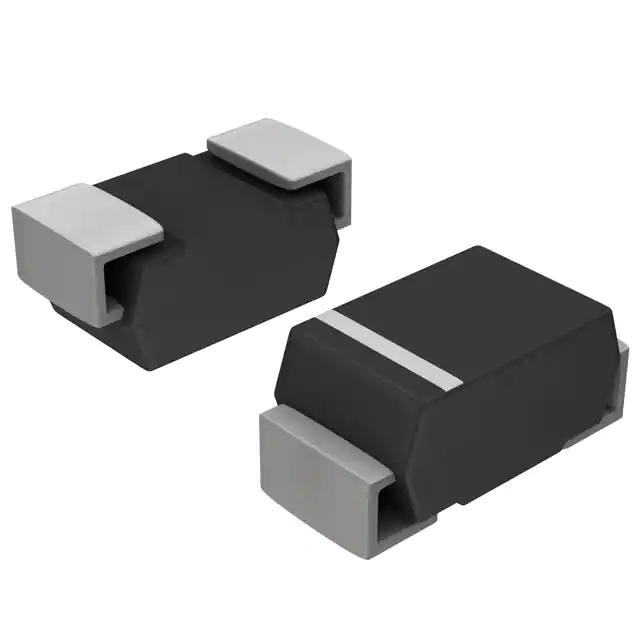
|
| Part Number | MURA220T3G |
| Manufacturer | onsemi |
| Series | - |
| Package/Case | DO-214AC, SMA |
| Packaging | Tape & Reel (TR) |
| Product Status | Active |
| Technology | Standard |
| Voltage - DC Reverse (Vr) (Max) | 200 V |
| Current - Average Rectified (Io) | 2A |
| Voltage - Forward (Vf) (Max) @ If | 950 mV @ 2 A |
| Speed | Fast Recovery =< 500ns, > 200mA (Io) |
| Reverse Recovery Time (trr) | 35 ns |
| Current - Reverse Leakage @ Vr | 2 µA @ 200 V |
| Capacitance @ Vr, F | - |
| Grade | - |
| Qualification | - |
| Mounting Type | Surface Mount |
| Supplier Device Package | SMA |
| Operating Temperature - Junction | -65°C ~ 175°C |
User Guide
- Purchase & Inquiry
- Package
- Shipping Information
- Customer Review
You may place an order without registering to IC-MAX.COM
We strongly suggest you sign in before purchasing as you can track your order in real time.
For your convenience, we accept multiple payment methods in USD, including PayPal, Credit Card, and wire transfer.
RFQ (Request for Quotations)
It is recommended to request for quotations to get the latest prices and inventories about the part.
Our sales will reply to your request by email within 24 hours.
1. You'll receive an order information email in your inbox. (Please remember to check the spam folder if you didn't hear from us).
2. Since inventories and prices may fluctuate to some extent, the sales manager is going to reconfirm the order and let you know if there are any updates.
-
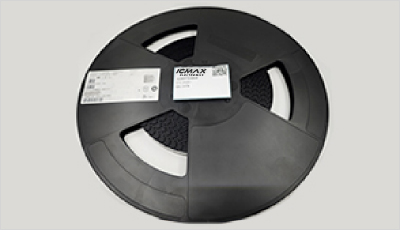
- Step1:Prepare product
-
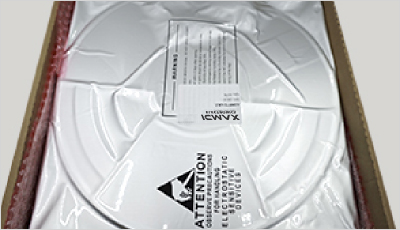
- Step2:Vacuum packaging
-
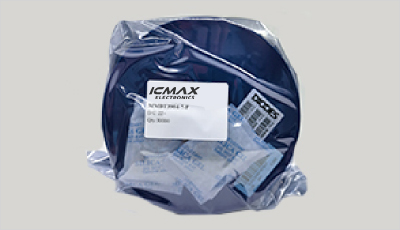
- Step3:Anti-static bag
-
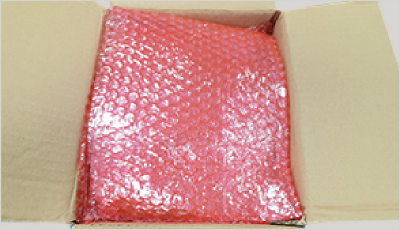
- Step4:Individual package
-
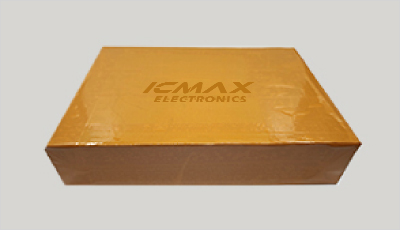
- Step5:Packaging box
-

- Step6:Barcode shipping label
Shipping starts at $40, but some countries will exceed $40. For example (South Africa, Brazil, India, Pakistan, Israel, etc.)
The basic freight (for package ≤0.5kg or corresponding volume) depends on the time zone and country.
Currently, our products are shipped through DHL, FedEx, SF, and UPS.
Delivery TimeOnce the goods are shipped, estimated delivery time depends on the shipping methods you chose:
FedEx International, 5-7 business days.
The following are some common countries' logistic time.

- Hot Sale
- Related Categories
- Include Parts
- Popular Search
The following parts include "MURA220T3G" in Silicon Labs MURA220T3G.
- Part Number
- Manufacturer
- Package
- Description
- 1N4448X-TP Micro Commercial Co DO-214AC, SMA DIODE GEN PURP 200V 2A SMA
- 1N4148WX-TP Micro Commercial Co DO-214AC, SMA DIODE GEN PURP 200V 2A SMA
- 1N4148TR onsemi DO-214AC, SMA DIODE GEN PURP 200V 2A SMA
- MMSD4148T1G onsemi DO-214AC, SMA DIODE GEN PURP 200V 2A SMA
- MMBD914LT3G onsemi DO-214AC, SMA DIODE GEN PURP 200V 2A SMA
- BAS16HT1G onsemi DO-214AC, SMA DIODE GEN PURP 200V 2A SMA
- 1N914BWT onsemi DO-214AC, SMA DIODE GEN PURP 200V 2A SMA
- BAS21LT1G onsemi DO-214AC, SMA DIODE GEN PURP 200V 2A SMA
- LL4148 onsemi DO-214AC, SMA DIODE GEN PURP 200V 2A SMA
- BAS16LT1G onsemi DO-214AC, SMA DIODE GEN PURP 200V 2A SMA
The following parts are popular search parts in Test and Measurement.
Inventory:41,102
Please send an inquiry. Send us your inquiry, and we will respond immediately.

- 1500+ Daily average RFQ Volume

- 20,000.000 Standard Product Unit

- 1800+ Worldwide Manufacturers

- 15,000+ In-stock Warehouse