onsemi MC74HC595ADTR2G

- Part No.:
- MC74HC595ADTR2G
- Manufacturer:
- onsemi
- Category:
- Shift Registers
- Package:
- 16-TSSOP (0.173", 4.40mm Width)
- Datasheet:
-
 MC74HC595ADTR2G.pdf
- Description:
- IC SHIFT REGSTR 8BIT 3ST 16TSSOP
- Quantity:
-
Unit Price:$0
Ext Price:$0
- Payment:
-

- Shipping:
-


MC74HC595ADTR2G Information
- Specifications
- Product Details
- Comparison
- Tags
- Product attributes
- Attribute value
- Manufacturer:
- onsemi
- Series:
- 74HC
- Package/Case:
- 16-TSSOP (0.173", 4.40mm Width)
- Packaging:
- Tape & Reel (TR)
- Product Status:
- Active
- Logic Type:
- Shift Register
- Output Type:
- Tri-State
- Number of Elements:
- 1
- Number of Bits per Element:
- 8
- Function:
- Serial to Parallel, Serial
- Voltage - Supply:
- 2V ~ 6V
- Operating Temperature:
- -55°C ~ 125°C
- Grade:
- -
- Qualification:
- -
- Mounting Type:
- Surface Mount
- Supplier Device Package:
- 16-TSSOP
- Datasheet:
-
MC74HC595ADTR2G.pdf
MC74HC595ADTR2G — 8-Bit Serial-Input Shift Register with Latched 3-State Outputs (TSSOP-16)
The MC74HC595ADTR2G is ON Semiconductor's 8-bit serial-in / serial-or-parallel-out shift register with a storage latch and 3-state outputs, in a TSSOP-16 package.
It turns one MCU data pin into eight controlled outputs. Shift data in on SRCLK, latch it on RCLK, and the eight parallel outputs hold steady until the next update.
Works from 2.0V to 6.0V, cascades without limit through the SQ_H serial output, and the Q’s sink or source enough current to drive LEDs directly.
In the logic IC lots we process (2025–2026), the mix-up we see most is the 595 ordered as a plain “shift register” and getting a 74HC4094 instead — same idea, different latch behavior, and the code breaks in ways that are hard to see on a scope.
Same family, different latch rules — check the part number before you commit the BOM.
What Are the Technical Specifications of MC74HC595ADTR2G?
| Parameter | Value |
|---|---|
| Type | 8-bit serial-in, serial/parallel-out shift register + 8-bit D-type latch |
| Outputs | 8 parallel, 3-state (Q_A–Q_H) + 1 serial (SQ_H) |
| Supply Voltage | 2.0V to 6.0V (HC class; HCT version runs 4.5V–5.5V) |
| Shift Clock Frequency | Typical ~100MHz at 5V (family), improved propagation delays on the A suffix |
| Propagation Delay | 26ns typical (improved over the original HC595) |
| Quiescent Current | 4µA typical — about 50% lower than the original |
| Output Drive | 15 LSTTL loads; I_OH/I_OL rated per datasheet over the full temp range |
| Input Leakage | 1.0µA max per input |
| Control Inputs | SRCLK (shift), RCLK (latch), OE (output enable, active-low), SRCLR (async reset, active-low) |
| Operating Temperature | -55°C to +125°C |
| Package / Pinout | TSSOP-16: 1–7=Q_B–Q_H, 8=GND, 9=SQ_H, 10=SRCLR, 11=SRCLK, 12=RCLK, 13=OE, 14=A, 15=Q_A, 16=VCC |
| Chip Complexity | 328 FETs / 82 equivalent gates |
| Compliance | Pb-free, halogen-free, RoHS (G suffix); NLV prefix = AEC-Q100 automotive |
Key numbers that matter: Per the ON Semiconductor MC74HC595A datasheet (Rev 23), the A-suffix part fixes what annoyed engineers about the original HC595 — 26ns propagation delay and 4µA quiescent current make it fast enough for SPI-fed LED strips and quiet enough for battery gear.
The three-state outputs matter more than people expect: with OE held high you can push fresh data into the shift register while the outside world still sees the old latch contents — no glitches between updates.
Learn the pin block, not just the pin names: outputs Q_A–Q_H are the parallel port, SQ_H is the cascade output, and the four control pins (SRCLK, RCLK, OE, SRCLR) decide when data moves.
The most common wiring mistake — from the Arduino forums, where this chip lives — is leaving OE (pin 13) floating: nothing ever appears on the outputs until it is tied low.
When Should You Use (and NOT Use) the MC74HC595ADTR2G?
✅ Use MC74HC595ADTR2G when:
- Expanding MCU I/O for 8 or more digital outputs. Three pins (DATA, SRCLK, RCLK) drive eight outputs, and each extra chip adds eight more with just one wire.
- Driving LED arrays or 7-segment displays. The latched 3-state outputs hold steady between updates — no visible flicker when the display refresh outruns the shift clock.
- Battery-powered designs. The A-suffix part idles at 4µA, so a shift register left static costs less standby power than the MCU’s own leakage.
- 3.3V and 5V systems. The 2.0V–6.0V supply range covers both rails with the same part number.
- Daisy-chained displays. Cascade through SQ_H to any depth — the forum standard for 16×2 LCDs and 8×8 LED matrices.
❌ Don't use MC74HC595ADTR2G when:
- You need PWM dimming on the outputs. The 595 is digital-only — it cannot vary LED brightness. Drive each output through a transistor with PWM, or use an LED driver instead.
- You must sink big currents. The 595 sinks modest current per pin. For relays, solenoids, or high-power LEDs, the TPIC6B595 open-drain class (150mA per channel) is the right tool.
- You need TTL-level input compatibility in a mixed 5V TTL system. Pick the 74HCT595 (4.5V–5.5V, TTL thresholds) — the HC part expects CMOS-level inputs.
- The load needs bidirectional or analog switching. A shift register switches digital levels only — for analog multiplexing, the 74HC4052 class is what you want.
What Are the Alternatives to MC74HC595ADTR2G?
| Model | Type | Key Difference | Best For |
|---|---|---|---|
| 74HCT595 | Shift register, TTL inputs | Same logic and pinout, 4.5V–5.5V, LSTTL-compatible thresholds | Mixed TTL/CMOS 5V systems |
| 74AHC595 | Shift register, advanced CMOS | Faster (sub-10ns class) and lower power at 3.3V | High-speed SPI-fed designs |
| 74HC4094 | Shift register, transparent latch | No separate latch pulse — data flows straight through to outputs | Simple streaming data, fewer pins to drive |
| TPIC6B595 | Shift register, open-drain | 150mA per channel sink, cannot source, different pinout (OE = G) | Relays, solenoids, high-current LED rows |
| 74HC138 | 3-to-8 decoder | Address-based, no shifting — one of 8 outputs goes low per address | Memory/device select, chip enables |
Pick by output type, then by speed. Need push-pull digital outputs at moderate current — the 595. Need to sink real current — TPIC6B595. Need TTL compatibility — 74HCT595. The decoder 74HC138 is not a replacement, but it is the other half of every “more outputs” conversation.
What Are the Typical Applications of MC74HC595ADTR2G?
8×8 LED Matrix Display: Two chained 595s hold the row and column data while the MCU scans. The latch isolates the display from the shifting — rows update in the background, and the screen shows clean frames instead of shifting garbage.
7-Segment Multiplexing: A single 595 drives the segments of a multi-digit display, with digit selects handled by a companion decoder. The 26ns propagation delay keeps refresh fast enough that no digit looks dimmer than its neighbor.
Relay and I/O Expansion for PLC-Style Controllers: An industrial board keeps its 8 outputs in one 595 so the processor can swap them atomically — latch the new state in one clock pulse and every actuator changes together, no partial updates mid-cycle.
Why the daisy chain works: SQ_H (pin 9) carries the last bit out, so U2 simply reads U1’s overflow. Both chips share SRCLK and RCLK — the shift clock feeds every register, the latch pulse updates every output simultaneously. Two 595s — sixteen outputs from three MCU pins.
Why Buy MC74HC595ADTR2G from ICMASS?
Genuine ON silicon, verified for the family trap. The 595/4094/138 trio looks interchangeable at a glance — same 16-pin body, same power rails, different latch rules. We test latch behavior and output drive on incoming lots so the part you receive matches the code you wrote.
Full logic IC family in one shipment. You’re ordering the 595 for output expansion, the 138 for address decoding, and the 4052 for analog switching — we stock the ON and TI logic families from Shenzhen with same-day dispatch.
Cross-reference support. Not sure whether your display needs the latch isolation of the 595 or the streaming transparency of the 4094? Tell us the display, the MCU rail, and the refresh rate — we’ll confirm the right part before you commit the BOM.
Frequently Asked Questions About MC74HC595ADTR2G
Q1: What is the MC74HC595ADTR2G?
A: An 8-bit serial-in, serial/parallel-out shift register with a storage latch and 3-state outputs, in TSSOP-16. ON Semiconductor’s A-suffix version improves on the original HC595 with 26ns propagation delay and 4µA quiescent current, and it runs from 2.0V to 6.0V.
Q2: What's the difference between 74HC595 and 74HCT595?
A: Input voltage levels — HC expects CMOS levels, HCT accepts TTL levels. Electrically the rest is the same: same 8-bit shift + latch logic, same pinout. Pick HCT when the driving logic is 5V TTL; the HCT version also runs 4.5V–5.5V only.
Q3: Why is my 74HC595 not working?
A: Check OE (pin 13) and SRCLR (pin 10) first — both are active-low and must be tied to VCC. On the Arduino forums this is the #1 cause: OE floating disables all outputs, SRCLR floating resets the register. Tie both high, then re-test.
Q4: Why does my 595 only work when I touch it?
A: You are providing the missing clock signal — connect RCLK properly. A classic forum case: the chip shifted data on SRCLK but the latch clock RCLK was never driven, so the finger’s capacitance acted as the latch pulse. Drive RCLK from the MCU after shifting, and the issue disappears.
Q5: Can I chain multiple 74HC595s?
A: Yes — connect SQ_H (pin 9) of the first to A (pin 14) of the next, share SRCLK and RCLK. Each chip adds eight outputs. Debug one chip first, then add the second — ordering mistakes in chained bits are the usual cause of “all outputs flash at once.”
Q6: Do I need a decoupling capacitor for each 595?
A: Yes — a 0.1µF ceramic between VCC and GND on every chip in the chain. Missing decoupling shows up as weird glitches and, in one documented ESP32 case, as a 595 failing after two days of operation. One cap per chip is cheap insurance.
Q7: Can I dim LEDs with a 74HC595?
A: No — the 595 is a digital device; it cannot change LED brightness. For dimming you need PWM on the outputs (via transistors) or a dedicated LED driver chip. This is a common forum misunderstanding, not a chip defect.
Q8: How many 595s can one MCU drive?
A: Forum builds report working chains from 20 to 45 chips — around 100 chips is where clock speed and signal integrity start hurting. An Arduino Forum user drove 20 chained 595s (160 outputs) from three pins; an EEVblog project ran 33 chips for 240+ outputs; another Arduino build reached 45 chips (360 outputs) with five 74HC125 buffers driving nine chips each.
Q9: How fast can the 74HC595 shift?
A: The datasheet specifies 25MHz maximum shift clock; forum builds run 20MHz and above, with ~100MHz typical quoted for the family. Bit-banged shiftOut() is far slower — use hardware SPI when you need real speed, since SPI can approach the chip’s actual limit.
Q10: How much does MC74HC595ADTR2G cost and is it in stock?
A: Volume pricing typically ranges from $0.03–$0.08/unit depending on quantity and date code. ICMASS stocks MC74HC595ADTR2G in TSSOP-16 and ships same-day from Shenzhen. Contact us for a quote on your specific quantity.
| Image |

|

|
| Part Number | MC74HC595ADTR2G | MC74HC595ADTR2G-Q |
| Manufacturer | onsemi | onsemi |
| Series | 74HC | 74HC |
| Package/Case | 16-TSSOP (0.173", 4.40mm Width) | 16-TSSOP (0.173", 4.40mm Width) |
| Packaging | Tape & Reel (TR) | Tape & Reel (TR) |
| Product Status | Active | Active |
| Logic Type | Shift Register | - |
| Output Type | Tri-State | Tri-State |
| Number of Elements | 1 | 1 |
| Number of Bits per Element | 8 | 8 |
| Function | Serial to Parallel, Serial | Serial to Parallel, Serial |
| Voltage - Supply | 2V ~ 6V | 2V ~ 6V |
| Operating Temperature | -55°C ~ 125°C | -55°C ~ 125°C |
| Grade | - | - |
| Qualification | - | - |
| Mounting Type | Surface Mount | Surface Mount |
| Supplier Device Package | 16-TSSOP | 16-TSSOP |
User Guide
- Purchase & Inquiry
- Package
- Shipping Information
- Customer Review
You may place an order without registering to IC-MAX.COM
We strongly suggest you sign in before purchasing as you can track your order in real time.
For your convenience, we accept multiple payment methods in USD, including PayPal, Credit Card, and wire transfer.
RFQ (Request for Quotations)
It is recommended to request for quotations to get the latest prices and inventories about the part.
Our sales will reply to your request by email within 24 hours.
1. You'll receive an order information email in your inbox. (Please remember to check the spam folder if you didn't hear from us).
2. Since inventories and prices may fluctuate to some extent, the sales manager is going to reconfirm the order and let you know if there are any updates.
-
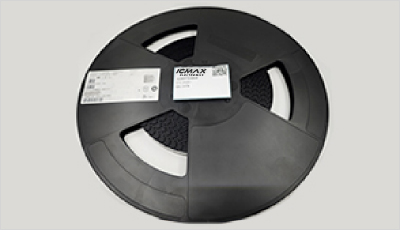
- Step1:Prepare product
-
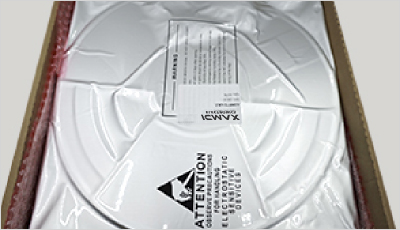
- Step2:Vacuum packaging
-
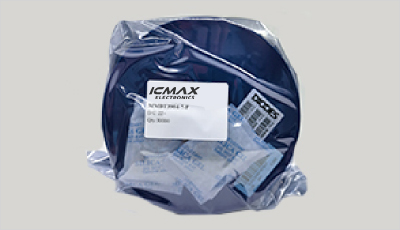
- Step3:Anti-static bag
-
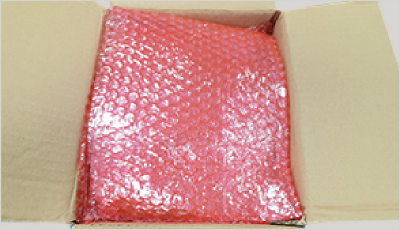
- Step4:Individual package
-
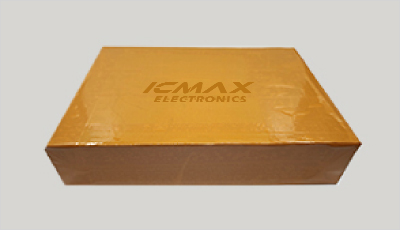
- Step5:Packaging box
-
- Step6:Barcode shipping label
Shipping starts at $40, but some countries will exceed $40. For example (South Africa, Brazil, India, Pakistan, Israel, etc.)
The basic freight (for package ≤0.5kg or corresponding volume) depends on the time zone and country.
Currently, our products are shipped through DHL, FedEx, SF, and UPS.
Delivery TimeOnce the goods are shipped, estimated delivery time depends on the shipping methods you chose:
FedEx International, 5-7 business days.
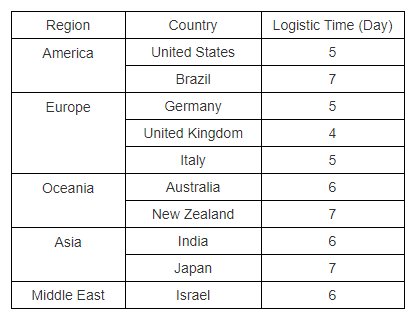
The following are some common countries' logistic time.
- Hot Sale
- Related Categories
- Include Parts
- Popular Search
- Universal Bus Functions(478)
- Translators, Level Shifters(2682)
- Specialty Logic(1247)
- Signal Switches, Multiplexers, Decoders(7433)
- Shift Registers(2074)
- Parity Generators and Checkers(194)
- Multivibrators(655)
- Latches(2949)
- Gates and Inverters - Multi-Function, Configurable(1137)
- Gates and Inverters(13350)
The following parts include "MC74HC595ADTR2G" in Silicon Labs MC74HC595ADTR2G.
- Part Number
- Manufacturer
- Package
- Description
- SN74HC164DR Texas Instruments 16-TSSOP (0.173", 4.40mm Width) IC SHIFT REGSTR 8BIT 3ST 16TSSOP
- SN74HC595DR Texas Instruments 16-TSSOP (0.173", 4.40mm Width) IC SHIFT REGSTR 8BIT 3ST 16TSSOP
- 74HC595PW,118 Nexperia USA Inc. 16-TSSOP (0.173", 4.40mm Width) IC SHIFT REGSTR 8BIT 3ST 16TSSOP
- SN74HC165PWR Texas Instruments 16-TSSOP (0.173", 4.40mm Width) IC SHIFT REGSTR 8BIT 3ST 16TSSOP
- HEF4094BT,653 Nexperia USA Inc. 16-TSSOP (0.173", 4.40mm Width) IC SHIFT REGSTR 8BIT 3ST 16TSSOP
- 74HC595D,118 Nexperia USA Inc. 16-TSSOP (0.173", 4.40mm Width) IC SHIFT REGSTR 8BIT 3ST 16TSSOP
- SN74HC595PWR Texas Instruments 16-TSSOP (0.173", 4.40mm Width) IC SHIFT REGSTR 8BIT 3ST 16TSSOP
- 74HC165D,653 Nexperia USA Inc. 16-TSSOP (0.173", 4.40mm Width) IC SHIFT REGSTR 8BIT 3ST 16TSSOP
- SN74LV165APWR Texas Instruments 16-TSSOP (0.173", 4.40mm Width) IC SHIFT REGSTR 8BIT 3ST 16TSSOP
- 74HC595BQ,115 Nexperia USA Inc. 16-TSSOP (0.173", 4.40mm Width) IC SHIFT REGSTR 8BIT 3ST 16TSSOP
The following parts are popular search parts in Test and Measurement.
Inventory:36,551
Please send an inquiry. Send us your inquiry, and we will respond immediately.

- 1500+ Daily average RFQ Volume

- 20,000.000 Standard Product Unit

- 1800+ Worldwide Manufacturers

- 15,000+ In-stock Warehouse