onsemi LM317LDR2G

- Part No.:
- LM317LDR2G
- Manufacturer:
- onsemi
- Package:
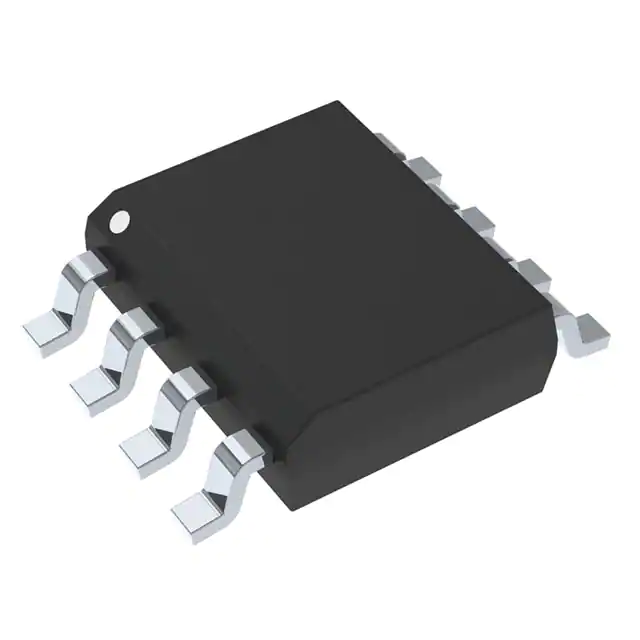
- 8-SOIC (0.154", 3.90mm Width)
- Datasheet:
-
 LM317LDR2G.pdf
- Description:
- IC REG LIN POS ADJ 100MA 8SOIC
- Quantity:
-
Unit Price:$0
Ext Price:$0
- Payment:
-

- Shipping:
-


LM317LDR2G Information
- Specifications
- Product Details
- Comparison
- Tags
- Product attributes
- Attribute value
- Manufacturer:
- onsemi
- Series:
- -
- Package/Case:
- 8-SOIC (0.154", 3.90mm Width)
- Packaging:
- Tape & Reel (TR)
- Product Status:
- Active
- Output Configuration:
- Positive
- Output Type:
- Adjustable
- Number of Regulators:
- 1
- Voltage - Input (Max):
- 40V
- Voltage - Output (Min/Fixed):
- 1.2V
- Voltage - Output (Max):
- 37V
- Voltage Dropout (Max):
- -
- Current - Output:
- 100mA
- Current - Quiescent (Iq):
- 10 mA
- Current - Supply (Max):
- -
- PSRR:
- 80dB (120Hz)
- Control Features:
- -
- Protection Features:
- Over Current, Over Temperature, Short Circuit
- Operating Temperature:
- 0°C ~ 125°C
- Grade:
- -
- Qualification:
- -
- Mounting Type:
- Surface Mount
- Supplier Device Package:
- 8-SOIC
- Datasheet:
-
LM317LDR2G.pdf
LM317LDR2G — 100mA Adjustable Voltage Regulator (SOIC-8, onsemi)
The LM317LDR2G is onsemi's 100mA adjustable positive regulator — the LM317L in an SOIC-8, supplied on a 2,500-piece reel. Two resistors set any rail from 1.2V to 37V, with a 1.25V reference and 5mA max minimum load.
The question we hear most at ICMASS (2025–2026) about this part: is it interchangeable with the TI LM317LMX/NOPB? Short answer — yes, pin for pin. The interesting part is the one spec that isn't identical, and it matters when your design ever goes outside.
What Are the Technical Specifications of the LM317LDR2G?
| Parameter | Value |
|---|---|
| Type | Adjustable positive linear regulator (onsemi LM317L family) |
| Output Voltage | 1.2V to 37V adjustable, set by two resistors |
| Maximum Output Current | 100mA guaranteed (current limit 200mA typ) |
| Input Voltage | Up to 40V input–output differential |
| Minimum Differential | 3V minimum VIN–VOUT for regulation (EC conditions assume 5V) |
| Reference Voltage | 1.25V typ (1.20V–1.30V) |
| Line Regulation | 0.01%/V typ, 0.04%/V max at 25°C; 0.3%/V max over temperature |
| Load Regulation | 0.1%/0.5% max (10mA–100mA, VO ≤ 5V); 0.3%/1.5% (VO ≥ 5V) |
| Adjust Pin Current | 50µA typ, 100µA max (ΔIADJ 0.2/2µA) |
| Minimum Load Current | 3.5mA typ, 5mA max (VI–VO = 40V) |
| Current Limit | 100/200/300mA min/typ/max — loads should stay under 100mA |
| Ripple Rejection | 80dB typ @ 120Hz with CADJ = 10µF (60dB min) |
| Operating Junction Temp | 0°C to +125°C (commercial LM317L; −40°C for LM317LB/NCV317LB) |
| Test Dissipation Ceiling | Electrical characteristics tested at 625mW max dissipation |
| Thermal Resistance | SO-8: 180°C/W junction-to-ambient (minimum pad), 45°C/W junction-to-case; TO-92: 160°C/W / 83°C/W |
| Package | SOIC-8 narrow body (CASE 751), 4.9×3.9mm, 1.27mm pitch |
| Manufacturer | onsemi — datasheet LM317L/D, Rev 14 (April 2021) |
Key numbers that matter. The EC table is tested at a 625mW dissipation ceiling, and the current limit engages anywhere from 100mA to 300mA. That spread is the design rule: a load that needs 120mA “should be fine” on one sample and trips protection on the next.
And the temperature floor is 0°C. The commercial LM317L is specified down to freezing — nothing lower. If the design ever sits in an unheated enclosure, this is the spec that sends you to the automotive grade or the TI part.
When Should You Use (and NOT Use) the LM317LDR2G?
Use LM317LDR2G when:
- You want dual sourcing without touching the layout. The SO-8 pinout is identical to TI's LM317LMX/NOPB — 1 VIN, 2/3/6/7 VOUT, 4 ADJ. Approve both parts on the BOM and swap at will. When one factory goes on allocation, you keep shipping.
- You're buying in reel quantities. The R2 suffix means 2,500 pieces on a 13-inch reel. Pick-and-place friendly, Pb-free (G suffix), with consistent date codes across a single reel.
- Your product lives indoors. Anything from lab instruments to office gear — the 0°C to +125°C junction range covers real indoor environments with margin.
- You need a precision current source. One resistor between VOUT and ADJ turns it into a two-terminal current regulator: I = 1.25V / R. 4–20mA loop transmitters and LED strings use exactly this mode.
Don't use LM317LDR2G when:
- The design must start below 0°C. Outdoor sensors, cold-warehouse gear, anything with a −20°C spec — go straight to the NCV317LBDR2G (automotive, −40°C) or the TI LM317LMX/NOPB.
- Your load needs more than 100mA. The current limit's 100mA floor is the guarantee; the 300mA ceiling is luck. Step up to the LM317T or LM317G-AA3-R for real headroom.
- The input rail is tight. The EC table assumes a 5V differential and a 3V minimum. At 5V in, a 3.3V rail is out of reach — that's LDO territory, like the AMS1117-3.3 or NCP1117ST33T3G.
- You're hand-soldering prototypes on stripboard. Then the LM317LZREG in TO-92 is the friendlier package — same die, through-hole legs, no rework station needed.
What Are the Alternatives to the LM317LDR2G?
| Model | Type | Key Difference | Best For |
|---|---|---|---|
| LM317LMX/NOPB | 100mA adjustable (TI, SOIC-8) | Same pinout; −40°C lower limit vs 0°C | Dual sourcing, cold-start designs |
| LM317LZREG | 100mA adjustable (TO-92) | Same die, through-hole package | Hand builds, breadboards |
| NCV317LBDR2G | 100mA adjustable, automotive | −40°C to +125°C, AEC-qualified | Automotive, outdoor gear |
| LM317T | 1.5A adjustable (TO-220) | Same topology, 15× the current | Loads above 100mA |
| LM317G-AA3-R | 1A adjustable (SOT-223) | Surface-mount with a real thermal tab | Board-level 1A rails |
The dual-source decision in one line. LM317LDR2G and LM317LMX/NOPB share a pinout, a 5mA minimum load, and a 625mW test ceiling. What actually differs: the temperature floor (0°C vs −40°C) and the brand on the reel. That's why dual-approving both costs nothing and buys an allocation-proof supply.
And don't let the 200mA typical current limit seduce you. The guaranteed floor is 100mA, and the EC table means it: 100mA is the rated output, full stop. Past that you're sampling, not designing.
What Are the Typical Applications of the LM317LDR2G?
4–20mA current loop transmitters. In precision current-regulator mode, I = 1.25V / R. A 62.5Ω resistor gives exactly 20mA — the classic two-wire transmitter trick. The 5mA minimum load is irrelevant here because the loop itself loads the output.
Reel-quantity production rails. At 2,500 per reel the LM317LDR2G drops into a standard SMT feeder with no rework. If your contract manufacturer already runs SOIC-8 parts, an adjustable rail adds zero setup time.
Dual-sourced bias supplies. Op-amp rails, reference supplies, and sensor excitation at 5–15mA draw. Approve both this part and the TI twin, and purchasing always has a working alternative — the layout, the test fixtures, and the firmware don't care which brand is populated.
Indoor instruments and lab gear. Benchtop PSUs, calibrators, and panel meters live at room temperature. The 0°C junction floor never matters indoors, and the 80dB ripple rejection with a 10µF ADJ cap keeps rails clean enough for 12-bit ADCs.
Why Buy LM317LDR2G from ICMASS?
Both twins, one warehouse. We stock LM317LDR2G and LM317LMX/NOPB side by side, so a dual-source BOM ships in one carton with one invoice. Swap between brands without changing anything downstream.
Reel integrity that matters on the line. We track lot codes through the full reel — 2,500 pieces that belong together stay together. Mixed-lot reels cause exactly the kind of mystery field failures nobody has time for.
The automotive grade when you need it. If the temperature floor question comes up, NCV317LBDR2G (−40°C, AEC-qualified) is on the shelf too. One conversation, no cross-vendor sourcing sprint.
Frequently Asked Questions About the LM317LDR2G
Q1: Is the LM317LDR2G a drop-in replacement for the TI LM317LMX/NOPB?
A: Yes — the SO-8 pinouts are identical. Pin 1 VIN, pins 2/3/6/7 VOUT, pin 4 ADJ, pins 5/8 NC on both parts. Same 1.25V reference and the same 5mA max minimum load. The one real difference: onsemi specifies 0°C to +125°C, TI −40°C to +125°C. Check your cold-start spec before swapping in a freezer-class design.
Q2: What does the DR2G suffix mean?
A: D = SOIC-8 package, R2 = 2,500-piece 13-inch reel, G = Pb-free. Same part, other suffixes: LM317LZREG is the TO-92 through-hole version, and the NCV317LB prefix marks the automotive-qualified −40°C variant. The suffix tells you package and reel, not silicon.
Q3: What's the minimum load current for the LM317LDR2G?
A: 3.5mA typical, 5mA maximum — same as the TI part. Below that, the internal quiescent current charges the output cap and the voltage drifts above the set point. Size the divider to draw at least 5mA, or hang a small permanent load on the rail.
Q4: Can the LM317LDR2G run below freezing?
A: Not on the datasheet — the commercial LM317L is specified from 0°C junction. For −40°C cold starts use the NCV317LBDR2G (automotive) or the TI LM317LMX/NOPB. Outside the specified range the part doesn't suddenly die, but you're on your own — not a place to be in a design review.
Q5: How much current can I really draw from an LM317LDR2G?
A: 100mA guaranteed — the current limit engages anywhere from 100mA to 300mA. The 200mA typical is where protection usually trips, but the guarantee stops at 100mA. TI's own engineers give the same advice for the LM317L-N: keep the load below the minimum current limit. Above 100mA, move to an LM317T or LM317G-AA3-R.
Q6: How do I get the best ripple rejection from the LM317LDR2G?
A: Add 10µF from ADJ to ground — rejection reaches 80dB typ at 120Hz. That's the onsemi datasheet number with CADJ in place, 60dB minimum. It fades above 120Hz, so for switching-frequency noise keep the input bypass close to the pins.
Q7: Can the LM317LDR2G drive a 4–20mA loop?
A: Yes — it's a classic. In current-source mode I = 1.25V / R, and a 62.5Ω resistor yields 20mA. Published LM317 loop converters hit 0.02% linearity, and full transmitter designs add an external boost transistor to keep IC dissipation low. At 20mA with a few volts across the part, the LM317L handles the loop comfortably.
Q8: SO-8 or TO-92 — which LM317L should I buy?
A: SO-8 for production, TO-92 for hand work — same die. Standalone, the TO-92 cools slightly better (160°C/W vs 180°C/W minimum-pad SO-8). But the SO-8's junction-to-case is 45°C/W versus 83°C/W — four VOUT pins pull heat into board copper, so on a real PCB it wins.
Q9: Do the LM317L suffix variants — DR2G, ZREG, LFT, NOPB — perform differently?
A: No — the die is identical; suffixes mark package and packing only. The LM317LDR2G (SO-8, 2,500/reel), LM317LZREG (TO-92), and TI's LM317L-N LFT/NOPB variants are functionally the same part, as TI's own E2E engineers confirm. Choose by package and reel, not performance.
Q10: How much input-output voltage difference does the LM317LDR2G need?
A: Specs assume a 5V differential, with 3V as the test-condition minimum. Design to 2.5–3V of headroom in practice. This is a classic regulator, not an LDO — tight-rail designs belong on AMS1117-class parts.
| Image |
|
| Part Number | LM317LDR2G |
| Manufacturer | onsemi |
| Series | - |
| Package/Case | 8-SOIC (0.154", 3.90mm Width) |
| Packaging | Tape & Reel (TR) |
| Product Status | Active |
| Output Configuration | Positive |
| Output Type | Adjustable |
| Number of Regulators | 1 |
| Voltage - Input (Max) | 40V |
| Voltage - Output (Min/Fixed) | 1.2V |
| Voltage - Output (Max) | 37V |
| Voltage Dropout (Max) | - |
| Current - Output | 100mA |
| Current - Quiescent (Iq) | 10 mA |
| Current - Supply (Max) | - |
| PSRR | 80dB (120Hz) |
| Control Features | - |
| Protection Features | Over Current, Over Temperature, Short Circuit |
| Operating Temperature | 0°C ~ 125°C |
| Grade | - |
| Qualification | - |
| Mounting Type | Surface Mount |
| Supplier Device Package | 8-SOIC |
User Guide
- Purchase & Inquiry
- Package
- Shipping Information
- Customer Review
You may place an order without registering to IC-MAX.COM
We strongly suggest you sign in before purchasing as you can track your order in real time.
For your convenience, we accept multiple payment methods in USD, including PayPal, Credit Card, and wire transfer.
RFQ (Request for Quotations)
It is recommended to request for quotations to get the latest prices and inventories about the part.
Our sales will reply to your request by email within 24 hours.
1. You'll receive an order information email in your inbox. (Please remember to check the spam folder if you didn't hear from us).
2. Since inventories and prices may fluctuate to some extent, the sales manager is going to reconfirm the order and let you know if there are any updates.
-
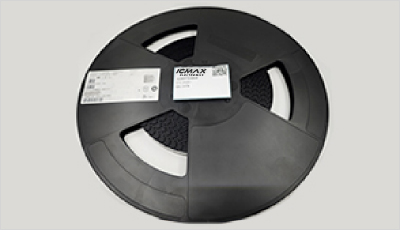
- Step1:Prepare product
-
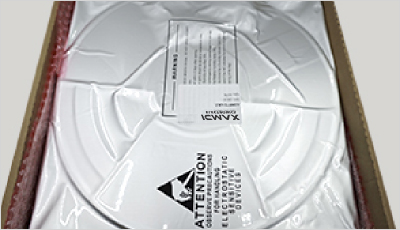
- Step2:Vacuum packaging
-
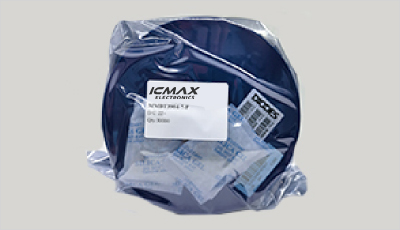
- Step3:Anti-static bag
-
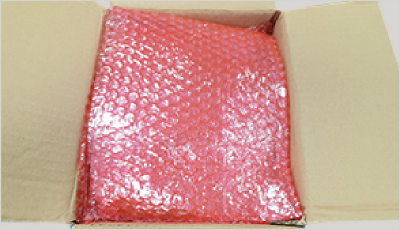
- Step4:Individual package
-
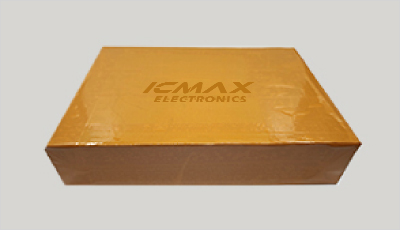
- Step5:Packaging box
-
- Step6:Barcode shipping label
Shipping starts at $40, but some countries will exceed $40. For example (South Africa, Brazil, India, Pakistan, Israel, etc.)
The basic freight (for package ≤0.5kg or corresponding volume) depends on the time zone and country.
Currently, our products are shipped through DHL, FedEx, SF, and UPS.
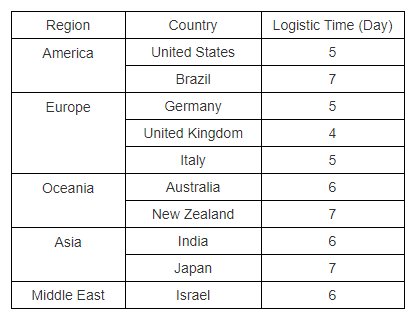
Delivery TimeOnce the goods are shipped, estimated delivery time depends on the shipping methods you chose:
FedEx International, 5-7 business days.
The following are some common countries' logistic time.
- Hot Sale
- Related Categories
- Include Parts
- Popular Search
- Voltage Regulators - Linear, Low Drop Out (LDO) Regulators(66836)
- Voltage Regulators - Linear Regulator Controllers(325)
- Voltage Regulators - Linear + Switching(1473)
- Voltage Regulators - DC DC Switching Regulators(35756)
- Voltage Reference(8428)
- V/F and F/V Converters(139)
- Thermal Management(515)
- Supervisors(41287)
- Special Purpose Regulators(4820)
- RMS to DC Converters(144)
The following parts include "LM317LDR2G" in Silicon Labs LM317LDR2G.
- Part Number
- Manufacturer
- Package
- Description
- MIC5504-1.8YM5-TR Microchip Technology 8-SOIC (0.154", 3.90mm Width) IC REG LIN POS ADJ 100MA 8SOIC
- MIC5504-3.3YM5-TR Microchip Technology 8-SOIC (0.154", 3.90mm Width) IC REG LIN POS ADJ 100MA 8SOIC
- MIC5365-3.0YC5-TR Microchip Technology 8-SOIC (0.154", 3.90mm Width) IC REG LIN POS ADJ 100MA 8SOIC
- MIC5365-1.8YC5-TR Microchip Technology 8-SOIC (0.154", 3.90mm Width) IC REG LIN POS ADJ 100MA 8SOIC
- MIC5365-2.5YC5-TR Microchip Technology 8-SOIC (0.154", 3.90mm Width) IC REG LIN POS ADJ 100MA 8SOIC
- MIC5365-3.3YC5-TR Microchip Technology 8-SOIC (0.154", 3.90mm Width) IC REG LIN POS ADJ 100MA 8SOIC
- MIC5365-3.3YD5-TR Microchip Technology 8-SOIC (0.154", 3.90mm Width) IC REG LIN POS ADJ 100MA 8SOIC
- MIC5317-3.3YM5-TR Microchip Technology 8-SOIC (0.154", 3.90mm Width) IC REG LIN POS ADJ 100MA 8SOIC
- TLV1117LV33DCYR Texas Instruments 8-SOIC (0.154", 3.90mm Width) IC REG LIN POS ADJ 100MA 8SOIC
- MIC5317-3.3YMT-TZ Microchip Technology 8-SOIC (0.154", 3.90mm Width) IC REG LIN POS ADJ 100MA 8SOIC
The following parts are popular search parts in Test and Measurement.
Inventory:18,867
Please send an inquiry. Send us your inquiry, and we will respond immediately.

- 1500+ Daily average RFQ Volume

- 20,000.000 Standard Product Unit

- 1800+ Worldwide Manufacturers

- 15,000+ In-stock Warehouse