onsemi 1SMA5942BT3G

- Part No.:
- 1SMA5942BT3G
- Manufacturer:
- onsemi
- Category:
- Single Zener Diodes
- Package:
- DO-214AC, SMA
- Datasheet:
-
 1SMA5942BT3G.pdf
- Description:
- DIODE ZENER 51V 1.5W SMA
- Quantity:
-
Unit Price:$0
Ext Price:$0
- Payment:
-

- Shipping:
-


1SMA5942BT3G Information
- Specifications
- Product Details
- Comparison
- Tags
- Product attributes
- Attribute value
- Manufacturer:
- onsemi
- Series:
- 1SMA59xxBT3G
- Package/Case:
- DO-214AC, SMA
- Packaging:
- Tape & Reel (TR)
- Product Status:
- Active
- Voltage - Zener (Nom) (Vz):
- 51 V
- Tolerance:
- ±5%
- Power - Max:
- 1.5 W
- Impedance (Max) (Zzt):
- 70 Ohms
- Current - Reverse Leakage @ Vr:
- 500 nA @ 38.8 V
- Voltage - Forward (Vf) (Max) @ If:
- 1.2 V @ 200 mA
- Operating Temperature:
- -65°C ~ 150°C
- Grade:
- -
- Qualification:
- -
- Mounting Type:
- Surface Mount
- Supplier Device Package:
- SMA
- Datasheet:
-
1SMA5942BT3G.pdf
1SMA5942BT3G — 1.5W 51V Zener Voltage Regulator (SMA)
The 1SMA5942BT3G is onsemi's 1.5-watt zener at 51V ±5% in a two-lead SMA package — a 1N5942B-class die in surface-mount form, built for 36V and 48V systems where clamp and detection thresholds sit above the low-voltage world.
Two numbers deserve a second look (2025–2026). First: a "1.5W" zener at 51V carries 29mA maximum — a quarter of the 12V grade's current. Second: telecom "48V" plants float at 49.9–56.4V, per Lucent and IEEE 802.3 documents. A 51V zener across that bus conducts at float, not just at fault.
What Are the Technical Specifications of the 1SMA5942BT3G?
| Parameter | Value |
|---|---|
| Type | 1.5W silicon planar zener voltage regulator (1N5942B-class die) |
| Nominal Zener Voltage VZ | 51V at IZT = 7.3mA |
| Tolerance | ±5% (B suffix) — 48.45V to 53.55V window |
| Test Current IZT | 7.3mA |
| Zener Impedance ZZT | 70Ω max at 7.3mA |
| Knee Impedance ZZK | 1100Ω at IZK = 0.25mA |
| Reverse Leakage IR | 0.5µA max at 38.8V, 25°C |
| Forward Voltage VF | 1.5V max at 200mA |
| Max Regulator Current IZM | 29mA — watts divide by volts |
| Power Dissipation PD | 1.5W at lead temperature ≤75°C (1 sq in pad); derates 20mW/°C above 75°C |
| Minimum-Footprint Rating | 0.5W at 25°C ambient; derates 4mW/°C above |
| Thermal Resistance | RθJL 50°C/W; RθJA 250°C/W |
| Operating Junction Temp | −65°C to +150°C |
| ESD Rating | Class 3 — exceeds 16kV (Human Body Model) |
| Package | SMA (DO-214AC), cathode band, UL 94 V-0, 5,000 per 13-inch reel (T3) |
| Automotive Variant | SZ1SMA5942BT3G — AEC-Q101 qualified, PPAP capable |
| Compliance | RoHS, halogen-free, Pb-free (G suffix) |
| Manufacturer | onsemi — 1SMA59xxBT3G series datasheet |
Key numbers that matter. The 29mA IZM is the whole story: at 51V, 1.5W buys a quarter of the 12V grade's current. Thermals are identical across the series — 1.5W at a 75°C lead temperature, derating 20mW per degree above; a minimum footprint manages 0.5W at 25°C ambient.
High-voltage zeners have soft knees — 1100Ω says so. Near the knee, one milliamp of current change swings VZ by roughly a volt. Above the knee it stiffens to 70Ω — 70mV per milliamp. And at 38.8V reverse the part leaks 0.5µA max, so anything below that line stays quiet.
When Should You Use (and NOT Use) the 1SMA5942BT3G?
Use the 1SMA5942BT3G when:
- You're flagging an undervoltage on a 48V rail. The 48.45V minimum of the B-suffix window lines up with "48V rail sagging" — a zener-fed divider and comparator trip when the bus falls out of spec, set by silicon instead of firmware.
- You're clamping transients on a 36V battery system. A 36V lithium pack peaks around 42V fully charged, leaving six volts of margin below the zener's 48.45V minimum. It conducts only on real overshoot, and the battery's own impedance limits the current.
- You're deriving a bias rail from a HV bus. A series resistor plus this zener makes a 51V bias point from 120V+ rails for gate drivers and floating supplies. The resistor burns the bulk of the voltage; the zener only pins the level.
- You're pre-regulating for a low-voltage LDO. Two-stage drop keeps a 5V or 3.3V LDO's input well below its absolute maximum even when the HV bus spikes. The zener's 29mA limit still covers logic loads with room to spare.
- You're protecting a high-voltage test point. A series resistor followed by the zener clamps the input of a measurement front end before the converter pin. Mind the 0.5µA leakage on high-impedance sources.
Don't use the 1SMA5942BT3G when:
- The bus is a telecom 48V plant on float. Lucent and IEEE 802.3 documents put float at 49.9–56.4V by cell count — above the zener's 53.55V maximum. It conducts at float, not just at fault, and burns up without careful series resistance.
- The clamp must burn more than about 0.5W continuously. That's the whole minimum-footprint budget at 25°C ambient — and at 51V it buys only 10mA. The 1SMB5942B (3W, SMB) doubles the thermal budget.
- The threat is surge energy, not voltage. Telecom cross and lightning-induced transients carry joules. A 600W-class TVS in the 1SMB series absorbs that; a 1.5W zener does not.
- You're doing reverse-polarity protection. The forward path drops up to 1.5V and turns into heat at load current. A Schottky does the same job with well under half the drop.
- You need a precision reference. ±5% here means a 5.1V-wide window — far too loose for measurement. That's TL431 territory.
What Are the Alternatives to the 1SMA5942BT3G?
| Model | Type | Key Difference | Best For |
|---|---|---|---|
| CMZ5942B TR13 | 1.5W 51V SMA (Central Semi) | True second source, same power class | Dual-sourcing the same board |
| 1SMA4757A | 1W 51V SMA (onsemi) | 1W rating, higher ZZT | Cost-down where 1W is enough |
| SMAZ5942B-E3 | 500mW 51V DO-214AC (Vishay) | Same "5942B" name, one-third the power | Low-current clamps — verify the watt first |
| MMSZ5262B | 500mW 51V SOD-123 | Tiny footprint, higher ZZT | Space-constrained, low-current rails |
| BZT52H-C51 | 500mW 51V SOD-123F (Nexperia) | Flat-leaded package, ±5% | Low-profile boards |
| SZ1SMA5942BT3G | 1.5W 51V SMA, automotive (onsemi) | Same die, AEC-Q101 + PPAP | Automotive programs with paperwork |
| 1SMB5942B | 3W 51V SMB (onsemi) | Double the power, slightly larger body | Continuous clamping above 1W |
The trap in one line: SMAZ5942B-E3 is a 500mW part with the same "5942B" in its name. It's a fine zener — for a different job. When a cross-reference list offers it as a "1SMA5942B equivalent", the pinout matches and the thermal budget doesn't.
Need more headroom? The 1SMB5942B doubles the power to 3W in an SMB body. Need tighter voltage? Zeners don't get tighter — that's what the TL431 is for.
Same "5942B" on the label, very different wattage:
What Are the Typical Applications of the 1SMA5942BT3G?
48V undervoltage detection. Telecom and industrial plants run 48V nominal, and equipment must shut down cleanly when the bus sags. A divider, this zener, and a comparator make a hardware trip point — no firmware, no hang risk, and the 48.45V minimum sits right on the "healthy rail" boundary.
36V battery overvoltage clamping. Charger overshoot and regenerative spikes ride above a 36V pack's normal 42V peak. The zener's 48.45V minimum stays clear of normal operation and clamps only the real excursions.
HV-bus bias supplies. Gate drivers and floating measurement front ends on 120V+ rails need a local supply. A series resistor plus the zener derives 51V from the bus with two parts, and the resistor keeps the zener inside its 29mA limit.
Pre-regulation ahead of LDOs. Two-stage dropping protects a low-voltage regulator from a hostile HV bus: the zener caps the LDO input, and the LDO does the precision work the zener can't.
High-voltage test-point protection. With a series resistor ahead, the zener clamps transients before a measurement pin. The cost is a fraction of a protection IC — at the price of the 0.5µA leakage you must account for on high-impedance sources.
Why Buy the 1SMA5942BT3G from ICMASS?
VZ lands where the datasheet says: 48.45–53.55V at 7.3mA. The B-suffix bin guarantees the window, and the reels arrive with date and lot codes intact so your 48V detection thresholds stay where you calculated them.
Quiet below 38.8V. The 0.5µA maximum leakage point sits well under the operating voltage of 36V systems, so the part draws nothing measurable in normal operation — and only 0.5µA max even at the edge.
One order covers the whole power section. This zener rides with the rectifiers, MOSFETs, and switcher controllers on a single PO from our Shenzhen stock — full 5,000-unit reels or cut tape, dispatched same day.
Traceable factory reels. Date and lot codes intact, straight from the manufacturer's packaging. For automotive programs, the SZ1SMA5942BT3G variant carries AEC-Q101 qualification and PPAP capability.
Frequently Asked Questions About the 1SMA5942BT3G
Q1: Can I clamp a 48V telecom bus with this 51V zener?
A: No — the bus floats above the zener. Telecom 48V plants float at 49.9–56.4V depending on cell count, per Lucent LINEAGE 2000 manuals and IEEE 802.3 documents. The zener's 53.55V maximum sits inside that range, so it conducts at float and burns up. Use it to sense and flag, or pick a clamp voltage above the float ceiling.
Q2: Why does a 1.5W zener only handle 29mA?
A: Because 1.5W divided by 51V is 29mA. IZM is the power rating divided by the zener voltage, so high-voltage grades carry far less current than low-voltage ones for the same watt. The 12V grade in the same series manages 125mA.
Q3: What does the 1100Ω knee impedance mean in practice?
A: Near the knee, 1mA of current change swings VZ by about a volt. High-voltage zeners have soft knees, so a "51V clamp" running at 1mA sits noticeably below 51V. Above the knee it stiffens to 70Ω — 70mV per milliamp. If your circuit runs the zener near its test current of 7.3mA, you get the datasheet window; far below it, you get less voltage.
Q4: How much current can it handle continuously?
A: 29mA absolute maximum, far less on a real board. The 1.5W rating needs a 1-square-inch pad and a 75°C lead temperature, derating 20mW/°C above; a minimum footprint manages only 0.5W at 25°C ambient — 10mA at 51V. Design for 8mA on a small footprint, 25mA with real copper; beyond that, step to the 1SMB5942B (3W).
Q5: Does a zener always need a series resistor?
A: Always. Without one, the supply fights the diode directly and the part fails. Size RS = (VIN − VZ) / (IZ + ILOAD), then check worst-case zener dissipation at minimum load and maximum line voltage.
Q6: My 48V undervoltage detector trips at 47V. Is the part bad?
A: Probably not — check the zener current and junction temperature. The 48.45V minimum holds only at 7.3mA and 25°C. Run the zener at a milliamp or so and it sits below spec; the datasheet curves also show VZ moving with temperature. This "detector trips early" report recurs on EE StackExchange, and it almost always traces back to operating point, not the part.
Q7: What's the forward voltage drop?
A: 1.5V max at 200mA per the datasheet. In practice a forward-biased zener drops about 0.7V at low current like any silicon diode, rising toward the maximum at higher current. For polarity protection a Schottky is far better, at 0.2–0.3V.
Q8: Should I use this 51V part or the 1SMA5927BT3G (12V)?
A: Match the zener to the bus voltage, then check the current. The 12V part suits 12V and 24V systems; the 51V part suits 36V and 48V systems. Remember the trade: the higher the voltage grade, the fewer milliamps the same 1.5W rating buys.
Q9: 51V zener or a TVS for surge protection?
A: TVS for energy, zener for thresholds. A TVS absorbs joules of surge current for microseconds; a zener holds a predictable voltage for detection and light clamping. Telecom cross and lightning-induced transients are TVS work — this part clamps overshoot, not strikes.
Q10: Can I parallel two zeners for more current?
A: Don't — zeners don't share. A few hundred millivolts of VZ mismatch sends most of the current through one device while the other idles. It's a classic electronics-forum question, and the answer never changes: use one larger part (1SMB5942B) or move to a proper regulator.
| Image |
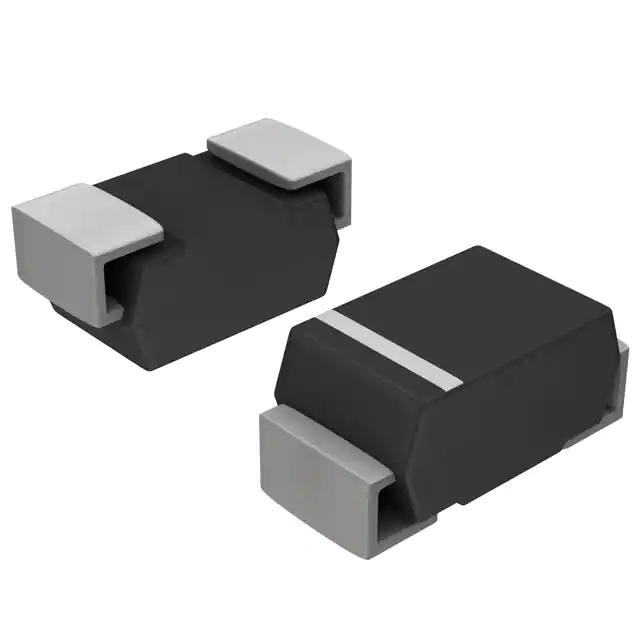
|
| Part Number | 1SMA5942BT3G |
| Manufacturer | onsemi |
| Series | 1SMA59xxBT3G |
| Package/Case | DO-214AC, SMA |
| Packaging | Tape & Reel (TR) |
| Product Status | Active |
| Voltage - Zener (Nom) (Vz) | 51 V |
| Tolerance | ±5% |
| Power - Max | 1.5 W |
| Impedance (Max) (Zzt) | 70 Ohms |
| Current - Reverse Leakage @ Vr | 500 nA @ 38.8 V |
| Voltage - Forward (Vf) (Max) @ If | 1.2 V @ 200 mA |
| Operating Temperature | -65°C ~ 150°C |
| Grade | - |
| Qualification | - |
| Mounting Type | Surface Mount |
| Supplier Device Package | SMA |
User Guide
- Purchase & Inquiry
- Package
- Shipping Information
- Customer Review
You may place an order without registering to IC-MAX.COM
We strongly suggest you sign in before purchasing as you can track your order in real time.
For your convenience, we accept multiple payment methods in USD, including PayPal, Credit Card, and wire transfer.
RFQ (Request for Quotations)
It is recommended to request for quotations to get the latest prices and inventories about the part.
Our sales will reply to your request by email within 24 hours.
1. You'll receive an order information email in your inbox. (Please remember to check the spam folder if you didn't hear from us).
2. Since inventories and prices may fluctuate to some extent, the sales manager is going to reconfirm the order and let you know if there are any updates.
-
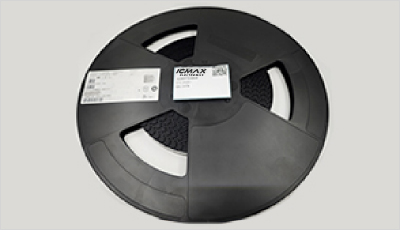
- Step1:Prepare product
-
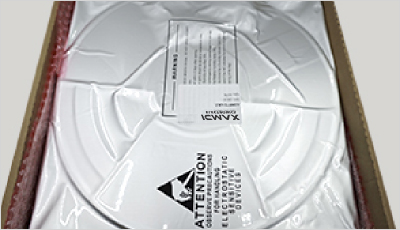
- Step2:Vacuum packaging
-
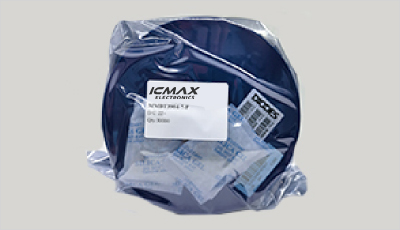
- Step3:Anti-static bag
-
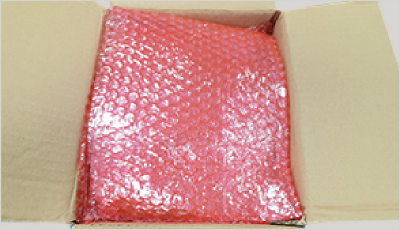
- Step4:Individual package
-
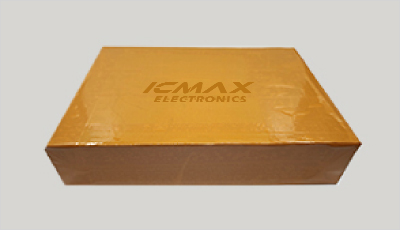
- Step5:Packaging box
-
- Step6:Barcode shipping label
Shipping starts at $40, but some countries will exceed $40. For example (South Africa, Brazil, India, Pakistan, Israel, etc.)
The basic freight (for package ≤0.5kg or corresponding volume) depends on the time zone and country.
Currently, our products are shipped through DHL, FedEx, SF, and UPS.
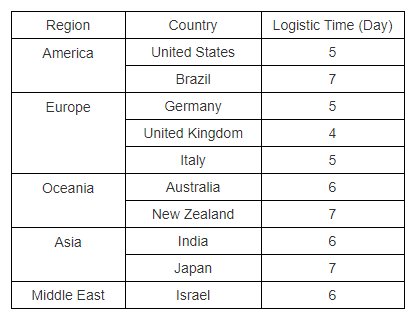
Delivery TimeOnce the goods are shipped, estimated delivery time depends on the shipping methods you chose:
FedEx International, 5-7 business days.
The following are some common countries' logistic time.
- Hot Sale
- Related Categories
- Include Parts
- Popular Search
The following parts include "1SMA5942BT3G" in Silicon Labs 1SMA5942BT3G.
- Part Number
- Manufacturer
- Package
- Description
- MMBZ5240B-7-F Diodes Incorporated DO-214AC, SMA DIODE ZENER 51V 1.5W SMA
- BZT52C5V6T-7 Diodes Incorporated DO-214AC, SMA DIODE ZENER 51V 1.5W SMA
- MMSZ5231B-7-F Diodes Incorporated DO-214AC, SMA DIODE ZENER 51V 1.5W SMA
- BZT52C15-7-F Diodes Incorporated DO-214AC, SMA DIODE ZENER 51V 1.5W SMA
- BZX84C3V3LT1G onsemi DO-214AC, SMA DIODE ZENER 51V 1.5W SMA
- MMSZ5245BS-7-F Diodes Incorporated DO-214AC, SMA DIODE ZENER 51V 1.5W SMA
- MMSZ4682T1G onsemi DO-214AC, SMA DIODE ZENER 51V 1.5W SMA
- BZT52C15S-7-F Diodes Incorporated DO-214AC, SMA DIODE ZENER 51V 1.5W SMA
- MM5Z5V1ST1G onsemi DO-214AC, SMA DIODE ZENER 51V 1.5W SMA
- SMAJ4744A-TP Micro Commercial Co DO-214AC, SMA DIODE ZENER 51V 1.5W SMA
The following parts are popular search parts in Test and Measurement.
Inventory:15,987
Please send an inquiry. Send us your inquiry, and we will respond immediately.

- 1500+ Daily average RFQ Volume

- 20,000.000 Standard Product Unit

- 1800+ Worldwide Manufacturers

- 15,000+ In-stock Warehouse