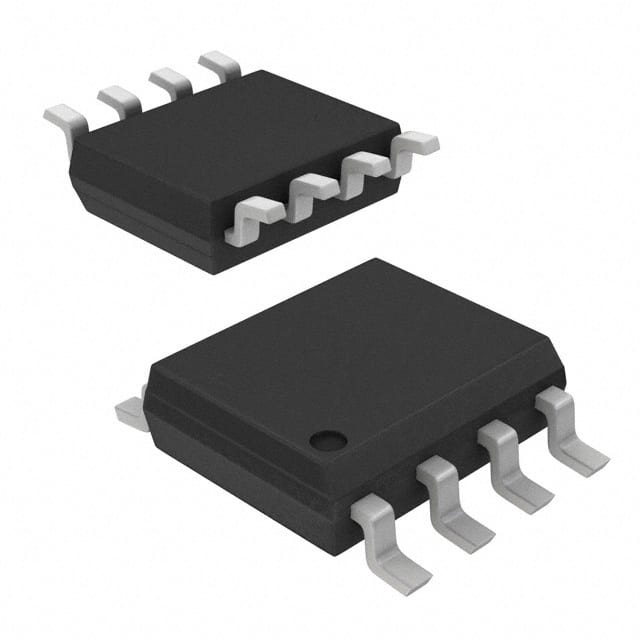
GigaDevice Semiconductor (HK) Limited GD25Q16CTIGR — 16Mbit (2MB) SPI NOR Flash, 120MHz Quad I/O, SOP-8 150mil (GigaDevice)

- Part No.:
- GD25Q16CTIGR — 16Mbit (2MB) SPI NOR Flash, 120MHz Quad I/O, SOP-8 150mil (GigaDevice)
- Manufacturer:
- GigaDevice Semiconductor (HK) Limited
- Category:
- Memory
- Package:
- 8-SOIC (0.154", 3.90mm Width)
- Datasheet:
-
 GD25Q16CTIGR — 16Mbit (2MB) SPI NOR Flash, 120MHz Quad I/O, SOP-8 150mil (GigaDevice).pdf
- Description:
- IC FLASH 16MBIT SPI/QUAD 8SOP
- Quantity:
-
Unit Price:$0
Ext Price:$0
- Payment:
-

- Shipping:
-


GD25Q16CTIGR — 16Mbit (2MB) SPI NOR Flash, 120MHz Quad I/O, SOP-8 150mil (GigaDevice) Information
- Specifications
- Product Details
- Comparison
- Tags
- Product attributes
- Attribute value
- Manufacturer:
- GigaDevice Semiconductor (HK) Limited
- Series:
- -
- Package/Case:
- 8-SOIC (0.154", 3.90mm Width)
- Packaging:
- Tape & Reel (TR)
- Product Status:
- Not For New Designs
- Programmable:
- Not Verified
- Memory Type:
- Non-Volatile
- Memory Format:
- FLASH
- Technology:
- FLASH - NOR
- Memory Size:
- 16Mbit
- Memory Organization:
- 2M x 8
- Memory Interface:
- SPI - Quad I/O
- Clock Frequency:
- 120 MHz
- Write Cycle Time - Word, Page:
- 50µs, 2.4ms
- Access Time:
- -
- Voltage - Supply:
- 2.7V ~ 3.6V
- Operating Temperature:
- -40°C ~ 85°C (TA)
- Grade:
- -
- Qualification:
- -
- Mounting Type:
- Surface Mount
- Supplier Device Package:
- 8-SOP
GD25Q16CTIGR — 16Mbit (2MB) SPI NOR Flash, 120MHz Quad I/O, SOP-8 150mil (GigaDevice)
The GD25Q16CTIGR is GigaDevice's 16Mbit SPI NOR Flash in an 8-pin SOP-8 150mil package. It delivers 120MHz Quad SPI reads with 100,000 program/erase cycles and 20-year data retention — the standard endurance numbers you expect from a NOR flash, at a price point that undercuts Winbond by a meaningful margin at volume. The GD25Q16C family is one of the most broadly deployed second-source SPI flash parts in the embedded world, with mainline Linux and U-Boot support going back years.
If you're designing an MCU board that needs firmware storage, a boot ROM for an SoC, or a configuration flash for an FPGA, the GD25Q16CTIGR is the practical choice. It's pin-compatible with the Winbond W25Q16, uses the same JEDEC command set, and supports SFDP for automatic parameter discovery. In the Shenzhen market, GD25Q series parts are frequently cross-shipped when Winbond is on allocation — and they won the Apple AirPods NOR flash socket, which tells you everything you need to know about GigaDevice's quality at scale.
What Are the Technical Specifications of GD25Q16CTIGR?
| Parameter | Value |
|---|---|
| Type | Serial NOR Flash Memory (Non-Volatile) |
| Package | SOP-8 150mil (3.90mm body width), surface mount |
| Memory Density | 16 Mbit (2M × 8 organization) |
| Interface | SPI — Standard / Dual / Quad I/O |
| Max Clock Frequency | 120 MHz (Quad SPI: up to 60MB/s equivalent throughput) |
| Supply Voltage (VCC) | 2.7V to 3.6V (3.3V nominal) |
| Active Read Current | 20mA max @ 120MHz Quad I/O |
| Standby Current | 5µA typ |
| Deep Power-Down Current | 1µA typ |
| Page Size | 256 bytes |
| Sector Size | 4KB (sub-sector) / 32KB / 64KB (block) |
| Page Program Time | 0.6ms typ / 2.4ms max |
| Sector Erase Time (4KB) | 45ms typ / 100ms max |
| Block Erase Time (64KB) | 150ms typ / 250ms max |
| Chip Erase Time | 8s typ / 15s max |
| Program/Erase Endurance | 100,000 cycles (minimum, per sector) |
| Data Retention | 20 years (typical) |
| Operating Temperature | -40°C to +85°C (Industrial) |
| JEDEC ID | 0xC84015 (Manufacturer: GigaDevice, Type: GD25Q16) |
| SFDP Support | Yes — JESD216B Serial Flash Discoverable Parameters |
| Packaging | Tape & reel, 3000 units/reel (R suffix) |
| Manufacturer | GigaDevice Semiconductor (Beijing, China — publicly listed, Apple supplier) |
GD25Q16CTIGR vs Winbond W25Q16JV — two 16Mbit 3.3V SPI NOR flashes, same SOP-8 footprint. Pin-compatible, command-compatible, SFDP-compatible. The differences are in the margins.
What these bars mean for your BOM: The Winbond is marginally faster on paper. In practice, most MCU SPI controllers top out at 50–80MHz anyway, so both parts are I/O-bound by the host, not the flash. The GigaDevice costs 20–30% less at volume for functionally equivalent performance. Unless your design pushes the flash to its absolute timing limits, the GD25Q16 is the better value.
When Should You Use (and NOT Use) the GD25Q16CTIGR?
✅ Use GD25Q16CTIGR when:
- Firmware storage for MCUs (STM32, ESP32, GD32, nRF52, RP2040). 2MB is the sweet spot for bootloader + application + OTA partition. The GD25Q16 has been shipping on ESP32 modules for years — it's the most battle-tested 16Mbit flash in the maker and commercial embedded ecosystem.
- Drop-in replacement for Winbond W25Q16 on a BOM cost-reduction pass. Same pinout (CS, SO, WP#, GND, SI, SCLK, HOLD#, VCC), same SOP-8 150mil footprint, same 3-byte addressing. Swap the part, re-run your SPI flash tests, and ship. The QE bit lives in Status Register-2 on both parts, so Quad I/O enable code doesn't change.
- FPGA configuration storage (Xilinx, Intel, Lattice). 16Mbit fits most small-to-mid FPGA bitstreams. The GD25Q16's 120MHz Quad SPI reads load an FPGA in tens of milliseconds. SFDP support means modern FPGA config tools auto-detect timing parameters.
- Linux-capable SoC boot flash (Allwinner, Rockchip, TI AM62x). At 16Mbit, you're safely within the 3-byte addressing range — no 4-byte mode warm-reset headaches. Room for U-Boot SPL + U-Boot + flattened device tree + a small recovery kernel.
❌ Don't use GD25Q16CTIGR when:
- You need more than 16Mbit. 2MB fills up fast if you're storing multiple firmware images, a Linux kernel, or asset data. Step up to GD25Q64ESIGR (64Mbit, same SOP-8, 4-byte addressing required) or W25Q128JVSIQ (128Mbit). Check if your boot ROM supports 4-byte addressing before crossing the 16MB boundary.
- Write speed is critical. The GD25Q16's 0.6ms page program is adequate for firmware updates but slow for data logging. Winbond's W25Q16JV (0.45ms/page) or Macronix MX25L1633F (0.33ms/page) are faster. If you need flash-as-RAM performance, look at OctaSPI/HyperBus parts.
- You're designing for 1.8V I/O. The GD25Q16CTIGR is 3.3V only. If your SoC's flash interface runs at 1.8V, you need a low-voltage variant like GD25LQ16C (1.8V, same density) or add a level translator.
- Automotive qualification is mandatory. The CTIGR suffix is industrial grade (-40 to +85°C). For AEC-Q100, look at GigaDevice's automotive GD25Q series or Winbond's W25Q16JV-IQ/AEC parts.
What Are the Alternatives to GD25Q16CTIGR?
| Model | Type | Key Difference | Best For |
|---|---|---|---|
| W25Q16JVSNIQ (Winbond) | SPI NOR Flash | 16Mbit, 133MHz, SOP-8, 0.45ms page program | Faster writes; Espressif-recommended, broadest ecosystem support |
| MX25L1633F (Macronix) | SPI NOR Flash | 16Mbit, 104MHz, SOP-8, 0.33ms page program | Fastest page writes; QE bit in Config Reg (check your code) |
| W25Q32JVSSIQ (Winbond) | SPI NOR Flash | 32Mbit, 133MHz, SOP-8, 3-byte addressing | Double the space, same package, still 3-byte safe |
| GD25Q64ESIGR (GigaDevice) | SPI NOR Flash | 64Mbit, 133MHz, SOP-8, 4-byte addressing | Quadruple density; requires 4-byte addressing support |
| AT25SF161 (Renesas/Adesto) | SPI NOR Flash | 16Mbit, 104MHz, SOP-8, ultra-low power | Battery-powered designs; 1µA deep power-down |
GD25Q16 vs W25Q16 — the decision in two sentences. If you need the absolute fastest writes and broadest toolchain support, pay the premium for Winbond. If you want functionally equivalent performance at a lower BOM cost and you're not pushing the timing margins, the GigaDevice is the smarter buy. Thousands of commercial products ship with GD25Q parts — this isn't a risky second-source, it's a proven alternative.
What Are the Typical Applications of GD25Q16CTIGR?
MCU firmware storage (STM32, ESP32, GD32, nRF52). The GD25Q16 holds your bootloader at 0x000000, your application at 0x001000, and an OTA update partition in the upper megabyte. At 120MHz Quad SPI, code executes directly from flash via XIP with no copy-to-RAM step needed for most instruction fetch rates. The 4KB sub-sector erase granularity means you can update the bootloader without touching the application.
FPGA bitstream storage. A 16Mbit flash comfortably stores a Xilinx Artix-7 or Intel Cyclone IV bitstream with room for a golden/recovery image. The GD25Q16's SFDP table tells the FPGA config controller exactly what timing to use, so configuration Just Works without manual timing parameter tweaking. Use Quad I/O reads to cut configuration time by ~4× versus standard SPI.
Embedded Linux boot flash (U-Boot + DTB + small kernel). At 2MB, you can fit U-Boot SPL (~32KB) + U-Boot proper (~500KB) + a flattened device tree (~50KB) + a recovery Linux kernel (~1.2MB stripped). For any Linux system that boots its real rootfs from eMMC or SD card, 16Mbit is plenty for the boot chain. Staying at 16Mbit avoids the 4-byte addressing warm-reset bug that has burned SoC designers on TI AM62x, Rockchip, and Allwinner platforms.
IoT sensor node parameter storage. If your device wakes up, reads calibration data from flash, takes a measurement, and goes back to sleep, the GD25Q16's 5µA standby and 1µA deep power-down currents matter. The 100K erase cycle endurance means you can write new calibration data daily for 270 years before wearing out a sector.
Why Buy GD25Q16CTIGR from ICMASS?
We stock the GD25Q16C alongside Winbond W25Q16JV and Macronix MX25L1633F. If your BOM specifies Winbond but lead times are at 26 weeks and your production line is idling, we can cross-ship GigaDevice parts that drop into the same footprint, pass the same SPI flash test suite, and keep your line moving. We'll help you run the qualification before you commit to a full reel.
We know the pitfalls. The QE bit is in Status Register-2 on both GD and Winbond parts — but on Macronix it's in the Configuration Register. If you're cross-shipping between brands, we'll flag the register differences before you discover them at 2am in the lab. We've seen every SPI flash bring-up issue and can save you the debugging time.
Tape & reel, 3000 pcs, ready for pick-and-place. The R suffix means tape & reel packaging. If you need tube packaging for prototyping, ask for the non-R GD25Q16CTIG variant. Same silicon, different feed format.
Frequently Asked Questions
Q1: Is the GD25Q16CTIGR a drop-in replacement for the Winbond W25Q16?
A: Yes, in most designs. Same SOP-8 150mil pinout, same 3.3V supply, same JEDEC command set, same SFDP support. The QE (Quad Enable) bit is in Status Register-2 on both parts, so Quad I/O code works without modification. The one difference: GD25Q16CTIGR max clock is 120MHz vs W25Q16JV's 133MHz. If your SPI controller runs at 80MHz or below (which most MCUs do), you won't notice. Always verify with your flash test suite after swapping.
Q2: Does the GD25Q16CTIGR support over-the-air (OTA) firmware updates?
A: Yes. With 16Mbit, you can partition the flash into bootloader (64KB), application A (768KB), application B (768KB), and a small parameter block (128KB) for OTA state tracking. The 4KB sub-sector erase lets you update the bootloader or parameter block independently. The 100K cycle endurance handles daily OTA updates for the life of the product.
Q3: What is the difference between GD25Q16C, GD25Q16E, and GD25Q16CTIGR specifically?
A: The GD25Q16C is GigaDevice's cost-optimized series (120MHz, SOP-8 150mil). GD25Q16E is the enhanced series (133MHz, available in smaller packages like USON8 3×2mm and WSON 6×5mm). CTIGR specifies: C-series, Industrial temp (-40 to +85°C), SOP-8 150mil (IG), Tape & Reel (R). The silicon inside a GD25Q16C and GD25Q16E is very similar — the E-series mainly adds higher clock and smaller package options.
Q4: Can I use GD25Q16CTIGR for an ESP32 module?
A: Yes — GigaDevice SPI flash has shipped on ESP32 modules for years. ESP-IDF has built-in support. The ESP32's SPI controller runs at 80MHz max, so the GD25Q16C's 120MHz ceiling is irrelevant — you're host-limited. Use the standard ESP-IDF flash configuration, set the mode to QIO, and it works.
Q5: Why does my boot ROM return JEDEC ID 0x00 0x00 0x00?
A: This is almost never a bad flash chip. Common causes: (1) SPI mode mismatch between controller and flash, (2) missing pull-up resistors on CS# (pin 1) and HOLD# (pin 7) — these pins float during power-up before the MCU configures its GPIOs, (3) MCU MOSI connected to flash MOSI instead of SI — verify cross-connection: MCU MOSI → Flash SI (pin 5), MCU MISO → Flash SO (pin 2), (4) hardware short between adjacent SOP-8 pins. Check these before swapping the flash.
Q6: Does GD25Q16CTIGR support SFDP?
A: Yes, JESD216B compliant. Send command 0x5A with a 3-byte address and the flash returns a standardized parameter table describing density, timing, voltage, and supported commands. Modern flash drivers in Linux (spi-nor), U-Boot, and Zephyr RTOS use SFDP to auto-configure — you don't need to hardcode timing parameters for each flash model.
Q7: What is the minimum erase size on GD25Q16CTIGR?
A: 4KB sub-sector erase. The flash supports three erase granularities: 4KB sub-sector (command 0x20, 45ms typ), 32KB half-block (command 0x52, 100ms typ), and 64KB block (command 0xD8, 150ms typ). The 4KB erase is essential for OTA firmware updates — you can erase just the pages you're about to program, rather than wiping a whole 64KB block.
Q8: How do I enable Quad I/O mode on the GD25Q16CTIGR?
A: Set the QE bit (bit 9) in Status Register-2. Write Enable (0x06), then Write Status Register-2 (0x31) with bit 9 = 1. The QE bit is non-volatile — set it once during production programming and it persists across power cycles. Same procedure as Winbond W25Q series. Verify with Read Status Register-2 (0x35).
Q9: Is GigaDevice a reliable NOR Flash supplier?
A: Yes, at the highest levels. GigaDevice is a publicly listed semiconductor company (Shanghai Stock Exchange: 603986) and the #3 NOR Flash supplier globally behind Winbond and Macronix. They won the NOR flash socket in Apple AirPods — a design win that requires passing Apple's supplier qualification, which is among the most demanding in the industry. For consumer, industrial, and IoT applications, GigaDevice is a proven, de-risked choice.
Q10: Can I program the GD25Q16CTIGR in-circuit after assembly?
A: Yes — ISP (In-System Programming) via the SPI bus is the standard workflow. Most MCU debug probes (J-Link, ST-Link, CMSIS-DAP) can program external SPI flash through the MCU's debug interface. For production, use a bed-of-nails fixture with pogo pins on the SPI test points, or program the flash before assembly using a gang programmer in the SOP-8 socket. The GD25Q16C is supported by all major production programmers (Xeltek, Elnec, Dediprog).
Related Products
- W25Q16JVSNIQ — 16Mbit SPI NOR Flash, 133MHz, SOP-8 (Winbond)
- GD25Q64ESIGR — 64Mbit SPI NOR Flash, 133MHz, SOP-8 (GigaDevice)
- W25Q32JVSSIQ — 32Mbit SPI NOR Flash, 133MHz, SOP-8 (Winbond)
- W25Q32 vs W25Q64 — SPI NOR Flash Density Comparison
- MX25L1633F — 16Mbit SPI NOR Flash, 104MHz, SOP-8 (Macronix)
- GD25Q16 vs W25Q16 vs MX25L16 — Full Comparison Guide
| Image |
|
| Part Number | GD25Q16CTIGR — 16Mbit (2MB) SPI NOR Flash, 120MHz Quad I/O, SOP-8 150mil (GigaDevice) |
| Manufacturer | GigaDevice Semiconductor (HK) Limited |
| Series | - |
| Package/Case | 8-SOIC (0.154", 3.90mm Width) |
| Packaging | Tape & Reel (TR) |
| Product Status | Not For New Designs |
| Programmable | Not Verified |
| Memory Type | Non-Volatile |
| Memory Format | FLASH |
| Technology | FLASH - NOR |
| Memory Size | 16Mbit |
| Memory Organization | 2M x 8 |
| Memory Interface | SPI - Quad I/O |
| Clock Frequency | 120 MHz |
| Write Cycle Time - Word, Page | 50µs, 2.4ms |
| Access Time | - |
| Voltage - Supply | 2.7V ~ 3.6V |
| Operating Temperature | -40°C ~ 85°C (TA) |
| Grade | - |
| Qualification | - |
| Mounting Type | Surface Mount |
| Supplier Device Package | 8-SOP |
User Guide
- Purchase & Inquiry
- Package
- Shipping Information
- Customer Review
You may place an order without registering to IC-MAX.COM
We strongly suggest you sign in before purchasing as you can track your order in real time.
For your convenience, we accept multiple payment methods in USD, including PayPal, Credit Card, and wire transfer.
RFQ (Request for Quotations)
It is recommended to request for quotations to get the latest prices and inventories about the part.
Our sales will reply to your request by email within 24 hours.
1. You'll receive an order information email in your inbox. (Please remember to check the spam folder if you didn't hear from us).
2. Since inventories and prices may fluctuate to some extent, the sales manager is going to reconfirm the order and let you know if there are any updates.
-
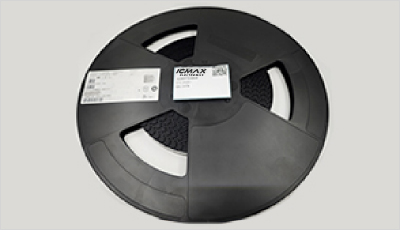
- Step1:Prepare product
-
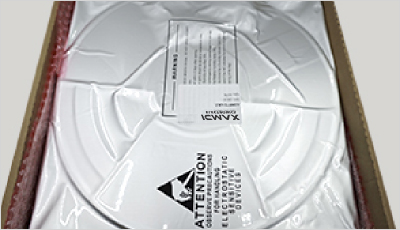
- Step2:Vacuum packaging
-
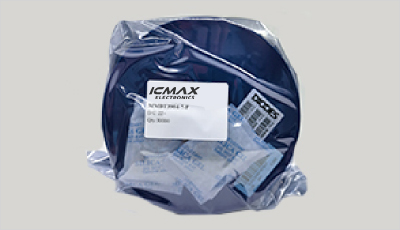
- Step3:Anti-static bag
-
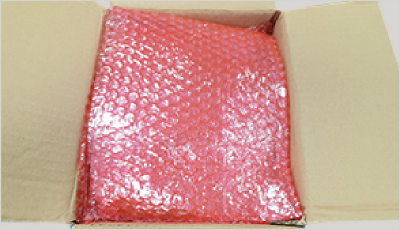
- Step4:Individual package
-
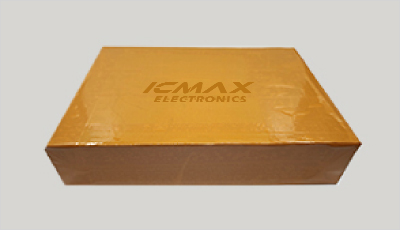
- Step5:Packaging box
-
- Step6:Barcode shipping label
Shipping starts at $40, but some countries will exceed $40. For example (South Africa, Brazil, India, Pakistan, Israel, etc.)
The basic freight (for package ≤0.5kg or corresponding volume) depends on the time zone and country.
Currently, our products are shipped through DHL, FedEx, SF, and UPS.
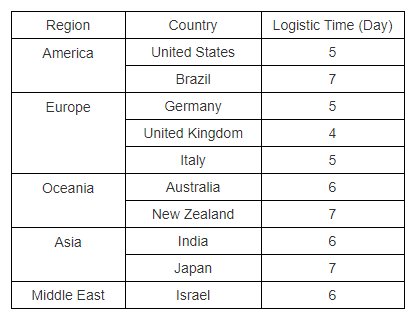
Delivery TimeOnce the goods are shipped, estimated delivery time depends on the shipping methods you chose:
FedEx International, 5-7 business days.
The following are some common countries' logistic time.
- Hot Sale
- Related Categories
- Include Parts
- Popular Search
The following parts include "GD25Q16CTIGR — 16Mbit (2MB) SPI NOR Flash, 120MHz Quad I/O, SOP-8 150mil (GigaDevice)" in Silicon Labs GD25Q16CTIGR — 16Mbit (2MB) SPI NOR Flash, 120MHz Quad I/O, SOP-8 150mil (GigaDevice).
- Part Number
- Manufacturer
- Package
- Description
- M24C02-WMN6TP STMicroelectronics 8-SOIC (0.154", 3.90mm Width) IC FLASH 16MBIT SPI/QUAD 8SOP
- AT24C02C-XHM-T Microchip Technology 8-SOIC (0.154", 3.90mm Width) IC FLASH 16MBIT SPI/QUAD 8SOP
- AT21CS01-STUM10-T Microchip Technology 8-SOIC (0.154", 3.90mm Width) IC FLASH 16MBIT SPI/QUAD 8SOP
- AT24C02C-SSHM-T Microchip Technology 8-SOIC (0.154", 3.90mm Width) IC FLASH 16MBIT SPI/QUAD 8SOP
- 24LC01BT-I/OT Microchip Technology 8-SOIC (0.154", 3.90mm Width) IC FLASH 16MBIT SPI/QUAD 8SOP
- M24C02-FMC6TG STMicroelectronics 8-SOIC (0.154", 3.90mm Width) IC FLASH 16MBIT SPI/QUAD 8SOP
- AT24CS02-SSHM-T Microchip Technology 8-SOIC (0.154", 3.90mm Width) IC FLASH 16MBIT SPI/QUAD 8SOP
- 93LC46BT-I/OT Microchip Technology 8-SOIC (0.154", 3.90mm Width) IC FLASH 16MBIT SPI/QUAD 8SOP
- AT24C04C-SSHM-T Microchip Technology 8-SOIC (0.154", 3.90mm Width) IC FLASH 16MBIT SPI/QUAD 8SOP
- 24LC01BT-I/SN Microchip Technology 8-SOIC (0.154", 3.90mm Width) IC FLASH 16MBIT SPI/QUAD 8SOP
The following parts are popular search parts in Test and Measurement.
Inventory:118,146
Please send an inquiry. Send us your inquiry, and we will respond immediately.

- 1500+ Daily average RFQ Volume

- 20,000.000 Standard Product Unit

- 1800+ Worldwide Manufacturers

- 15,000+ In-stock Warehouse