ICMASS XL6009

- Part No.:
- XL6009
- Manufacturer:
- ICMASS
- Package:
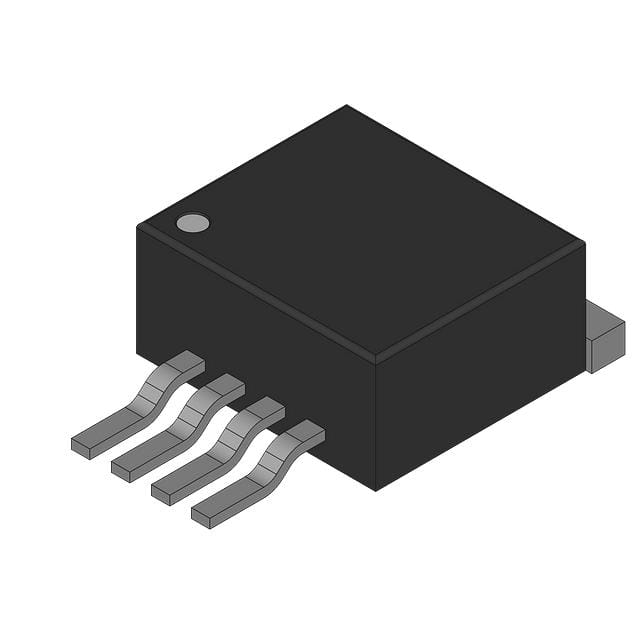
- TO-263-5L, D2PAK (5 Leads + Tab), TO-263BA
- Description:
- IC REG BUCK ADJ 3A TO263-5L
- Quantity:
-
Unit Price:$0
Ext Price:$0
- Payment:
-

- Shipping:
-


XL6009 Information
- Specifications
- Product Details
- Comparison
- Tags
- Product attributes
- Attribute value
- Manufacturer:
- ICMASS
- Series:
- XL6009
- Package/Case:
- TO-263-5L, D2PAK (5 Leads + Tab), TO-263BA
- Packaging:
- Tape & Reel (TR)
- Product Status:
- Active
- Function:
- Step-Down
- Output Configuration:
- Positive
- Topology:
- Buck
- Output Type:
- Adjustable
- Number of Outputs:
- 1
- Voltage - Input (Min):
- -
- Voltage - Input (Max):
- 40V
- Voltage - Output (Min/Fixed):
- 1.2V
- Voltage - Output (Max):
- 37V
- Current - Output:
- 3A
- Frequency - Switching:
- 150kHz
- Synchronous Rectifier:
- No
- Operating Temperature:
- -40°C ~ 125°C (TA)
- Grade:
- -
- Qualification:
- -
- Mounting Type:
- Surface Mount
- Supplier Device Package:
- TO-263-5L
XL6009 — 400kHz Boost/Buck-Boost/Inverting DC-DC Converter from XLSEMI
The XL6009 is a 400kHz fixed-frequency, current-mode DC-DC converter with an internal 4A/60V MOSFET switch. It does boost, buck-boost (SEPIC), and inverting topologies — one chip, three configurations. Input range is 5V to 32V, feedback reference is 1.25V, and peak efficiency hits 94%.
The TO263-5L package is large enough to hand-solder and dissipates heat better than a QFN. You've probably got a blue XL6009 module board in a drawer somewhere — it's the default adjustable boost converter for makers, industrial equipment, and automotive aftermarket. Just keep in mind the realistic continuous output is 1–2A, not the 4A switch limit stamped on the listing. We'll get into why in the FAQ.
What Are the Technical Specifications of XL6009?
| Parameter | Value |
|---|---|
| Manufacturer | XLSEMI |
| Topology | Boost, Buck-Boost (SEPIC), Inverting |
| Input Voltage Range | 5V to 32V |
| Feedback Reference Voltage | 1.25V |
| Switching Frequency | 400kHz typ (320–480kHz) |
| Internal Switch Current Limit | 4A |
| Internal MOSFET RDS(on) | ~110mΩ |
| Max Switch Pin Voltage | 60V |
| Max Duty Cycle | 90% |
| Peak Efficiency | 94% (92% typ at 12V→18.5V/2A) |
| Quiescent Current | 2.5mA typ (switching, no load) |
| Standby Current (EN low) | 70µA typ |
| EN Pin Threshold | ON >1.4V / OFF <0.8V (TTL-compatible) |
| Built-in Protections | Soft-start, current limit, thermal shutdown, SW OVP |
| Package | TO263-5L (10.2mm × 8.9mm) |
| Thermal Resistance (RθJA) | 30°C/W (free air) |
| Operating Junction Temp | –40°C to +125°C |
Key numbers that matter: The 1.25V feedback reference is what you set the output with: Vout = 1.25 × (1 + R2/R1). The 400kHz switching frequency hits a sweet spot — fast enough for compact inductors, slow enough that layout isn't critical. The 110mΩ RDS(on) means at 2A switch current, conduction losses are only about 440mW — manageable in the TO263 package. And the 90% max duty cycle means you can boost from 5V to about 48V before running out of duty cycle headroom.
What Are the Alternatives to XL6009?
| Model | Manufacturer | Key Difference | Best For |
|---|---|---|---|
| XL6019 | XLSEMI | 5A switch, 220kHz, 5V–40V input, native buck-boost | Higher power, direct upgrade |
| MT3608 | Aerosemi | 1.2MHz, 4A switch, SOT-23-6, 2V–24V input | Compact battery-powered |
| LM2577 | TI / onsemi | 52kHz, 3A switch, legacy TO-263 | Legacy LM2577 replacement |
| TPS61088 | Texas Instruments | 10A switch, 1MHz, built-in OVP/OCP/OTP | High-reliability, high-power |
| MC34063A | Multiple | Very old, external MOSFET above 1.5A | Ultra-low-cost, simple |
| FP6291 | Feeling Technology | 1MHz, 2A, SOT-23-6 | MT3608 alternative |
XL6009 vs XL6019 — which one? The XL6019 is the direct successor from XLSEMI. Switch current goes from 4A to 5A, input range extends to 40V, and — most importantly — it supports buck-boost mode natively for automotive applications where the input can be above or below the output. The trade-off: switching frequency drops to 220kHz, so your inductor and capacitors will be physically larger. Same TO263-5L pinout, though — if you're spinning a new high-power design, pick the XL6019. For existing XL6009 BOMs, stick with it unless you're re-qualifying.
XL6009 vs MT3608 — high power or compact? The MT3608 switches at 1.2MHz — three times faster — so your inductor and capacitors can be tiny. And it runs from 2V input, so a single Li-Ion cell can boost to 5V or 12V directly. But here's the catch: the MT3608's realistic continuous current is about 1A, and the tiny SOT-23-6 can't dissipate much heat. The XL6009's TO263-5L handles 2A continuous with just PCB copper pour — no heatsink needed. Pick the MT3608 for sub-5W battery boosters. Pick the XL6009 for anything above 1A or when you need SEPIC/inverting modes.
How Much Does XL6009 Cost and Is It in Stock?
| Quantity | XL6009E1 IC (per unit) | XL6009 Module (per unit) |
|---|---|---|
| 1–49 | $0.40–$0.60 | $0.80–$1.50 |
| 50–999 | $0.25–$0.40 | $0.50–$0.80 |
| 1,000–4,999 | $0.18–$0.25 | — |
| 5,000+ (full reel) | $0.12–$0.18 | — |
The XL6009 is one of the most popular boost converter ICs on the market. Global inventory is deep across all distributor channels. The bare IC (TO263-5L, tape & reel) and pre-built modules (with inductor, Schottky diode, and trim pot) are both widely stocked. No allocation risk. Lead time for ICs: 2–5 business days. Modules: same-day from stock. Contact us for a same-day quote.
What Are the Typical Applications of XL6009?
Adjustable Boost Power Supply: The classic application. 12V in, adjustable output up to about 35V. Set Vout with two resistors: Vout = 1.25 × (1 + R2/R1). The pre-built modules use a trim pot for R2, giving you a screwdriver-adjustable output from roughly 5V to 35V. Add a voltmeter display and you've got a lab bench boost supply for under two dollars in parts.
Automotive Voltage Adapter: 12V car battery to 19V laptop charger. Or 12V to 24V for industrial sensors. The XL6009 handles the 12–14.6V automotive voltage range comfortably, and the EN pin lets you shut it down with the ignition. One caution: automotive load dumps can spike to 40V+, which exceeds the 32V input limit. Add a TVS clamp on the input.
SEPIC Buck-Boost (Wide Input Range): With two inductors and a coupling capacitor, the XL6009 becomes a SEPIC converter — it can buck or boost, so the output stays regulated even when the input crosses through the output voltage. A 5–32V input with a stable 12V output, for example. This is especially useful for battery-powered equipment where the battery starts above 12V and discharges below it. Per the XLSEMI datasheet, the SEPIC application circuit is fully characterized.
LED Driver (Constant Current): By sensing current instead of voltage on the feedback pin, the XL6009 becomes a constant-current LED driver. A current-sense resistor in the LED string return path generates 1.25V at the desired current. Good for driving 10–30W LED arrays from 12V or 24V. Efficiency stays above 90%. This is a common DIY and maker application — you'll find schematics on basically every electronics forum.
Inverting Power Supply: Need −12V from a +5V rail for an op-amp or LCD bias? The XL6009 does inverting mode. The inductor, diode, and output capacitor get rearranged so the output voltage is negative relative to ground. Same feedback formula: |Vout| = 1.25 × (1 + R2/R1). Per the datasheet, efficiency in inverting mode is about 5–8% lower than boost mode because the switch sees Vin + |Vout|.
Why Buy XL6009 from ICMASS?
Genuine XLSEMI parts from authorized distribution. Every IC with full lot code traceability, factory-sealed tape & reel. Counterfeit XL6009s exist in the market — they use a smaller die with higher RDS(on) and lower current limit. Ours are direct from XLSEMI.
Shenzhen warehouse, same-day shipping. Orders before 15:00 CST ship same day. Next-day delivery to Shenzhen/Guangzhou. 2–3 days rest of China. International via DHL/FedEx: 5–10 days.
BOM consolidation. Alongside the XL6009, we stock the Schottky diodes (SS34, 1N5822), power inductors, and electrolytic capacitors you need to complete the circuit. One order, one shipment, one invoice.
Application support included. XL6009, XL6019, or MT3608? Tell us your input voltage, output voltage, and current requirements — we'll recommend the right chip and the supporting passives.
Frequently Asked Questions About XL6009
Q1: Why is my XL6009 output unstable or oscillating under load?
A: This is the #1 problem, and it's almost always the capacitors. The stock electrolytics on cheap modules have high ESR. Add a 220–470µF low-ESR electrolytic and a 0.1µF ceramic capacitor across both the input and output terminals. Keep the wires short and thick — input-side voltage drop makes the converter hunt for the right duty cycle. If your input power supply is weak, add a large input bulk capacitor (2,200µF+). Boost converters draw high peak currents from the input. Confirmed across dozens of threads on EEVblog, DIYAudio, and Electroda.
Q2: Why is my XL6009 overheating?
A: Three things to check. First, the Schottky diode — the SMD SS34 on most modules is undersized above 1A. Upgrade to a through-hole MBR745 or 1N5822 and give it airflow. Second, the inductor — cheap unshielded drum cores saturate around 1–1.5A and become resistive heaters. Replace with a quality shielded ferrite core rated for ≥4A saturation. Third, the IC itself: the TO263-5L tab dissipates about 2W in free air. Above that, add a small heatsink or fan. And calibrate your expectations: these modules realistically deliver 1–2A continuous, not 4A.
Q3: Why does my XL6009 output spike to 40V+ when the input voltage drops?
A: This is a known dangerous behavior. When the input drops below about 3.5V, the IC's internal reference loses regulation and the duty cycle goes to maximum — the output can spike to 2–3× the set voltage, destroying whatever downstream electronics you've connected. If you're powering from a battery that discharges, add an undervoltage lockout (UVLO) to disconnect the input below 5V. For solar panels: the XL6009 is a bad choice, period. As the panel voltage sags, the converter pulls more current, which sags the panel further — a destructive feedback loop. Always add a Zener clamp on the output as the last line of defense.
Q4: Why won't my XL6009 start when a load is already connected?
A: Boost converters draw a large inrush at startup because the output capacitor needs to charge from zero to the regulation voltage. If your input supply can't deliver that surge — common with USB ports and small wall adapters — the converter enters a start-stop loop. Fixes: add a larger input capacitor (2,200–22,000µF), use a stronger input supply, or connect the load after the output is stable. The XL6009's soft-start helps but isn't strong enough for heavy loads.
Q5: How do I set the output voltage on an XL6009 module?
A: Turn the trim pot. Clockwise = higher voltage. The formula: Vout = 1.25 × (1 + R2/R1), where R1 is the fixed resistor (usually 1kΩ on modules) and R2 is the pot plus series resistor. Hook up a multimeter to the output, turn slowly, and never adjust with a load connected — the transient can overshoot. Most modules ship set to about 12V. The pot geometry means the voltage changes faster at the upper end of the range, so go slowly as you approach the target.
Q6: What is the realistic maximum current I can get from XL6009?
A: The "4A" on the listing is switch current, not output current. In boost mode: Iout = Iswitch × (Vin/Vout) × efficiency. For 12V to 24V at 85% efficiency: 4 × (12/24) × 0.85 = about 1.7A — at the absolute limit, with no thermal margin. For continuous operation in free air with no heatsink, aim for 1–1.5A. For 2A continuous, add a heatsink to the TO263 tab. For 3A+, use the XL6019 instead.
Q7: My module is dead - no output at all. How do I diagnose it?
A: Three quick multimeter tests. (1) Check the Schottky diode in diode mode: forward should read 0.3–0.5V, reverse should be OL. A shorted diode is the most common failure. (2) Measure inductor resistance: should be under 0.5Ω. Open = broken coil. Near 0Ω with no inductance = shorted turns. (3) Power up with no load and check the SW pin with a scope or frequency counter — should see 400kHz switching. No switching = dead IC. If Vout equals Vin (no boost), the internal MOSFET has failed short. Replace the module.
Q8: Can I use XL6009 to charge a battery?
A: You can, but you shouldn't without a proper charge controller. The XL6009 is a voltage regulator — not a CC/CV charger. If you set it to the battery's float voltage, the initial charging current is limited only by your input supply and inductor saturation — you can easily pump 3A+ into a discharged battery. For lead-acid, add a current-limiting circuit on the feedback pin. For Li-Ion, use a dedicated charger IC like the TP4056. An XL6009 with no current limiting plus a Li-Ion battery equals a fire waiting to happen.
Q9: What's the difference between XL6009E1 and XL6009TRE1?
A: Same silicon, different packaging. E1 = RoHS lead-free, in tubes (50 units per tube). TRE1 = lead-free, tape & reel (800 units per reel). The E1 suffix means RoHS compliant — the non-E1 parts are the older leaded version and are essentially gone from the market. For hand assembly, buy the tube version. For pick-and-place, get the tape & reel.
Q10: How do I reduce switching noise and EMI from my XL6009 circuit?
A: Start with a shielded inductor — unshielded drum cores radiate like antennas at 400kHz. Add a 0.1µF ceramic capacitor directly across SW and GND, as close as physically possible. Keep the SW node trace short and wide — it swings from 0 to Vout at 400kHz with fast edges. For EMC compliance, add an LC filter on the input and a ferrite bead on the output. The TO263 package's tab makes a good thermal connection to a ground plane, which also helps with EMI by reducing loop area.
Q11: Can I parallel two XL6009s for more current?
A: Don't. The XL6009 has no synchronization pin, no current-sharing circuit, and no way to phase-lock two converters. Two independent oscillators running at slightly different frequencies (the tolerance is 320–480kHz) will beat against each other and create low-frequency ripple that no output capacitor can filter. If you need more current, use a single higher-power IC — the XL6019 delivers 5A with the same footprint and design effort.
Q12: XL6009 vs XL6019 - is it worth the upgrade?
A: For new designs: yes. 5A switch current, 40V input range, and native buck-boost with the same TO263-5L footprint. The lower 220kHz switching frequency means your inductor and caps will be slightly larger, but the extra amp of output current and the ability to handle automotive input transients more than make up for it. For existing BOMs: stick with the XL6009 unless you're re-spinning the PCB. The pinout's the same, but the feedback compensation network may need tweaking because of the different switching frequency.
Internal Links
| Image |
|
| Part Number | XL6009 |
| Manufacturer | ICMASS |
| Series | XL6009 |
| Package/Case | TO-263-5L, D2PAK (5 Leads + Tab), TO-263BA |
| Packaging | Tape & Reel (TR) |
| Product Status | Active |
| Function | Step-Down |
| Output Configuration | Positive |
| Topology | Buck |
| Output Type | Adjustable |
| Number of Outputs | 1 |
| Voltage - Input (Min) | - |
| Voltage - Input (Max) | 40V |
| Voltage - Output (Min/Fixed) | 1.2V |
| Voltage - Output (Max) | 37V |
| Current - Output | 3A |
| Frequency - Switching | 150kHz |
| Synchronous Rectifier | No |
| Operating Temperature | -40°C ~ 125°C (TA) |
| Grade | - |
| Qualification | - |
| Mounting Type | Surface Mount |
| Supplier Device Package | TO-263-5L |
User Guide
- Purchase & Inquiry
- Package
- Shipping Information
- Customer Review
You may place an order without registering to IC-MAX.COM
We strongly suggest you sign in before purchasing as you can track your order in real time.
For your convenience, we accept multiple payment methods in USD, including PayPal, Credit Card, and wire transfer.
RFQ (Request for Quotations)
It is recommended to request for quotations to get the latest prices and inventories about the part.
Our sales will reply to your request by email within 24 hours.
1. You'll receive an order information email in your inbox. (Please remember to check the spam folder if you didn't hear from us).
2. Since inventories and prices may fluctuate to some extent, the sales manager is going to reconfirm the order and let you know if there are any updates.
-
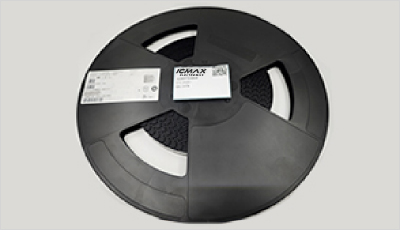
- Step1:Prepare product
-
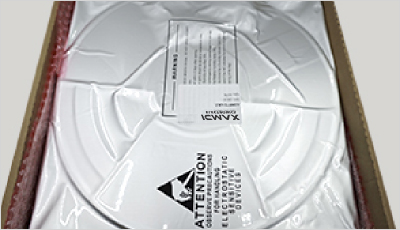
- Step2:Vacuum packaging
-
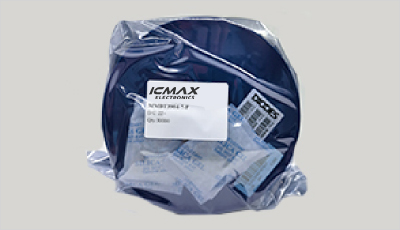
- Step3:Anti-static bag
-

- Step4:Individual package
-
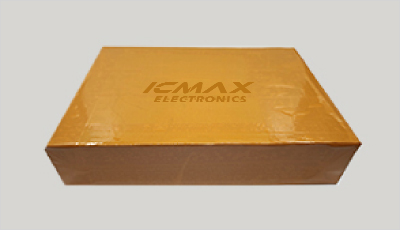
- Step5:Packaging box
-
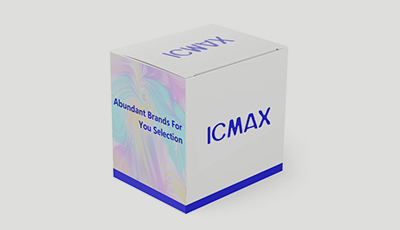
- Step6:Barcode shipping label
Shipping starts at $40, but some countries will exceed $40. For example (South Africa, Brazil, India, Pakistan, Israel, etc.)
The basic freight (for package ≤0.5kg or corresponding volume) depends on the time zone and country.
Currently, our products are shipped through DHL, FedEx, SF, and UPS.
Delivery TimeOnce the goods are shipped, estimated delivery time depends on the shipping methods you chose:
FedEx International, 5-7 business days.
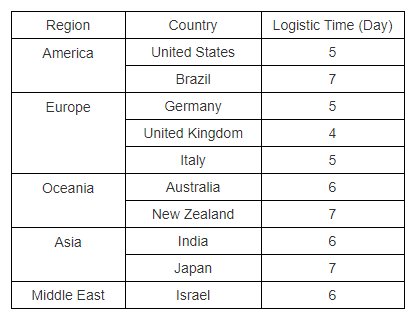
The following are some common countries' logistic time.
- Hot Sale
- Related Categories
- Include Parts
- Popular Search
- Voltage Regulators - Linear, Low Drop Out (LDO) Regulators(66836)
- Voltage Regulators - Linear Regulator Controllers(325)
- Voltage Regulators - Linear + Switching(1473)
- Voltage Regulators - DC DC Switching Regulators(35756)
- Voltage Reference(8428)
- V/F and F/V Converters(139)
- Thermal Management(515)
- Supervisors(41287)
- Special Purpose Regulators(4820)
- RMS to DC Converters(144)
The following parts include "XL6009" in Silicon Labs XL6009.
- Part Number
- Manufacturer
- Package
- Description
- TPS562201DDCR Texas Instruments TO-263-5L, D2PAK (5 Leads + Tab), TO-263BA IC REG BUCK ADJ 3A TO263-5L
- MC34063ABD-TR STMicroelectronics TO-263-5L, D2PAK (5 Leads + Tab), TO-263BA IC REG BUCK ADJ 3A TO263-5L
- TPS561201DDCR Texas Instruments TO-263-5L, D2PAK (5 Leads + Tab), TO-263BA IC REG BUCK ADJ 3A TO263-5L
- MC33063ADR Texas Instruments TO-263-5L, D2PAK (5 Leads + Tab), TO-263BA IC REG BUCK ADJ 3A TO263-5L
- MC34063ADR Texas Instruments TO-263-5L, D2PAK (5 Leads + Tab), TO-263BA IC REG BUCK ADJ 3A TO263-5L
- TPS560200DBVR Texas Instruments TO-263-5L, D2PAK (5 Leads + Tab), TO-263BA IC REG BUCK ADJ 3A TO263-5L
- AP3012KTR-G1 Diodes Incorporated TO-263-5L, D2PAK (5 Leads + Tab), TO-263BA IC REG BUCK ADJ 3A TO263-5L
- TLV61048DBVR Texas Instruments TO-263-5L, D2PAK (5 Leads + Tab), TO-263BA IC REG BUCK ADJ 3A TO263-5L
- AZ34063UMTR-G1 Diodes Incorporated TO-263-5L, D2PAK (5 Leads + Tab), TO-263BA IC REG BUCK ADJ 3A TO263-5L
- TPS562200DDCR Texas Instruments TO-263-5L, D2PAK (5 Leads + Tab), TO-263BA IC REG BUCK ADJ 3A TO263-5L
The following parts are popular search parts in Test and Measurement.
Inventory:1,486
Please send an inquiry. Send us your inquiry, and we will respond immediately.

- 1500+ Daily average RFQ Volume

- 20,000.000 Standard Product Unit

- 1800+ Worldwide Manufacturers

- 15,000+ In-stock Warehouse