MURA220T3G vs MURA140T3G vs MURA260T3G — Which ON Semi Ultrafast SMA Rectifier Should You Pick?
MURA220T3G vs MURA140T3G vs MURA260T3G — Which ON Semi Ultrafast SMA Rectifier Should You Pick?
All three are ON Semiconductor ultrafast recovery rectifiers in the same SMA package. They share the same glass-passivated silicon technology, the same AEC-Q101 qualification, and the same pinout. But they cover three different voltage classes, and picking the wrong one means either a diode that fails on the first line surge, or a diode that runs hotter than it needs to for no reason.
- Need the fastest switching and lowest VF, and your reverse voltage is under 200V? → MURA220T3G. 35ns recovery, 0.95V VF at 2A. The efficiency pick.
- Need 400V blocking for off-line rectified mains, but only pulling 1A or less? → MURA140T3G. The sweet spot for auxiliary and bias supplies on universal-input designs.
- Need 600V headroom for 3-phase, surge immunity, or high-voltage PFC? → MURA260T3G. Highest voltage, highest VF penalty. You pick this one when 400V isn't enough.
The price spread across the three is modest - usually within 20–30% from lowest to highest. You're not making a cost decision here. You're making a voltage margin decision. Get it right and the diode runs for a decade. Get it wrong and you're troubleshooting a shorted rectifier at the worst possible time.
At a Glance: MURA220T3G vs MURA140T3G vs MURA260T3G
| Parameter | MURA220T3G | MURA140T3G | MURA260T3G | Best |
|---|---|---|---|---|
| Reverse Voltage (VRRM) | 200V | 400V | 600V | MURA260 |
| Forward Current (IO) | 2A | 1A | 2A | MURA220/260 |
| Reverse Recovery (trr) | 35ns | 65ns | 75ns | MURA220 (fastest) |
| Forward Voltage (VF @ rated I) | 0.95V @ 2A | 1.1V @ 1A | 1.45V @ 2A | MURA220 (lowest) |
| VF @ 150°C junction | 0.77V @ 2A | 0.89V @ 1A | 1.2V @ 2A | MURA220 |
| Surge Current (IFSM) | 40A | 35A | 30A | MURA220 |
| Reverse Leakage @ rated V, 25°C | 2μA | 5μA | 5μA | MURA220 |
| Conduction Loss @ rated I, 25°C | 1.9W | 1.1W | 2.9W | MURA140 (lowest) |
| Thermal Resistance (θJA) | 216°C/W | 216°C/W | 216°C/W | Equal |
| Junction Temp Range | -65 to +175°C | -65 to +175°C | -65 to +175°C | Equal |
| Package | SMA (DO-214AC) | SMA (DO-214AC) | SMA (DO-214AC) | Equal |
| Footprint | 4.57 × 2.92 mm | 4.57 × 2.92 mm | 4.57 × 2.92 mm | Equal |
| AEC-Q101 | Yes | Yes | Yes | Equal |
| ESD (HBM) | >4000V | >4000V | >4000V | Equal |
| Soft Recovery Option | MURS220T3G | MURS140T3G | MURS260T3G | MURS (any) |
| Price (relative) | Baseline | ~+10% | ~+20–30% | MURA220 (lowest) |
Are MURA220T3G, MURA140T3G, and MURA260T3G Pin-Compatible?
Yes, 100%. All three use the identical SMA (DO-214AC) package with the same J-bend lead configuration. Pin 1 is cathode (marked by the polarity band), pin 2 is anode. You can swap between them on the same PCB footprint with zero layout changes.
That said, don't swap between them casually. Putting a MURA220T3G (200V) where a MURA260T3G (600V) was originally specified is asking for a shorted diode on the first power-up if the reverse voltage exceeds 200V. Putting a MURA260T3G where a MURA220T3G was specified will work electrically but will run hotter (1.45V vs 0.95V VF). The pin compatibility is a logistics and procurement advantage — you can qualify one PCB layout for multiple voltage variants — not a license to substitute without checking the circuit requirements.
When to Choose MURA220T3G (200V/2A/35ns)
- Your DC rail is 48V or below, and your switching frequency is 100–250kHz. At these voltages, 200V rating gives 4× headroom. The 35ns recovery is the fastest of the three, so switching losses are minimal. The 0.95V VF keeps conduction losses low. This is the default pick for DC-DC converter output rectification, POL (point-of-load) freewheeling diodes, and low-voltage SMPS secondary stages.
- You're designing for efficiency first. At 2A load, the MURA220T3G dissipates 1.9W. The MURA260T3G at the same current dissipates 2.9W — 52% more heat. If your design has a tight thermal budget or is going into a sealed enclosure, that extra watt per diode adds up across a multi-output supply.
- Your switching frequency is 150–300kHz. At these frequencies, the 65–75ns recovery of the higher-voltage MURA parts becomes a significant fraction of the switching period. The MURA220T3G's 35ns keeps recovery losses manageable up to roughly 300kHz. Above that, even 35ns starts to hurt — consider SiC.
- You need the best surge handling. The 40A IFSM rating is the highest of the three, giving you the most margin for inrush currents and output short-circuit conditions.
When to Choose MURA140T3G (400V/1A/65ns)
- Your circuit runs off rectified universal mains (85–265VAC), and your load current is under 0.8A. This is the classic auxiliary winding rectifier scenario. The reflected flyback voltage plus ringing on an off-line supply auxiliary winding can hit 300–350V. The MURA140T3G's 400V rating covers it. The 1A capability is more than enough for a PWM controller VCC rail drawing 20–50mA. Using a 2A part here is wasted silicon.
- You're replacing a UF4004 or HER107 but need surface-mount. Same 400V/1A/ultrafast core specs, but in SMA instead of axial through-hole. If you're migrating a through-hole design to SMD, this is the natural landing point for the 1A ultrafast positions.
- You're building a low-power off-line supply (<10W). IoT power supplies, smart home devices, standby supplies, and auxiliary power boards that run from mains but only need 3–10W of output. The MURA140T3G is sized correctly for these applications — a 2A part would be over-specified, and the smaller die of the 1A part actually has lower junction capacitance, reducing capacitive turn-on loss at light loads.
- Cost matters and 1A is enough. The MURA140T3G is typically the lowest absolute cost of the three, despite having a higher voltage rating than the MURA220T3G. The 1A current rating means a smaller die, which means lower silicon cost. If your circuit genuinely only needs 1A, don't pay for 2A.
When to Choose MURA260T3G (600V/2A/75ns)
- Your worst-case reverse voltage exceeds 350V. This is the hard cutoff. If you're rectifying a 220VAC line (311V peak), adding 10% line tolerance (342V) plus ringing overshoot, you can easily exceed 400V. The MURA140T3G at 400V is marginal. The MURA260T3G at 600V gives you comfortable margin. The extra cost of the 600V part is cheaper than a field return.
- You need to survive IEC 61000-4-5 surge testing without the diode being the failure point. A 1kV line-to-neutral surge on a 220VAC mains input pushes the rectified DC bus hundreds of volts above nominal for microseconds. A 400V diode on a 311V nominal bus has ~90V of surge headroom. A 600V diode has ~290V. That's often the difference between a passed surge test and a shorted rectifier.
- You're designing for 3-phase auxiliary supplies (277V phase-to-neutral). 277V RMS rectifies to 392V peak. Add ringing, and you're north of 450V. The MURA260T3G at 600V covers this cleanly. For the main 3-phase bridge (480V phase-to-phase = 680V DC), you need 1000–1200V parts — the MURA260T3G is for the auxiliary and control supplies only.
- You're replacing a failed 600V ultrafast in an existing design. The MURA260T3G drops into MUR260, ES2J, BA158, and BYV26-series positions with the same SMA footprint. Check the original's package — if it was axial, you'll need to adapt or use an axial equivalent.
- You need 600V and 2A in the smallest possible footprint. At 600V/2A, the SMA package is one of the most compact options available. If you need the same specs with soft recovery, the MURS260T3G in SMB is slightly larger. If you need more current at 600V, you're looking at DPAK (TO-252) devices that occupy significantly more board area. The MURA260T3G maximizes current-per-square-millimeter at the 600V rating.
The Voltage-Speed Tradeoff: Why Higher Voltage Means Slower Recovery
You'll notice the pattern across the three parts: 200V/35ns, 400V/65ns, 600V/75ns. This isn't ON Semi skimping on the higher-voltage parts. It's the physics of silicon PN junctions.
To block higher reverse voltage, the diode's drift region must be thicker and more lightly doped. That thicker region stores more charge during forward conduction. When the diode turns off, it takes longer to sweep that stored charge out. The result: higher voltage = more stored charge = slower recovery. Every silicon ultrafast rectifier family shows this tradeoff.
The engineering question isn't "which is the best diode?" It's "how much voltage do I actually need, and what's the fastest diode at that voltage?" Answer that question honestly — not with a margin-on-top-of-margin approach — and you'll end up with the coolest-running, most efficient design.
Soft Recovery Upgrade Path: MURS Series
All three MURA parts have soft-recovery equivalents in the MURS series:
| Standard Ultrafast | Soft Recovery Version | Package | Key Difference |
|---|---|---|---|
| MURA220T3G | MURS220T3G | SMB | Soft recovery, larger package |
| MURA140T3G | MURS140T3G | SMB | Soft recovery, VF 1.25V vs 1.1V |
| MURA260T3G | MURS260T3G | SMB | Soft recovery, same VF |
From our experience with customers who've switched from MURA to MURS in noise-sensitive designs: the soft recovery characteristic typically reduces switching-node ringing amplitude by 50–70%, which translates to a 5–8dB reduction in conducted EMI at the switching frequency harmonics. Whether that matters depends on whether you're fighting an EMC compliance deadline. On a relaxed schedule with room for snubber tuning, MURA works fine. On a tight schedule with no room for board spins, the MURS premium is cheap insurance.
Why Buy MURA Series Rectifiers from ICMASS?
- One supplier, the full voltage range. MURA220T3G, MURA140T3G, MURA260T3G, and all three MURS soft-recovery equivalents. If your design requirements shift during development, you don't need to re-qualify a new distributor — just change the part number on your BOM.
- Factory-reel traceability on every order. Every reel includes ON Semiconductor lot code and date code. If you're building for automotive, industrial, or medical customers who audit component traceability, we keep the paperwork without being asked.
- Prototype-friendly quantities. Need 20 of each to characterize all three on your board before committing? Same-day dispatch from Shenzhen, no minimum order, no sample markup.
- Cross-reference support. Replacing ES2J, UF4004, UF4007, MUR260, BYG20G, or BYV26-series parts? Tell us what you're replacing and we'll confirm pin compatibility, check the critical specs, and flag any VF or trr mismatches before you order. We stock ON Semi, Vishay, Diodes Inc, and other manufacturers — we recommend the right part, not the one we're overstocked on.
Frequently Asked Questions
Q1: Can I use MURA220T3G on a rectified 220VAC rail?
A: No. Rectified 220VAC gives 311V DC peak, rising to ~342V with 10% line tolerance, plus ringing. The MURA220T3G is rated 200V. It will fail, likely on the first switching cycle. For rectified mains, the minimum is MURA140T3G (400V). For 3-phase or surge-hardened designs, use MURA260T3G (600V).
Q2: What happens if I replace a MURA260T3G with a MURA220T3G?
A: If the circuit's reverse voltage is under 200V: it works fine, and the diode runs cooler (0.95V vs 1.45V VF). But if the original designer specified a 600V part, there's usually a reason — the circuit probably sees >200V reverse. Putting a 200V part in a 600V socket is one of the most common causes of "replaced the diode, blew again immediately" in SMPS repair. Always check the circuit's actual reverse voltage before substituting.
Q3: Why not just always use the MURA260T3G for maximum margin?
A: Because you pay for that margin in heat. At 2A, MURA260T3G dissipates 2.9W vs MURA220T3G's 1.9W. That extra watt requires more copper area, raises enclosure temperature, and shortens the life of nearby electrolytic capacitors. A 10°C rise in ambient temperature roughly halves capacitor lifetime. Over-specifying the diode voltage "just to be safe" has knock-on effects throughout the thermal design. Use the right voltage for the job, not the highest voltage you can buy.
Q4: Which one for a 24V output flyback converter running from 220VAC?
A: For the secondary rectifier: the reverse voltage is VOUT + (VIN(max) / turns ratio). For a typical 220VAC flyback with a 10:1 primary-to-secondary turns ratio: roughly 24 + 375/10 = 61.5V steady-state. Even with leakage ringing doubling that, you're under 150V. Use MURA220T3G. The 200V rating is adequate, and you get the best efficiency (35ns, 0.95V VF). For the primary-side RCD clamp diode, which sees the full reflected voltage plus the leakage spike (potentially 400–500V): use MURA260T3G.
Q5: Can I parallel two MURA140T3G for 2A capability instead of using one MURA260T3G?
A: You're comparing apples and oranges — MURA140T3G is 400V/1A, MURA260T3G is 600V/2A. But if your question is "can I parallel MURA140T3G for more current at 400V?": not recommended. The negative temperature coefficient of VF causes current hogging between parallel diodes. If you need 2A at 400V, step up to a 2A-rated 400V part (like the MURS240 in SMB) or use the MURA220T3G if 200V is enough. Parallel operation of ultrafast rectifiers requires series resistance or impedance for current sharing — it adds components, increases losses, and usually isn't worth it compared to just using the right single diode.
Q6: Which MURA part has the best EMI performance?
A: All three MURA parts have standard (snappy) recovery characteristics. For inherently lower EMI, any of the MURS soft-recovery equivalents will produce less ringing at turn-off. Among the MURA parts themselves, the MURA220T3G has the lowest stored charge (smallest die, lowest voltage), so its snap-off energy is the smallest of the three. But if conducted EMI is a key concern, skip the MURA vs MURA comparison entirely and go straight to the MURS series.
Q7: Do these all come in the same reel quantity?
A: Yes. All three are standard 5000 pieces per 13-inch reel. Same tape width, same pocket dimensions (SMA/DO-214AC standard). If you're running a pick-and-place line, you can switch between MURA220, MURA140, and MURA260 on the same feeder setup — just change the reel and update the BOM.
Related information
-
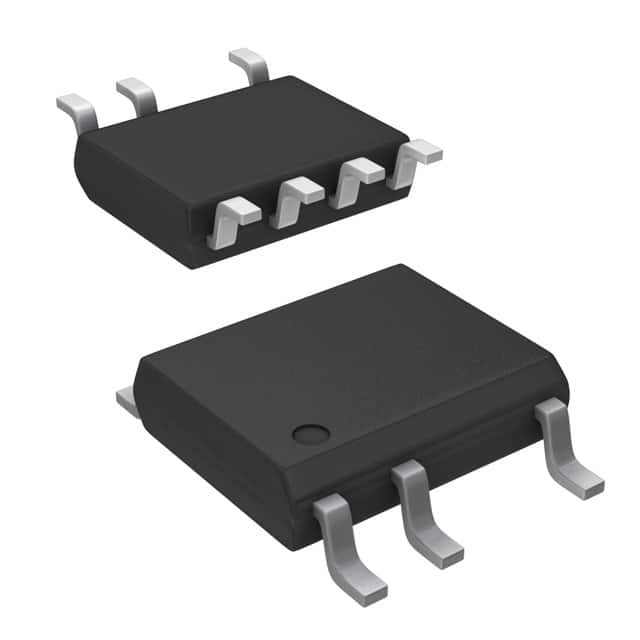
LNK304DN-TL Power Integrations
-
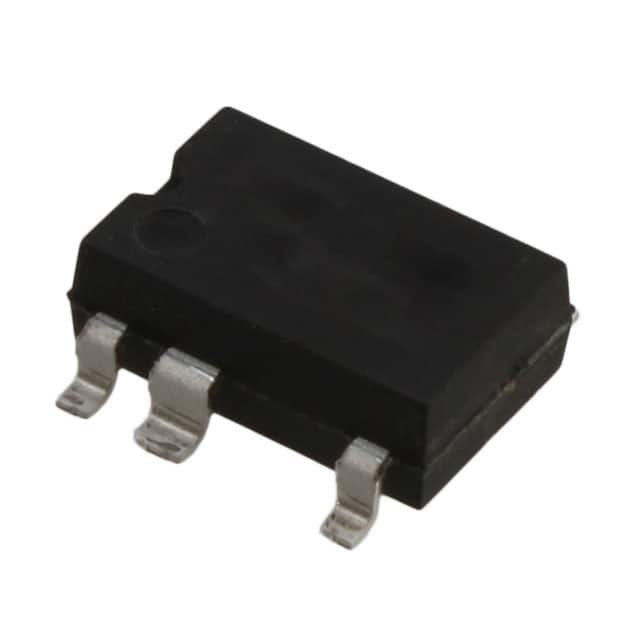
LNK304GN-TL Power Integrations
-
LNK304DG-TL Power Integrations
-
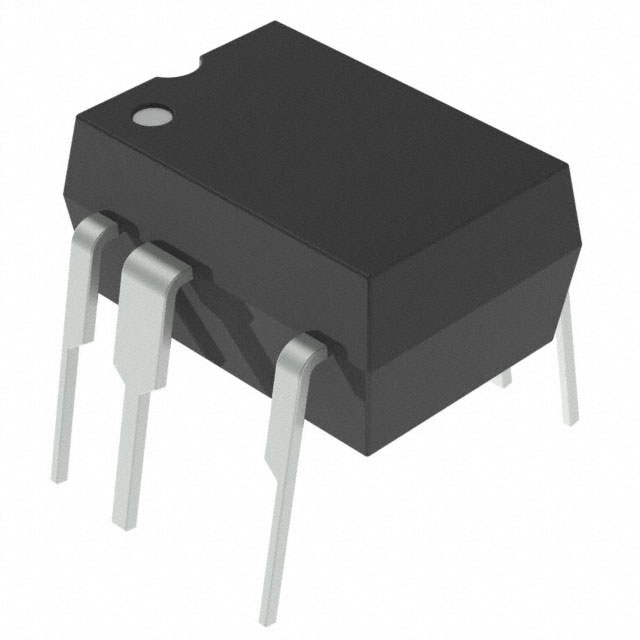
TNY277PN Power Integrations
-
TNY276PN Power Integrations
-
TNY278PN Power Integrations
-
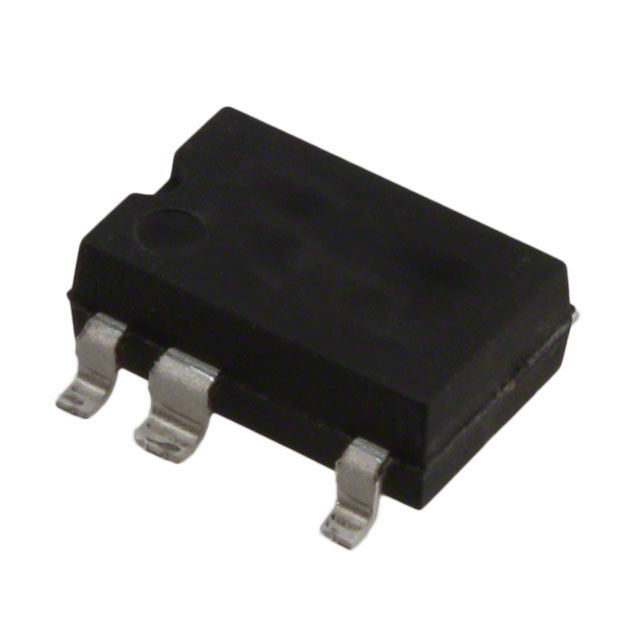
TNY278GN-TL Power Integrations
-
TNY280GN-TL Power Integrations
-
TOP266KG-TL Power Integrations
-
TOP258PN Power Integrations
-
TOP253PN Power Integrations
-
TOP253PNAU Power Integrations

- 1500+ Daily average RFQ Volume

- 20,000.000 Standard Product Unit

- 1800+ Worldwide Manufacturers

- 15,000+ In-stock Warehouse