MC34063 Equivalent & Replacement Guide — Drop-In, Upgrade, and Modern Alternatives
MC34063 Equivalent & Replacement Guide — Drop-In, Upgrade, and Modern Alternatives
The MC34063 has been in production since the early 1980s. That's 40+ years of second-source manufacturing, and the result is a sprawling ecosystem of drop-in replacements from at least a dozen semiconductor companies. If your BOM has an MC34063 on it, you have options — from pin-compatible clones that cost pennies less, to the NCP3063 (same pinout, better performance), to modern synchronous switchers that leave the MC34063's efficiency in the dust.
This guide covers three tiers: direct drop-in (no PCB changes), pin-compatible upgrade (same footprint, minor BOM tweaks), and modern alternatives (new PCB, much better performance). Pick the tier that matches your willingness to respin the board.
Tier 1: Direct Drop-In Replacements (No PCB Changes)
These parts share the MC34063's exact pinout, 3.0–40V input range, 1.5A peak switch current, and 100 kHz max frequency. Swap the IC, change nothing else.
| Part Number | Manufacturer | Package | Temp Range | Notes |
|---|---|---|---|---|
| MC34063ADR | UMW (Youtai Semiconductor) | SOP-8 | 0–70°C | Most common Asian-market drop-in; lowest cost |
| KA34063A | Fairchild / onsemi | DIP-8 / SOP-8 | 0–70°C | Original second-source from Fairchild Korea |
| TS34063CD / CS | Taiwan Semiconductor | DIP-8 / SOP-8 | 0–70°C | Widely available in Asia-Pacific supply chain |
| AP34063N8L-U / S8G-13 | Diodes Inc. | DIP-8 / SOP-8 | 0–70°C | Diodes Inc. branded; good Western distribution |
| XD34063 | XINLUDA | DIP-8 | 0–70°C | Budget DIP option; common in mainland China supply |
| IP34063 | Seme LAB (Serenals) | DIP-8 / SOP-8 | 0–70°C | UK-based manufacturer; MIL-spec variants available |
| MC34063ADE4 / ADRE4 | Texas Instruments | SOP-8 | 0–70°C | Original manufacturer; "E4" = RoHS-compliant suffix |
All of these are the same silicon in different packaging. The MC34063 is a commodity part — the design is in the public domain, the process is mature CMOS/bipolar, and nobody has a meaningful performance advantage. Pick based on availability and price at your volume. TI still makes the official version. UMW and XINLUDA are the cheapest. Diodes Inc. and Taiwan Semi have the best global distributor coverage.
Tier 2: Extended Temperature Range (MC33063 Family)
The MC33063 is the same IC, same pinout, same specs — but rated for −40°C to +85°C instead of 0–70°C. If your product goes outdoors, into a vehicle, or into an unheated factory, use this instead. The price premium is small; the field-failure cost of a commercial-temp IC in a −20°C environment is not.
| Part Number | Manufacturer | Package | Temp Range |
|---|---|---|---|
| MC33063ADE4 | Texas Instruments | SOP-8 | −40–+85°C |
| MC33063ADRE4 | Texas Instruments | SOP-8 (T/R) | −40–+85°C |
| IP33063 | Seme LAB | DIP-8 / SOP-8 | −40–+85°C |
| IP35063 | Seme LAB | Ceramic DIP-8 | −55–+125°C (military/aerospace) |
Tier 3: NCP3063 — Pin-Compatible Upgrade
The NCP3063 (onsemi) is the closest thing to an MC34063 v2.0. Same DIP-8/SOP-8 pinout. Same basic external component structure. But it switches at up to 150 kHz (vs 100 kHz), has cycle-by-cycle current limiting (vs the MC34063's basic peak current limit), and can be synchronized to an external clock — something the MC34063 cannot do at all.
What the NCP3063 fixes: The MC34063's hysteretic control produces a messy, variable-frequency switching waveform that's hard to filter. The NCP3063's controlled PWM with external frequency sync cleans this up significantly. If your product has sensitive analog circuits anywhere near the power supply, the NCP3063 is worth the slight BOM adjustment.
Not a zero-change swap. The timing capacitor value changes (different oscillator architecture), and the current-sense threshold is lower. One or two resistor values will change. But the PCB stays the same, and the inductor/transistor/diode all stay the same. Budget an afternoon of bench testing, not a board respin.
Tier 4: Modern Replacements (New PCB Required)
If you're designing a new product — not maintaining an existing one — you have better options than the MC34063. Here's what to use instead, organized by topology.
For Buck (Step-Down): 12V→5V, 24V→3.3V
| Part | Frequency | Efficiency | Max Current | Why Better Than MC34063 |
|---|---|---|---|---|
| LM2596 | 150 kHz | ~88% | 3A | Simpler BOM, integrated 3A switch, widely available modules |
| MP2307 | 340 kHz | ~93% | 3A | Synchronous rectification — no Schottky diode loss |
| TPS5430 | 500 kHz | ~95% | 3A | Modern TI synchronous buck; tiny inductor |
For Boost (Step-Up): 5V→12V, 3.7V→5V
| Part | Frequency | Efficiency | Max Current | Why Better Than MC34063 |
|---|---|---|---|---|
| XL6009 | 400 kHz | ~94% | 4A (int.) | Integrated MOSFET, higher frequency, SEPIC capable |
| MT3608 | 1.2 MHz | ~93% | 4A (int.) | Very small BOM; popular in portable devices |
| TPS61291 | 1 MHz | ~95% | 1.5A | 3×3mm package, bypass mode, IoT-optimized |
For High-Voltage Boost: 12V→100V+, Nixie/Tube Supplies
| Part | Frequency | Topology | Why Better Than MC34063 |
|---|---|---|---|
| MAX1771 | Up to 300 kHz | Boost / Flyback | Designed for high-voltage; up to 90%+ at 12→300V |
| UC3843 | Up to 500 kHz | Current-mode PWM | External MOSFET handles any voltage; proper current-mode control |
| LM3478 | 100 kHz–1 MHz | Boost / SEPIC / Flyback | Versatile controller; programmable frequency; good app note coverage |
How to Choose: Decision Table
| Your Situation | Best Choice | Why |
|---|---|---|
| Existing product, MC34063 going EOL at your supplier | MC34063ADR (UMW) or KA34063A | Cheapest drop-in; no PCB change; no requalification |
| Existing product, need better temp range for outdoor use | MC33063A | Same pinout, −40–+85°C, no design change |
| Existing product, want fewer EMI headaches | NCP3063 | Same footprint, cleaner switching, external sync capable |
| New design, buck, under 3A | MP2307 or TPS5430 | Synchronous rectification, >90% efficiency, tiny passives |
| New design, boost, under 30V output | XL6009 | 400 kHz, integrated MOSFET, cheap and widely available |
| New design, boost, >100V output (tube/nixie) | MAX1771 or UC3843 | External MOSFET handles the voltage; proper control loop |
| Battery-powered, every mW counts | TPS61291 | 95% at light load, 1 MHz, sub-µA shutdown current |
Frequently Asked Questions
Q1: Can I use an MC33063 in place of an MC34063?
A: Yes, drop-in. Same pinout, same specs. The MC33063 is the industrial-temp version (−40–+85°C vs 0–70°C). It costs slightly more but works in every MC34063 socket. If you're designing a new product, just use the MC33063 from the start — the price delta is pennies.
Q2: Is the NCP3063 a true drop-in for MC34063?
A: Almost. Same pinout, but the timing capacitor and current-sense resistor values will change. The oscillator operates differently — the NCP3063 uses a fixed-frequency PWM with external sync capability, while the MC34063 is hysteretic. You'll need to recalculate CT and possibly adjust RSC. Same PCB, different BOM values on 2–3 components.
Q3: Are cheap MC34063 clones from AliExpress/eBay reliable?
A: Test before trusting. Most clones are functionally identical — the MC34063 is a simple bipolar design that's hard to get wrong. But some re-marked parts may be factory rejects or different ICs entirely. Buy a tube of 50, test 5 across the full input voltage and load range, and if they all work, the rest probably will too.
Q4: Why replace MC34063 if it still works?
A: Three reasons — efficiency, board space, and EMI. At 78% efficiency, the MC34063 burns 22% of your input power as heat. A modern synchronous switcher at 93% burns 7%. The MC34063's 50–100 kHz requires a 100µH inductor; a 1 MHz switcher uses 4.7µH. And the hysteretic control produces a noise spectrum that's hard to predict and hard to filter.
Q5: Will TI ever discontinue the MC34063?
A: Unlikely anytime soon. TI still lists the MC34063A as "Active" with no EOL notice. It's a cash-cow commodity part with millions of units in annual demand across industrial, automotive, and consumer products. But second-source it anyway — having a UMW or Taiwan Semi alternative approved on your AVL costs nothing and protects against single-supplier disruption.
Q6: MC34063ADR (UMW) vs original TI MC34063 — any difference?
A: Electrically, none that matter for 99% of applications. UMW's version is a faithful clone on a similar bipolar process. The reference voltage tolerance, switch saturation voltage, and oscillator frequency range are all within the original datasheet limits. For safety-critical or radiation-hardened applications, stick with TI or Seme LAB.
Q7: Can I parallel two MC34063s for more current?
A: Not directly. The hysteretic control loops will fight each other. You can build a multi-phase converter with external sequencing logic, but at that point you're spending more on discrete components than a single higher-current switcher would cost. Use an LM2596 for 3A or a synchronous buck for higher current.
Q8: Which MC34063 replacement for an automotive 12V→5V design?
A: MC33063A for drop-in, or MP2307 for a new PCB. Automotive needs the wide temperature range (−40°C cold-start) and can't tolerate the MC34063's commercial 0–70°C rating. The MP2307 adds synchronous rectification for cooler operation in a sealed engine-compartment enclosure.
Related information




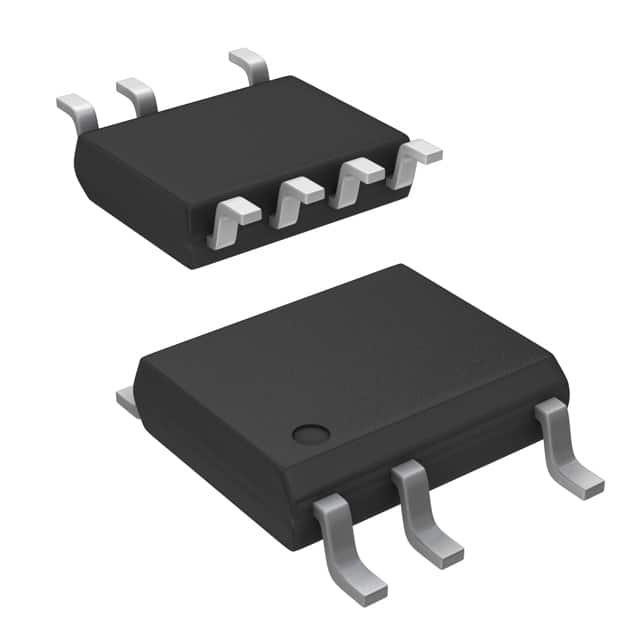
-
LNK304DN-TL Power Integrations
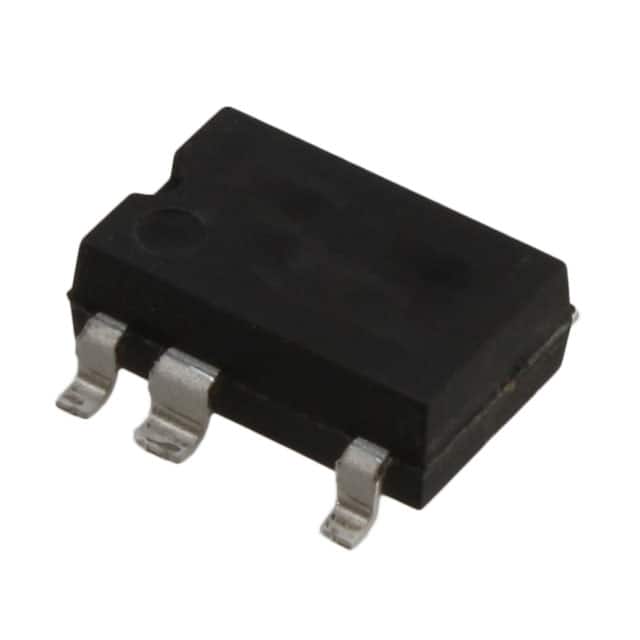
-
LNK304GN-TL Power Integrations
-
LNK304DG-TL Power Integrations
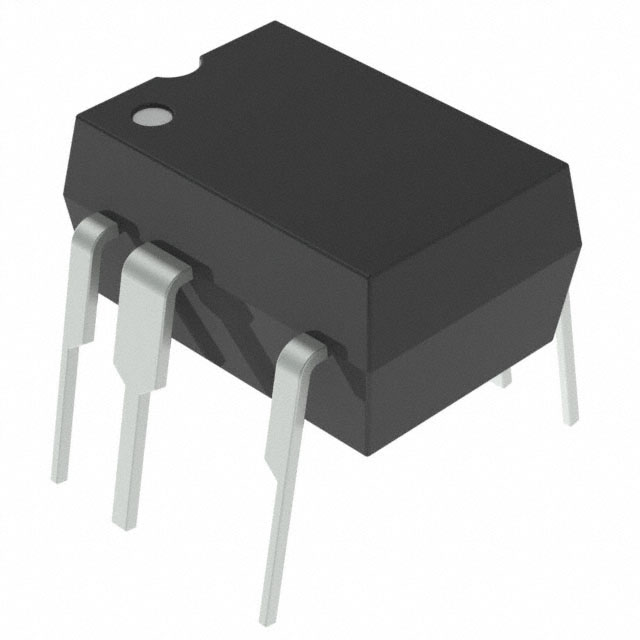
-
TNY277PN Power Integrations
-
TNY276PN Power Integrations
-
TNY278PN Power Integrations
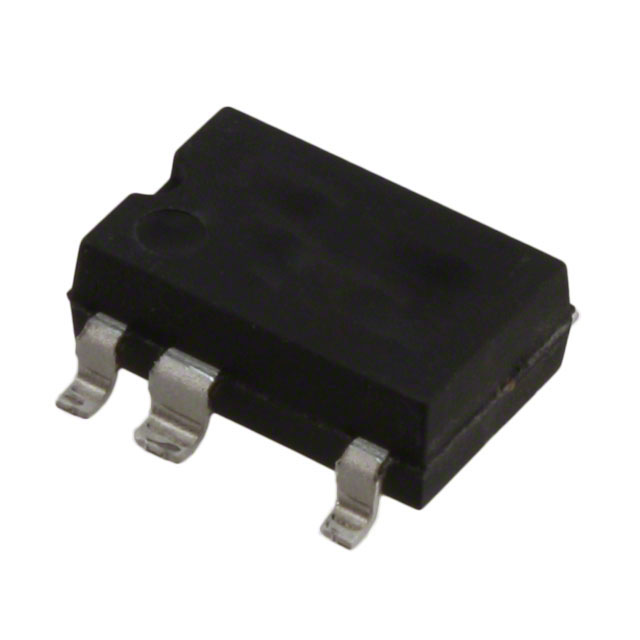
-
TNY278GN-TL Power Integrations
-
TNY280GN-TL Power Integrations
-
TOP266KG-TL Power Integrations
-
TOP258PN Power Integrations
-
TOP253PN Power Integrations
-
TOP253PNAU Power Integrations

- 1500+ Daily average RFQ Volume

- 20,000.000 Standard Product Unit

- 1800+ Worldwide Manufacturers

- 15,000+ In-stock Warehouse