LNK306DG-TL Equivalent & Replacement Guide — Drop-In, Same-Family, and Cross-Manufacturer Options
LNK306DG-TL Equivalent & Replacement Guide — Drop-In, Same-Family, and Cross-Manufacturer Options
Need a replacement for the LNK306DG-TL (LinkSwitch-TN, 700V, 66kHz, 482mA ILIMIT, non-isolated buck)? You've got three tiers.
Tier 1: Drop-in swaps from the same SO-8C family — different current limits, zero PCB changes. Tier 2: Functional equivalents from other manufacturers — same job, new board. Tier 3: Budget alternatives from Chinese fabs. This page maps every path.
Tier 1: Same Package, Same Pinout - Just Change the Current Limit
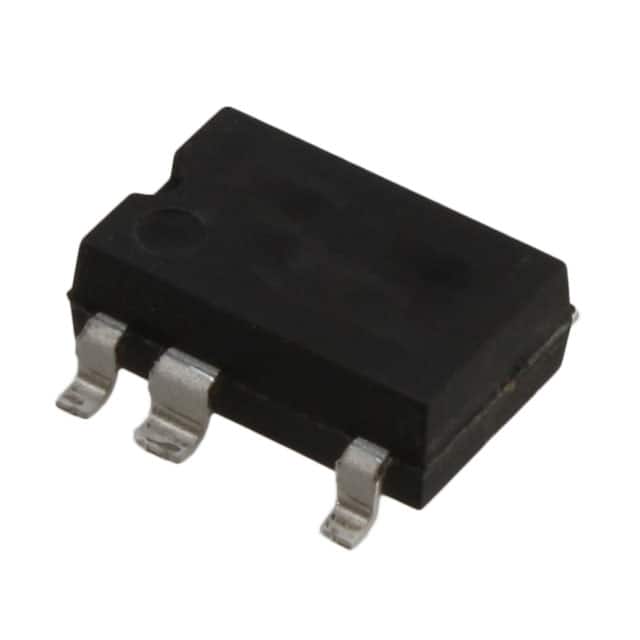
The LinkSwitch-TN family shares an identical pinout across LNK302 through LNK306. If your design has thermal or current headroom, you can swap the IC without touching the PCB. The only difference is the internal MOSFET current limit — smaller number = less output current, less heat, lower cost.
| Part Number | ILIMIT | Typical Output Current (MDCM Buck) | RDS(on) | Status | When to Use |
|---|---|---|---|---|---|
| LNK302DG-TL | 170mA | 80mA | 24Ω | Active | Lowest power, lowest cost. MCU bias, cap-drop replacement under 1W. |
| LNK304DG-TL | 257mA | 120mA | 17Ω | Active | Entry-level for general-purpose buck. LED drivers, relay supplies. |
| LNK305DG-TL | 375mA | 175mA | 11Ω | Active | Mid-power. When LNK306 is overkill but LNK304 can't deliver. |
| LNK306DG-TL | 482mA | 225mA | 7Ω | Active | Your baseline. Highest current in the family. |
Key rule for same-family swaps: Going down (LNK306 → LNK304) works if your load is below the smaller device's limit. Going up always works electrically. Same inductor, same FB scheme — only the peak current changes.
Tier 1b: Same IC, Different Package or Reel
| Part Number | Difference | When to Use |
|---|---|---|
| LNK306DN-TL | Same SO-8C, different reel format | Alternate reel option for pick-and-place compatibility |
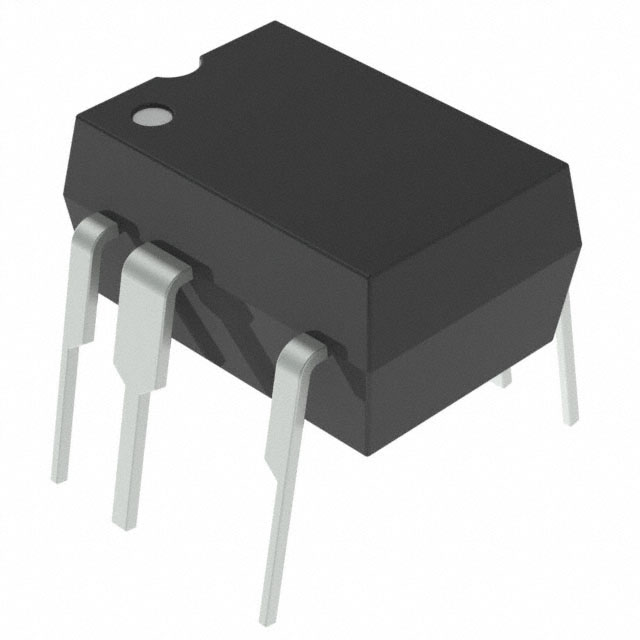
| LNK306PN | DIP-8C through-hole package | Hand-soldering, prototyping, or when THT is specified |
| LNK306GN | SMD-8B package | ⚠️ Listed as No Longer Manufactured at some distributors. Avoid for new designs. |
Tier 2: Cross-Manufacturer Functional Equivalents
These parts do the same thing — non-isolated offline buck, integrated MOSFET, ~225mA output — but with different pinouts, different feedback schemes, and different switching frequencies. Every one of these requires a PCB redesign. No exceptions.
| Part Number | Manufacturer | Package | fSW | VDS | Key Difference from LNK306 |
|---|---|---|---|---|---|
| UCC28881D | TI | SOIC-7 | 62kHz | 700V | Closest documented replacement. TI directly positions this against LNK306. Sub-100µA quiescent. ON/OFF control. Slightly lower frequency — may need larger inductor. |
| NCP1014AP065G | onsemi | PDIP-7 | 65kHz | 700V | Integrated 700V MOSFET, 65kHz fixed. Current-mode control (vs LNK306 ON/OFF). Better transient response but different feedback loop. |
| NCP1015AP065G | onsemi | PDIP-7 | 65kHz | 700V | Higher current version of NCP1014. ~350mA vs LNK306's 225mA. |
| VIPer12ADIP | ST | DIP-8 | 60kHz | 730V | 60kHz PWM with integrated 730V MOSFET. Higher breakdown voltage is a plus. 8-pin DIP — more pins, more functions, different pinout. |
Before you pick a Tier 2 replacement: The LNK306 uses ON/OFF control with an FB pin comparing to 49µA. NCP1014 uses current-mode PWM. VIPer12A uses voltage-mode PWM. These are fundamentally different control loops.
You're not tweaking a resistor — you're re-doing the feedback network from scratch. Budget 2–3 days of design time and a board spin.
Tier 3: Budget / Chinese-Manufacturer Alternatives
These are functionally similar offline switcher ICs from Chinese semiconductor fabs. They target the same application space at lower cost, but documentation is often sparse and quality varies by batch. Suitable for cost-sensitive consumer products where certification requirements are less stringent.
| Part Number | Manufacturer | Notes |
|---|---|---|
| DK106 | Jingjing Micro (晶进微) | Offline PWM power switch, similar power range. Widely used in Chinese LED drivers and small appliance supplies. |
| DK1203 | Jingjing Micro | Higher power variant. May exceed LNK306 output but pin-compatible within DK family. |
| EG1120 | Jingjing Micro | High-performance PWM control switch. 700V MOSFET. Close functional match. |
| HM5011 | Huazhimei Semi (华之美) | Offline PWM control power switch. Similar architecture, lower cost. |
⚠️ Trade-offs with Tier 3 parts: Datasheets may be Chinese-only and less detailed than PI's. Electrical characteristics can vary 10–15% batch-to-batch. EMI may differ — budget extra filtering. ESD/latch-up testing may not match TI/onsemi/PI standards.
For UL/CE-certified products, Tier 3 parts add testing risk. For internal tools and non-certified products, they work.
Decision Flow: Which Replacement Tier for Your Situation?
Production line is down → Tier 1. Swap LNK302/304/305 into the same footprint. Load under 120mA? LNK304 drops in, costs less. Need full 225mA? Only LNK306 works (or LNK305 with margin). Same reel, same pinout, same inductor — zero PCB change.
Redesigning the board anyway → Tier 2. If you're spinning a new PCB, the UCC28881 is the best-documented cross-manufacturer alternative. TI's app notes explicitly target LNK306 replacement. The NCP1014 gives you current-mode control if you need better transient response.
Cost-down on a high-volume non-certified product → Tier 3. DK106 or EG1120 can cut the switcher BOM cost by 30–50%. But order samples from 2–3 batches first and characterize them on your board. Don't trust a single datasheet value.
Frequently Asked Questions
Q1: Can I replace LNK306 with LNK304 without changing anything else?
A: Yes, if your load current is under 120mA. Same SO-8C pinout, same FB threshold, same inductor value. The LNK304 has a 257mA current limit vs LNK306's 482mA, so it can deliver less output current before hitting the limit. If your load peaks above 120mA, the LNK304 will current-limit and the output will sag. For loads under 100mA, the LNK304 is a cost-down drop-in.
Q2: Is there a pin-compatible replacement from another manufacturer?
A: No. Not one. The LNK306's 7-lead SO-8C pinout with the FB pin on pin 3 and DRAIN on pin 5 is proprietary to Power Integrations. The UCC28881, NCP1014, and VIPer12A all have different pinouts. Any cross-manufacturer replacement requires a PCB redesign. There is no second source for drop-in LNK306 replacements.
Q3: Is the LNK306 being discontinued?
A: The LNK306DG-TL (SO-8C) is active. The LNK306GN (SMD-8B) variant is listed as "No Longer Manufactured" at some distributors. If your design uses the GN package, migrate to the DG (SO-8C) — same die, different package. The DG-TL variant has stable supply and no EOL notice from PI.
Q4: Can I use TinySwitch-4 (TNY284) as an LNK306 replacement?
A: Only if you're redesigning for isolation. The LNK306 is a non-isolated buck. The TNY284 is an isolated flyback. Different topology, different transformer, different feedback, different pinout. They don't replace each other. If you need isolation, the TNY284 is the right part — but it's a new design, not a replacement.
Q5: What's the most common reason LNK306s fail in the field?
A: Input surge and lightning strike on the mains. The 700V MOSFET is robust, but a 2kV surge on the AC line will blow through it. The LNK306's internal protection is good for overload and short-circuit, but it has no integrated line surge clamping. Add a 275V MOV across the input and a 10Ω fusible resistor in series with the rectifier to prevent field failures — regardless of which Tier 1/2/3 part you use.
Q6: Are the Chinese DK/EG/HM replacements reliable?
A: Depends on your sourcing and testing. These parts ship in millions of Chinese LED bulbs and appliances. They work. But batch-to-batch variation is wider than PI's production. The critical failure mode: at 85°C+, some batches show 15–20% higher RDS(on), raising die temperature and triggering thermal shutdown at loads where LNK306 runs fine. Test 10+ units from your production batch at max load and max ambient before committing.
Related information

-
LNK304DN-TL Power Integrations
-
LNK304GN-TL Power Integrations
-
LNK304DG-TL Power Integrations
-
TNY277PN Power Integrations
-
TNY276PN Power Integrations
-
TNY278PN Power Integrations
-
TNY278GN-TL Power Integrations
-
TNY280GN-TL Power Integrations
-
TOP266KG-TL Power Integrations
-
TOP258PN Power Integrations
-
TOP253PN Power Integrations
-
TOP253PNAU Power Integrations

- 1500+ Daily average RFQ Volume

- 20,000.000 Standard Product Unit

- 1800+ Worldwide Manufacturers

- 15,000+ In-stock Warehouse