AO3400 Equivalent, Alternative & Replacement Guide
AO3400 Equivalent, Alternative & Replacement Guide
The AO3400 is obsolete. Alpha & Omega Semiconductor discontinued it. But the part is still on thousands of BOMs across consumer electronics, power banks, and battery-powered devices — so engineers need a replacement that works without a board spin.
The closest drop-in replacements are the AO3400A (enhanced variant, same SOT-23 pinout), IRLML6344 (Infineon, near-identical specs), and PJA3400 (Panjit, widely available). From our Shenzhen distribution data (2025–2026), the AO3400A is the most common substitution we process — it's pin-compatible, cheaper, and has slightly better RDS(on).
If your current requirements are under 200 mA, you have more options. If you need the full 5A, your pool shrinks to about 4 parts. This guide covers all of them.
So which one should you actually pick? Let's start with the three closest matches.
AO3400 vs AO3400A vs IRLML6344: Full Comparison
These three are the closest matches for a direct AO3400 swap. All are N-channel, SOT-23-3, 30V rated, and logic-level compatible.
| Parameter | AO3400 (Obsolete) | AO3400A | IRLML6344 |
|---|---|---|---|
| Manufacturer | Alpha & Omega | AOS / Second-source | Infineon |
| VDS (max) | 30V | 30V | 30V |
| ID (continuous) | 5.8A | 5.7A | 5.0A |
| RDS(on) @ 4.5V | 28 mΩ max | 26.5 mΩ max | 29 mΩ max |
| RDS(on) @ 2.5V | 42 mΩ max | 38 mΩ max | 45 mΩ max |
| VGS(th) | 0.7–1.45V | 0.7–1.45V | 0.5–1.3V |
| VGS (max) | ±12V | ±12V | ±12V |
| Package | SOT-23-3 | SOT-23-3 | SOT-23-3 |
| Pinout | G-S-D (1-2-3) | G-S-D (1-2-3) | G-S-D (1-2-3) |
| QG (typ) | 1.2 nC | 1.3 nC | 1.5 nC |
| PD (max) | 1.4W | 1.4W | 1.3W |
| Status | Obsolete | Active | Active |
| Price Reference | N/A | $0.03–0.06/unit | $0.05–0.09/unit |
When to Use AO3400A
- You need a drop-in replacement: same SOT-23-3 pinout, same gate-drive requirements. Pull the AO3400 off the BOM, solder the AO3400A in. No layout change.
- Cost is the main driver: the AO3400A is the most affordable of the three — and the most widely second-sourced. From what we see in Shenzhen, it's the de facto replacement in 90%+ of cases.
- You're running at 3.3V gate drive: RDS(on) at 2.5V VGS is 38 mΩ — better than the original.
When to Use IRLML6344
- You need Infineon quality and traceability: if your customer or industry requires full supply-chain documentation, Infineon's pedigree matters.
- Lower gate threshold: VGS(th) as low as 0.5V gives you more margin on weak gate drives. If your MCU GPIO sags below 3V under load, the IRLML6344 stays fully enhanced.
- You're designing for automotive or industrial: Infineon's process control and lifetime support are a step above commodity second-source parts.
When NOT to Use Either
- Your rail is above 24V: all three are 30V parts. If your input can spike above 30V, step up to a 40–60V part like BSS138 (50V) or 2N7002 (60V) — but accept the much higher RDS(on).
- You need continuous >5A with low dropout: these are SOT-23 parts. Package dissipation limits you to about 1.4W. At 5A with 28 mΩ RDS(on), you're at 0.7W — fine at 25°C ambient. Push beyond that and you'll need a larger package.
AO3400 Alternatives Comparison Table (All Candidates)
| Part Number | Manufacturer | VDS | ID | RDS(on) max | Pin-Compatible? | Status | Notes |
|---|---|---|---|---|---|---|---|
| AO3400A | AOS / Multi-source | 30V | 5.7A | 26.5 mΩ | Yes — G-S-D | Active | Best overall replacement. Enhanced variant. |
| IRLML6344 | Infineon | 30V | 5.0A | 29 mΩ | Yes — G-S-D | Active | Infineon quality, lowest VGS(th). |
| PJA3400 | Panjit | 30V | 5.8A | ~28 mΩ | Yes — G-S-D | Active | Good availability, competitive pricing. |
| AO3404 | AOS | 30V | 5.0A | 31 mΩ | Yes — G-S-D | Active | Slightly higher RDS(on), ±20V VGS. |
| AOSS32334C | AOS | 30V | — | Similar | Check datasheet | Active | AOS direct MFR-recommended substitute. |
| SI2338DS | Vishay | 30V | 5.0A | ~32 mΩ | Yes — G-S-D | Active | Vishay quality, limited stock. |
| BSS138 | Multiple | 50V | 220 mA | 3.5 Ω | Yes — G-S-D | Active | Only for ≤200 mA. RDS(on) is 100× higher. |
| 2N7002 | Multiple | 60V | 300 mA | 5 Ω | Yes — G-S-D | Active | Only for ≤100 mA. Highest voltage rating. |
Can BSS138 or 2N7002 Replace AO3400?
Short answer: almost never — unless your load current is under 200 mA.
The BSS138 and 2N7002 are small-signal MOSFETs. They're designed for level shifting, LED driving, and signal switching — not power. Their RDS(on) is roughly 100 times higher than the AO3400's. If your circuit draws 500 mA, a BSS138 will drop 1.75V across itself and dissipate nearly a watt. It won't survive.
But here's the thing: if your original design used an AO3400 where a small-signal FET would have sufficed (it happens — engineers use whatever is in the parts library), then BSS138 or 2N7002 can work. How do you know which camp you're in? Here's a quick decision table:
| If your load is... | AO3400A | BSS138 | 2N7002 |
|---|---|---|---|
| >500 mA | ✅ Only option | ❌ Will overheat | ❌ Will overheat |
| 100–500 mA | ✅ Works | ⚠️ Check Pd | ❌ RDS(on) too high |
| <100 mA | ✅ Overkill but fine | ✅ Works | ✅ Works |
| Rail >30V | ❌ VDS exceeded | ⚠️ Up to 50V | ✅ Up to 60V |
| 3.3V gate drive | ✅ Excellent | ✅ Good | ⚠️ Marginal |
The Counterfeit Problem: How to Spot a Fake AO3400
If you're buying AO3400s (or AO3400As) from AliExpress, Taobao, or uncertified spot-market vendors, you have a real risk of getting fakes. Here's what we see from testing incoming lots in Shenzhen (2025–2026):
- RDS(on) far above spec: a genuine AO3400A should measure ≤26.5 mΩ at 4.5V VGS. Counterfeits frequently measure 50–100+ mΩ. They're often relabeled generic MOSFETs with similar threshold voltage but much higher on-resistance.
- Gate oxide failures after soldering: genuine AO3400As tolerate standard reflow. Counterfeits develop gate leakage after a single thermal cycle. If your boards pass initial test but fail after burn-in, check your source.
- Marking inconsistencies: genuine AOS parts use laser marking with consistent font and depth. Ink-marked or inconsistently oriented markings are red flags.
- Price too good to be true: if you're paying $0.005/unit for "AO3400A" from an unknown seller, you're buying rejects. Genuine parts in volume run $0.03–0.06/unit from authorized distribution.
The simplest verification: measure RDS(on) at 4.5V VGS on a sample of 10 units. If any measure above 35 mΩ, reject the lot.
Common AO3400 Failure Modes (And How to Prevent Them in Your Replacement)
"It works for a few minutes, then burns out"
This is the #1 complaint on EEVblog and StackExchange. The root cause is almost always a missing gate pull-down resistor. When the MCU GPIO goes low (or during power-up before the MCU initializes), the gate floats. The MOSFET operates in its linear region, dissipates heat, and thermal runaway follows. Fix: add a 10 kΩ–100 kΩ resistor from gate to source. This applies to whatever replacement you choose.
"It won't turn off completely"
Same cause — floating gate. The pull-down resistor fixes it. Also check that your MCU GPIO actually goes below 0.5V in its low state. Some 3.3V MCUs only pull down to 0.8–1.0V under load, which can keep a low-VGS(th) MOSFET partially on.
"It died during soldering"
The AO3400's gate oxide is sensitive to ESD. If you're hand-soldering with an ungrounded iron, you can punch through the gate oxide before the part ever sees a circuit. Use a grounded iron, an ESD mat, and ideally hot-air rework for SOT-23 parts. The IRLML6344 (Infineon) tends to be more robust in this regard — their gate protection is better characterized.
Where to Buy AO3400 Replacements
| Parameter | Details |
|---|---|
| Primary Replacement | AO3400A (SOT-23-3, 30V, 5.7A) |
| Premium Replacement | IRLML6344 (Infineon, 30V, 5.0A) |
| Condition | New, original manufacturer packaging |
| Lead Time | In stock, ship from Shenzhen |
| Packing | Tape & Reel (3,000/standard reel) |
Contact ICMASS for current pricing on your specific quantity. We stock AO3400A, IRLML6344, and PJA3400 with full traceability. If you're replacing AO3400 across an entire BOM, we can quote reel-level pricing and help you validate the substitution before you commit.
Frequently Asked Questions About AO3400 Replacements
Q1: Is the AO3400 discontinued?
A: Yes. Alpha & Omega Semiconductor marked the AO3400 as obsolete. You can still find residual stock on the spot market, but for new production you should migrate to the AO3400A or another active replacement.
Q2: Is the AO3400A a direct drop-in replacement for AO3400?
A: Yes. Same SOT-23-3 package, same G-S-D pinout (pin 1: Gate, pin 2: Source, pin 3: Drain), same ±12V VGS rating. The AO3400A actually has slightly better RDS(on) — 26.5 mΩ vs 28 mΩ. No layout or BOM change needed beyond the part number.
Q3: Can I drive the AO3400A with 3.3V logic?
A: Yes. The AO3400A is fully enhanced at 2.5V VGS, with RDS(on) at 38 mΩ max. A 3.3V GPIO from an ESP32, STM32, or similar MCU drives it cleanly. Just don't forget the gate pull-down resistor (10 kΩ–100 kΩ to ground) — without it, the gate floats during MCU reset and the FET can operate in its linear region, overheat, and fail.
Q4: What's the difference between AO3400 and AO3400A?
A: The AO3400A is the enhanced second-generation version. Key differences: better RDS(on) (26.5 vs 28 mΩ max at 4.5V), better RDS(on) at 2.5V (38 vs 42 mΩ), and it's still in active production. Electrically and mechanically, they are interchangeable in virtually all applications.
Q5: Can BSS138 replace AO3400?
A: Only if your load current is under 200 mA and you can tolerate much higher voltage drop. The BSS138 has RDS(on) of 3.5 Ω — over 100 times higher than the AO3400. At 500 mA, it dissipates nearly 1W and will likely fail. If you need the 50V rating and your current is low, it works. Otherwise, stick with AO3400A or IRLML6344.
Q6: Why does my AO3400 keep burning out?
A: Three most common causes: (1) missing gate pull-down resistor — add 10–100 kΩ from gate to source; (2) counterfeit parts with out-of-spec RDS(on) — test a sample before committing to a reel; (3) ESD damage during handling/soldering — use grounded equipment. If you're replacing AO3400s that keep failing in the same board position, check the gate drive waveform with a scope before blaming the FET.
Q7: How do I verify a genuine AO3400A?
A: Measure RDS(on) at VGS = 4.5V, ID = 3A on a sample of 10 units. Genuine parts should read ≤30 mΩ (allowing for test setup resistance). Anything consistently above 35 mΩ is suspect. Also check for laser marking (genuine) vs ink marking (likely fake). Buy from authorized distribution, not spot-market vendors.
Q8: Are there any layout changes needed when replacing AO3400 with IRLML6344?
A: No. Both use the standard SOT-23-3 pinout: Gate (pin 1), Source (pin 2), Drain (pin 3). The footprints are identical. The IRLML6344 has slightly lower VGS(th) — which is an advantage, not a problem. The only thing to watch: the IRLML6344's ±12V VGS max is the same as the AO3400, so existing gate-drive circuits are safe.
Related information
-
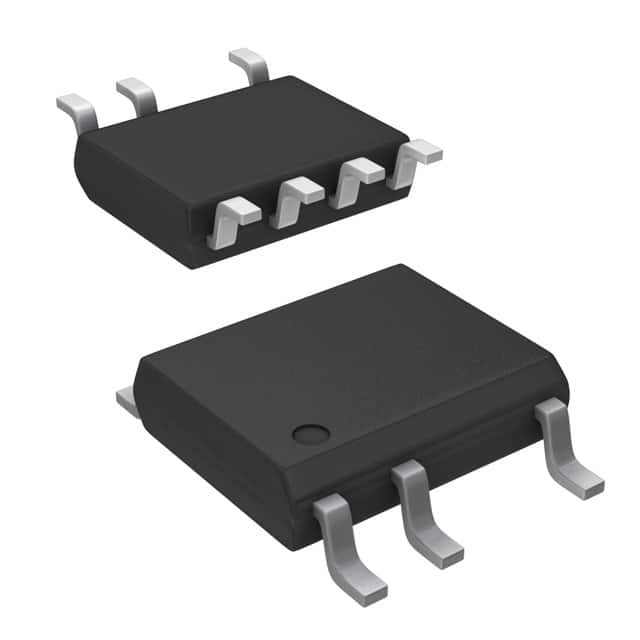
LNK304DN-TL Power Integrations
-
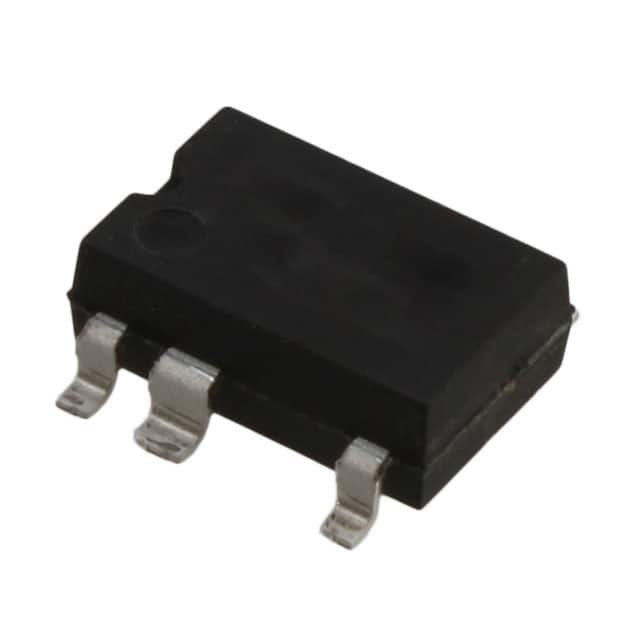
LNK304GN-TL Power Integrations
-
LNK304DG-TL Power Integrations
-
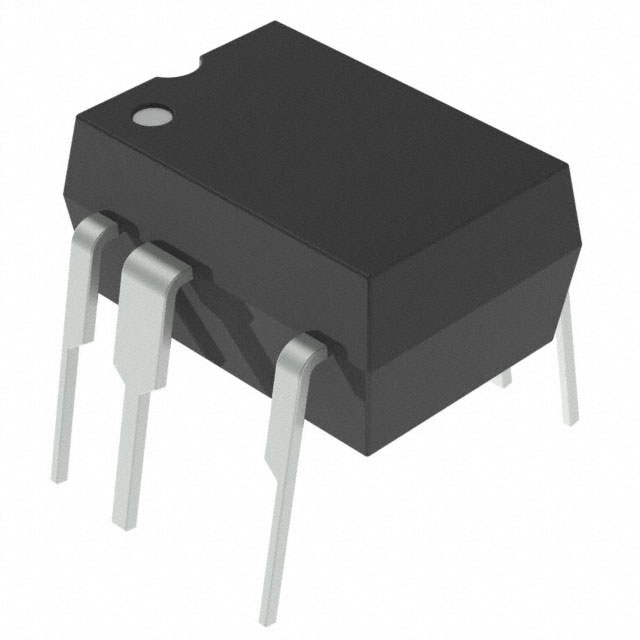
TNY277PN Power Integrations
-
TNY276PN Power Integrations
-
TNY278PN Power Integrations
-
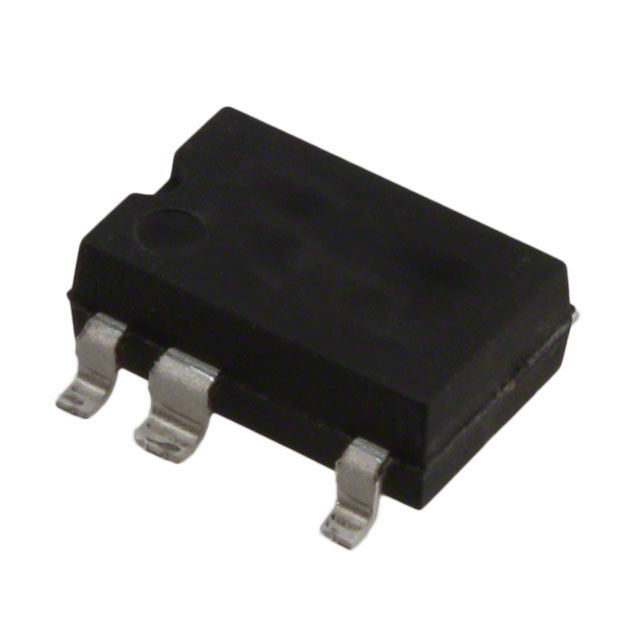
TNY278GN-TL Power Integrations
-
TNY280GN-TL Power Integrations
-
TOP266KG-TL Power Integrations
-
TOP258PN Power Integrations
-
TOP253PN Power Integrations
-
TOP253PNAU Power Integrations

- 1500+ Daily average RFQ Volume

- 20,000.000 Standard Product Unit

- 1800+ Worldwide Manufacturers

- 15,000+ In-stock Warehouse