74LVC vs 74HC vs 74LV — Which Logic Family Should You Use?
74LVC vs 74HC vs 74LV — Which Logic Family Should You Use?
If you're staring at a BOM and wondering whether to spec 74HC, 74LVC, or 74LV logic — you're not alone. These three CMOS logic families cover roughly 80% of the glue logic in modern embedded designs, and picking the wrong one means either wasted power, signal integrity headaches, or a board that flat-out doesn't work at 3.3V.
Here's the short version: 74HC is the 5V workhorse — simple, robust, forgiving. 74LVC is the 3.3V speed demon — 10× faster than HC, 5V-tolerant inputs, but it demands clean layout. 74LV sits in the gap — lower voltage than HC, slower than LVC, decent when you need a middle ground.
From what we see in Shenzhen distribution (2025–2026), the trend is clear: 74LVC is eating HC's lunch in new designs. Anything designed in the last five years at 3.3V uses LVC by default. HC still dominates in 5V industrial and repair/retrofit markets — there are millions of HC-based boards still in production.
How Do 74LVC, 74HC, and 74LV Compare on Key Parameters?
| Parameter | 74HC | 74LV | 74LVC | Notes |
|---|---|---|---|---|
| Supply Voltage (VCC) | 2.0–6.0V | 1.0–5.5V | 1.65–3.6V | HC is the only one rated to 6V |
| Sweet Spot Voltage | 5V | 2.5–3.3V | 3.3V | Where each family performs best |
| Propagation Delay (typ) | 14–18 ns | 8–12 ns | 3–6 ns | At nominal VCC, 50pF load |
| Max Clock (practical) | ~20 MHz | ~70 MHz | ~100–150 MHz | Depends on function type |
| Output Drive (per pin) | ±4–25 mA | ±4–12 mA | ±12–24 mA | Check specific part number |
| Quiescent Current (ICC) | 2–20 µA | 2–20 µA | 10–40 µA | All near-zero static |
| 5V-Tolerant Inputs | No | Usually yes | Yes (most) | Critical for mixed-voltage |
| Input Threshold Type | CMOS (VCC/2) | CMOS (VCC/2) | CMOS (VCC/2) | Use HCT for TTL thresholds |
| Rise/Fall Time (typ) | 4–7 ns | 2–5 ns | 1–3 ns | Faster = more ground bounce |
| Hysteresis (Schmitt) | On '132/'14 variants | On specific variants | On specific variants | Not standard on all gates |
| ESD (HBM) | 2000V | 2000V | 2000V | Standard across all families |
| Temperature Range | -40 to +85°C | -40 to +85°C | -40 to +85°C | Extended temp variants available |
| Ioff (Partial Power Down) | No | Some variants | Yes (most) | LVC supports live insertion |
| Package Options | DIP, SOIC, TSSOP, QFN | SOIC, TSSOP, QFN | SOIC, TSSOP, QFN, BGA | HC is the last with DIP |
| Cost (relative) | $ (baseline) | $–$$ (mid) | $$ (premium vs HC) | Volume pricing narrows the gap |
| Availability Risk | Very low | Moderate | Low | HC has deepest multi-source supply |
Key Differences That Actually Matter
Voltage compatibility is the first filter. If your system runs at 5V, HC is the path of least resistance. If your system runs at 3.3V or below, LVC is the technically correct choice — but HC will also work at 3.3V (it's rated down to 2V), just slower and with weaker drive. If your system runs at 1.8V, you're in LV or LVC territory — HC can't go that low.
Speed: LVC is 3–5× faster than HC. At 3.3V, a typical HC gate has tpd ≈ 20–25 ns. An LVC gate at the same voltage: 4–6 ns. That's the difference between a 10 MHz SPI bus working reliably and a 40 MHz bus that violates timing. If you're pushing past 30 MHz at 3.3V, you're in LVC territory by default — HC simply can't keep up.
5V tolerance: LVC wins, HC loses. This is the single biggest differentiator in mixed-voltage designs. An LVC device powered at 3.3V can accept 5V signals on its inputs without damage or excess current. An HC device powered at 3.3V cannot — the input clamp diodes to VCC will conduct, potentially damaging the device or loading the 5V source. If you need to receive 5V signals in a 3.3V system, LVC (or AHC/LVT) is mandatory.
Output drive: check the specific part, not just the family. HC outputs can range from ±4 mA (standard HC gate) to ±25 mA (HC bus drivers). LVC outputs are typically ±12–24 mA. If you're driving long traces, multiple loads, or LEDs, check the individual device datasheet — family-level generalizations can mislead you here.
Ground bounce: LVC's speed is a double-edged sword. LVC outputs switch in 1–3 ns. Into a 50pF load, that's a di/dt that will ring without proper decoupling. HC's slower edges (4–7 ns) are more forgiving of suboptimal layout. If you're hand-soldering a prototype on perfboard, HC is much less likely to ruin your afternoon with mysterious glitches.
Are 74HC, 74LV, and 74LVC Pin-Compatible?
Yes — for the same function type. The 7400-series pinout is standardized across families. An SN74HC245, SN74LV245, and SN74LVC245 all share the same pinout on the same package. You can drop an LVC245 into an HC245 footprint and it will work — assuming you've checked the voltage.
But there are catches:
- Voltage must be compatible. Dropping an LVC part into a 5V HC socket will destroy it (LVC max VCC is 3.6V). Dropping an HC part into a 3.3V circuit designed for LVC may work — HC is rated down to 2V — but the speed will be worse and the output drive lower than what the circuit was designed for.
- Package availability differs. HC is the last family with through-hole DIP packages widely available. LVC and LV are surface-mount only. If you're breadboarding, you're using HC (or investing in SMD adapter boards).
- Unused input behavior differs. Some LVC devices have bus-hold circuits on inputs (the 'LVCH' subfamily). Some HC devices don't. If your circuit relies on inputs staying at the last driven level when tri-stated, the family swap changes behavior.
- Ioff (partial power down) is not universal. Most LVC devices support Ioff — outputs go high-Z when VCC = 0V. Most HC devices do not. If your circuit does hot-swap or has multiple power domains, this matters.
When to Choose 74HC
You're running a 5V system and speed is under 20 MHz. This is HC's home turf. The parts are cheap, available from 5+ manufacturers, and have been in production for over 30 years. You won't get bitten by an obscure errata or a sudden EOL — HC is the cockroach of logic families.
You're prototyping on a breadboard or perfboard. HC comes in DIP. You can plug it into a breadboard, hand-solder it onto stripboard, or socket it for easy replacement. Try that with a TSSOP LVC part and you'll need a breakout board and a steady hand.
You're driving moderate loads (LEDs, relays via transistor, long cables). HC's output stage is robust — the 25 mA variants can drive small loads directly. The slower edge rates mean less ringing on long traces and fewer EMI headaches.
You're repairing or maintaining legacy equipment. If the original design used CD4000, 74LS, or 74HC, replacement with the same family eliminates surprises. A 74HC132 in a 1995 industrial controller will drop in and work identically.
✘ Don't choose 74HC when: your VCC is below 2V; you need 5V-tolerant inputs on a 3.3V rail; your clock exceeds 30 MHz; you need Ioff for hot-swap.
When to Choose 74LVC
Your system runs at 3.3V and you need speed. At 3.3V, LVC is 3–5× faster than HC. If your SPI bus runs at 30 MHz, your UART at 3 Mbps, or your parallel bus at 50 MHz+, LVC is the default choice.
You're interfacing 5V and 3.3V domains. The 5V-tolerant inputs are LVC's killer feature. Power the LVC device at 3.3V, connect 5V signals to the inputs, and the outputs swing 0–3.3V cleanly. No level shifter, no voltage divider, no extra BOM line. This alone justifies LVC in thousands of mixed-voltage designs.
You're designing for battery power. LVC's static current is near zero, and the dynamic power (CV²f) is minimized by the low VCC. Combined with modern microcontrollers that also run at 3.3V or 1.8V, the entire digital section draws microamps in sleep.
Your board does hot-swap or has multiple power domains. Ioff guarantees outputs go high-Z when VCC is removed. This prevents back-driving unpowered circuits and enables live insertion. HC can't do this reliably without external bus switches.
✘ Don't choose 74LVC when: your VCC is 5V; you're breadboarding (no DIP); your layout has poor grounding; you need through-hole for assembly.
When to Choose 74LV or 74AHC
You need 5V-tolerant inputs but at a lower cost than LVC. 74AHC gives you the 5V-tolerant inputs of LVC with near-HC pricing. The speed is between HC and LVC (~12 ns tpd). From our distribution data (2025–2026), AHC is gaining traction in cost-sensitive industrial designs that need mixed-voltage capability.
You're running at 1.8V. 74LV goes down to 1.0V on some variants. LVC bottoms out at 1.65V. For ultra-low-voltage designs (single-cell battery, energy harvesting), LV is the only option among these three.
You need the CD4093's voltage range but want CMOS speed. 74LV at 5.5V gives you most of the voltage headroom of the old 4000-series with 10× the speed and 1/10th the power.
✘ Don't choose 74LV/74AHC when: you need absolute fastest speed (go LVC); you need DIP packages (go HC); you're in a pure 5V system (HC is cheaper).
Mixed-Voltage Interfacing — How to Connect These Families
| From | To | Works? | What You Need |
|---|---|---|---|
| 5V HC | 5V HC | ✔ | Direct connect |
| 5V HC | 3.3V LVC | ✘ | Level shifter or voltage divider — HC outputs 5V, LVC inputs max at VCC + margin |
| 5V HC | 3.3V HC | ✘ | Same problem — HC inputs are not 5V-tolerant |
| 3.3V LVC | 5V HC | ⚠ Marginal | LVC outputs 3.3V. HC input threshold at 5V VCC is ~2.5V. Only 0.8V margin. Use HCT (VIH ≤ 2.0V) on receiving side. |
| 3.3V LVC | 3.3V LVC | ✔ | Direct connect |
| 5V TTL | 3.3V LVC | ✔ | LVC inputs are 5V-tolerant. TTL HIGH (~3.4V) is safe. |
| 5V TTL | 3.3V HC | ⚠ Risky | HC inputs not 5V-tolerant. TTL HIGH may exceed VCC+0.5V diode limit. |
| 3.3V LVC | 5V TTL | ✔ | TTL VIH is 2.0V — 3.3V from LVC easily exceeds this. |
The golden rule for mixed-voltage designs: if a signal leaves a 5V domain and enters a 3.3V domain, the receiving device MUST have 5V-tolerant inputs. That means LVC, AHC, or LVT — not HC.
Why Buy Logic ICs from ICMASS?
We stock all three families. HC, LVC, LV, AHC, AC — we carry the parts engineers actually use, not just the ones with the highest margin. If your BOM calls for an SN74LVC245APWR, SN74LV4052APWR, and SN74HC132DR on the same board, you get them from one supplier with one shipment from Shenzhen.
Traceability matters for logic ICs. Counterfeit 74-series parts are rampant — especially HC and LVC devices in high-volume packages like TSSOP and SOIC. Everything we sell has full traceability back to TI, Nexperia, or onsemi. No gray market, no refurbished pulls, no remarked parts.
Multi-sourcing advice comes standard. From our distribution data (2025–2026), we track which logic families have lead-time risks and which have stable supply. If your design can accept a pin-compatible alternative from a different manufacturer, we'll tell you before you place the order — not after the line stops.
Frequently Asked Questions About Logic Family Selection
Q1: Can I mix 74HC and 74LVC on the same board?
A: Yes — as long as you respect the voltage rules. The most common setup: 74LVC at 3.3V for the high-speed digital section, 74HC at 5V for the interface section. 5V HC → 3.3V LVC: native (LVC inputs are 5V-tolerant). 3.3V LVC → 5V HC: use 74HCT on the receiving side (TTL-compatible thresholds, VIH ≤ 2.0V). Per TI application notes (SCLA013), this is the recommended architecture for mixed-voltage systems.
Q2: Why not just use 74LVC for everything?
A: Three reasons. (1) LVC doesn't come in DIP — through-hole prototyping requires HC. (2) LVC max VCC is 3.6V — 5V systems need HC. (3) LVC's 1–3 ns edges cause ground bounce and EMI that HC's 4–7 ns edges don't. For simple LED blinkers or button debouncers, HC is cheaper and more forgiving of layout.
Q3: What is the difference between 74HC and 74HCT?
A: One letter, one critical difference. 74HC has CMOS input thresholds (VIH ≈ 70% VCC). 74HCT has TTL-compatible input thresholds (VIH ≥ 2.0V). An HCT gate at 5V reliably reads a 3.3V HIGH — something HC at 5V cannot (VIH ≈ 3.5V). Otherwise identical: same speed, drive, pinout. HCT exists specifically for 3.3V → 5V up-translation.
Q4: Is 74AHC just a faster 74HC?
A: Mostly, but with one key addition: 5V-tolerant inputs. 74AHC combines HC-like simplicity with LVC-like input tolerance. Speed: ~2× HC (~12 ns vs ~18 ns tpd). From our distribution data, AHC is the fastest-growing logic family in industrial designs. If you were going to use HC at 3.3V, use AHC instead for the 5V-tolerant inputs.
Q5: How do I know if a specific LVC part has 5V-tolerant inputs?
A: Check the datasheet Absolute Maximum Ratings. Look for "Input voltage, VI" — if it says "VI = -0.5V to 6.5V" regardless of VCC, inputs are 5V-tolerant. If it says "VI = -0.5V to VCC+0.5V," they are not. Most LVC devices from TI, Nexperia, and onsemi have 5V-tolerant inputs, but verify per specific part number — exceptions exist in little-logic single-gate series.
Q6: What happens if I power an HC device at 3.3V and feed it 5V signals?
A: The input protection diodes from pin to VCC forward-bias. Current flows from the 5V source, through the diode, into the 3.3V rail. This can pull up the 3.3V rail (most regulators can't sink current), exceed the device's input current rating (±20 mA per pin), and cause latch-up in extreme cases. It might work on the bench for a few minutes. It will fail in production. Don't do it.
Q7: Which logic family is best for battery-powered designs?
A: LVC. Three factors: (1) lower VCC = lower dynamic power (CV²f); (2) Ioff support for complete power-down without back-driving; (3) 5V-tolerant inputs let you interface with higher-voltage peripherals without running the logic core at higher voltage. At ~1 µA static draw, LVC adds essentially nothing to your sleep-mode budget.
Q8: Are there functions available in HC that aren't available in LVC?
A: Yes — HC still has the broadest function catalog. Specialty functions like monostable multivibrators (74HC123), phase-locked loops (74HC4046), and some decade counters are HC-only. TI and Nexperia have ported the most popular functions (245, 574, 00, 14, 4052, etc.) to LVC, but if your design needs an obscure 74-series function from 1985, it probably only exists in HC or CD4000.
Related information
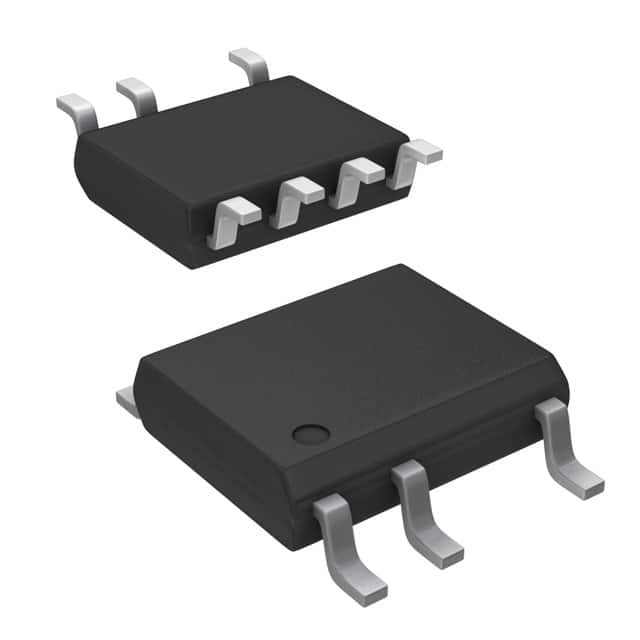
-
LNK304DN-TL Power Integrations
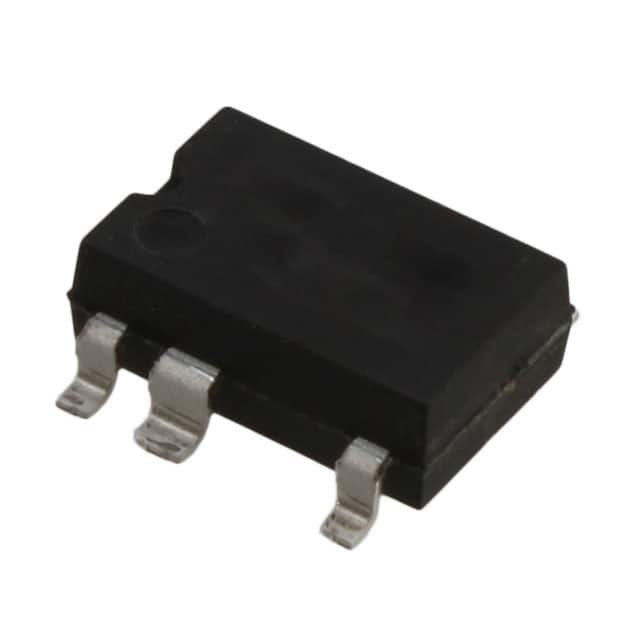
-
LNK304GN-TL Power Integrations
-
LNK304DG-TL Power Integrations
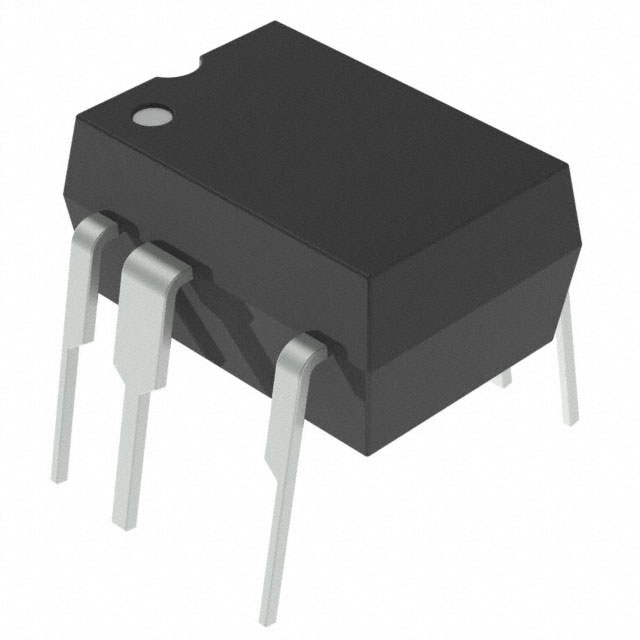
-
TNY277PN Power Integrations
-
TNY276PN Power Integrations
-
TNY278PN Power Integrations
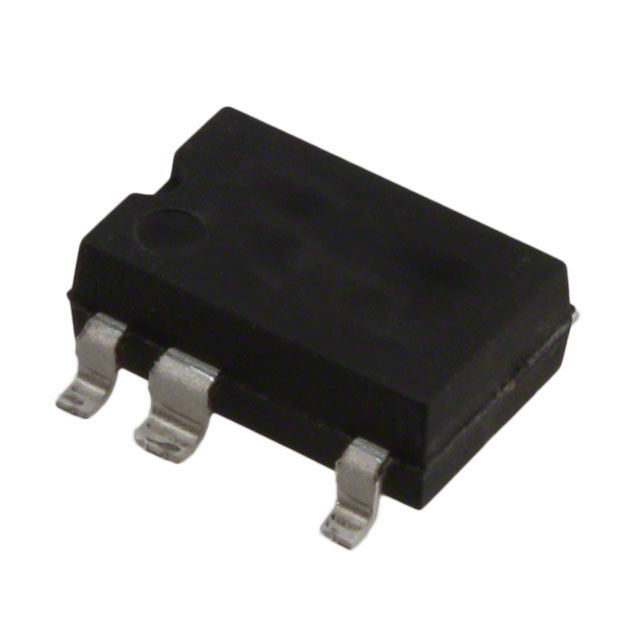
-
TNY278GN-TL Power Integrations
-
TNY280GN-TL Power Integrations
-
TOP266KG-TL Power Integrations
-
TOP258PN Power Integrations
-
TOP253PN Power Integrations
-
TOP253PNAU Power Integrations

- 1500+ Daily average RFQ Volume

- 20,000.000 Standard Product Unit

- 1800+ Worldwide Manufacturers

- 15,000+ In-stock Warehouse