2N7002 Equivalent, Alternative & Replacement Guide
The 2N7002 is the go-to small-signal N-channel MOSFET for low-side switching in 5V systems. You'll find it on thousands of schematics - LED drivers, level shifters, reset controllers, relay drivers. But the part has a well-known weak spot: its gate threshold voltage is too high for reliable 3.3V logic drive.
The three best replacements depend on why you're switching. If you're moving to 3.3V microcontrollers, the BSS138 is the right call - its 0.8–1.3V Vgs(th) guarantees full turn-on at 3.3V. If you need the same 60V rating but want lower RDS(on), the 2N7002CKVL (Nexperia) drops on-resistance from ~7.5Ω to ~1.1Ω. If you're pushing above 200 mA, the MMBF170 (onsemi, 500 mA) buys you current headroom in the same SOT-23 footprint.
The 2N7002 is not obsolete and won't be anytime soon. But new designs running on 3.3V rails should skip it. This guide covers every drop-in alternative, the gate-drive trap that catches engineers, and what fails when it goes wrong.
2N7002 vs BSS138 vs 2N7002CKVL: Full Comparison
All three are N-channel enhancement-mode MOSFETs in the SOT-23 package with the same pinout (Pin 1: Gate, Pin 2: Source, Pin 3: Drain). The differences come down to gate threshold, on-resistance, and current rating - and those differences determine which one actually works in your circuit.
| Parameter | 2N7002 (Standard) | BSS138 | 2N7002CKVL (Nexperia) |
|---|---|---|---|
| Manufacturer | Multi-source (onsemi, Diodes, ROHM, etc.) | Multi-source (onsemi, Infineon, Nexperia, etc.) | Nexperia |
| Vds (max) | 60V | 50V | 60V |
| Id Continuous (max) | 115–300 mA (varies by mfr) | 220 mA | 300 mA |
| RDS(on) @ Vgs=10V | ~7.5Ω | ~0.7–3.5Ω | ~1.1Ω |
| Vgs(th) Range | 1.0–2.5V | 0.8–1.5V | 1.0–2.0V |
| RDS(on) @ Vgs=3.3V | Not guaranteed - often >>10Ω | Typically <5Ω | Typically <3Ω |
| Pd (max) | 200–350 mW | 360–430 mW | 350 mW |
| Input Capacitance (Ciss) | ~50 pF | ~27 pF | ~30 pF |
| Rise / Fall Time | ~15 ns / ~12 ns | ~9 ns / ~7 ns | ~10 ns / ~8 ns |
| Package | SOT-23 | SOT-23 | SOT-23 |
| Pinout | G-S-D (1-2-3) | G-S-D (1-2-3) | G-S-D (1-2-3) |
| ESD Protection | No (standard parts) | No (standard parts) | Yes (2kV HBM) |
| Status | Active | Active | Active |
| Price Reference | $0.01–0.04/unit | $0.02–0.06/unit | $0.03–0.08/unit |
When to Use BSS138
- You're driving the gate from a 3.3V microcontroller: the BSS138's 0.8–1.3V Vgs(th) guarantees the MOSFET fully enhances at 3.3V. The 2N7002 typically needs 4.5–5V on the gate to reach its specified RDS(on). At 3.3V, a 2N7002 might barely turn on - or not at all, depending on the unit.
- You want the lowest on-resistance: at 0.7–3.5Ω (depending on manufacturer), the BSS138 drops less voltage across the channel than a standard 2N7002. For a 100 mA load, that's 140 mV drop vs 750 mV.
- Switching speed matters: the BSS138's 9 ns rise / 7 ns fall times are faster than the 2N7002. For PWM above 50 kHz, this difference starts to matter.
When to Use 2N7002CKVL
- You need 60V Vds and low RDS(on) in the same part: the BSS138 caps at 50V. If your rail is 48V or you need margin on a 36V system, the 2N7002CKVL gives you 60V with RDS(on) close to BSS138 levels.
- ESD protection matters: the 2N7002CKVL includes 2kV HBM ESD protection on the gate. Standard 2N7002 and BSS138 parts have no gate protection - a static discharge during assembly can punch through the gate oxide.
- You're already using a 2N7002 and just want a better one: same pinout, same footprint, same gate drive requirements, but 7× lower RDS(on) and higher current. Drop it in and move on.
When NOT to Use a 2N7002-Type MOSFET at All
- Your load current exceeds 300 mA continuous: even the best SOT-23 small-signal MOSFETs struggle above 300 mA. At 500 mA, the voltage drop across a 2N7002 (RDS(on) ~7.5Ω) is 3.75V - most of your supply gone before the load sees it. Switch to a power MOSFET in a larger package. The AO3400A (SOT-23, 30V, <30mΩ, 5.8A) is the go-to upgrade for SOT-23 high-current switching - just watch the 30V Vds limit.
- You're switching an inductive load without a flyback diode: a relay coil or solenoid stores energy in its magnetic field. When the MOSFET turns off, that energy has nowhere to go and creates a voltage spike that can exceed the 60V Vds rating in nanoseconds. The MOSFET avalanches - once or twice it might survive. Repeatedly, the drain-source junction degrades and eventually shorts. Always put a diode (1N4148 for small relays, 1N4007 for larger coils) across the inductive load, cathode to supply.
- You need a guaranteed sub-1Ω RDS(on) at 3.3V gate drive: none of the 2N7002-family parts can do this. For true low-RDS(on) at 3.3V, look at the AO3400A (30V, ~50mΩ at Vgs=3.3V) or DMG2302 (20V, ~50mΩ at Vgs=2.5V). Different voltage class, different use case - but if RDS(on) is what you're optimizing, these are the right tools.
2N7002 Alternatives Comparison Table (All Candidates)
| Part Number | Manufacturer | Vds | Id (max) | RDS(on) @ 10V | Vgs(th) | Pin-Compatible? | Status | Notes |
|---|---|---|---|---|---|---|---|---|
| BSS138 | Multi-source | 50V | 220 mA | ~1.4Ω | 0.8–1.5V | Yes - SOT-23 G-S-D | Active | Best for 3.3V logic. Widest availability. |
| 2N7002CKVL | Nexperia | 60V | 300 mA | ~1.1Ω | 1.0–2.0V | Yes - SOT-23 G-S-D | Active | Best RDS(on) in 60V class. ESD protected. |
| MMBF170 | onsemi | 60V | 500 mA | ~5Ω | 0.8–2.1V | Yes - SOT-23 G-S-D | Active | Highest current in SOT-23 60V class. |
| 2N7002LT1G | onsemi | 60V | 115 mA | ~7.5Ω | 1.0–2.5V | Yes - SOT-23 G-S-D | Active | Direct equivalent. Same specs as generic 2N7002. |
| 2N7002-7-F | Diodes Inc. | 60V | 210 mA | ~7.5Ω | 1.0–2.5V | Yes - SOT-23 G-S-D | Active | Slightly higher Id rating. Direct swap. |
| RK7002T116 | ROHM | 60V | 115 mA | ~7.5Ω | 1.0–2.5V | Yes - SOT-23 G-S-D | Active | Direct equivalent. Good Asian supply. |
| 2N7002-TP | Micro Commercial | 60V | 115 mA | ~7.5Ω | 1.0–2.5V | Yes - SOT-23 G-S-D | Active | Budget direct equivalent. |
| BS170 | onsemi / Multi-source | 60V | 500 mA | ~1.2Ω | 0.8–2.1V | No - TO-92 (through-hole) | Active | Through-hole alternative. Breadboard-ready. |
| 2N7000 | onsemi / Multi-source | 60V | 200 mA | ~1.2Ω | 0.8–2.1V | No - TO-92 (through-hole) | Active | Through-hole. Same gate drive as 2N7002. |
The 3.3V Gate Drive Trap: Why Your 2N7002 Barely Turns On
This is the single most common issue with the 2N7002, and it shows up repeatedly on StackExchange and EEVblog. The 2N7002 was designed in the era of 5V logic. Its gate threshold voltage (Vgs(th)) is spec'd at 1.0–2.5V - and that threshold is measured at just 250 µA of drain current. It's the voltage where the MOSFET starts to conduct, not where it's fully on.
To reach the specified RDS(on) of ~7.5Ω, the 2N7002 typically needs 4.5–5V on the gate. At 3.3V, you're operating in the linear region - the MOSFET is partially enhanced, RDS(on) can be 15–50Ω or worse, and drain current is severely limited. For a 100 mA load through 20Ω of channel resistance, that's a 2V drop across the MOSFET - your "switch" isn't switching, it's a resistor.
The fix is straightforward: if your microcontroller runs at 3.3V, use a MOSFET with guaranteed RDS(on) at Vgs=2.5V or lower. The BSS138 specifies RDS(on) at Vgs=2.5V (typically <5Ω). The AO3400A goes further - RDS(on) <50mΩ at Vgs=2.5V. If you're stuck with 2N7002s and 3.3V GPIOs, add a level-shifting stage (a 2N3904 NPN with a 10k base resistor and pull-up to 5V works as a cheap gate driver).
A quick test: put a scope on the drain while the MOSFET is supposedly "on." If you see the drain voltage sitting at 1–2V above ground instead of near zero, the gate drive is insufficient. Swap in a BSS138 and measure again - the difference is immediate.
Common 2N7002 Failure Modes
"It was switching a relay fine for weeks, now the relay is stuck on"
This usually means the MOSFET failed shorted (drain-to-source). Two likely causes. First: no flyback diode across the relay coil - each turn-off event generates a voltage spike that stresses the drain-source junction. After enough cycles, the junction breaks down permanently. Second: weak gate drive causing high RDS(on) and overheating. A hot MOSFET running in the linear region degrades over time. The fix: add a 1N4148 across the coil (cathode to V+), and verify your gate voltage reaches at least 4.5V.
"The gate measures 2–10V even when I tie it to ground"
Gate oxide damage. The MOSFET's gate is a tiny capacitor - a few picofarads - isolated by a thin oxide layer. A static discharge during handling or a transient on the gate pin can punch through that oxide. Once damaged, the gate leaks current from the drain, pulling itself high. The MOSFET is permanently on. Prevention: use a 10k–100k gate-to-source pulldown resistor on every MOSFET gate. For production, consider the 2N7002CKVL which includes internal ESD protection.
"It works on the bench but fails in the field after a few months"
Marginal gate drive is the usual suspect. On the bench, your 3.3V supply might be 3.35V and the ambient temperature 25°C - the 2N7002 barely works. In the field, the supply droops to 3.1V on a hot day (Vgs(th) drops with temperature), and suddenly the MOSFET isn't turning on reliably. The circuit works intermittently, the load gets partial voltage, and eventually something fails. This is why production designs should never depend on a MOSFET being "close enough" to its threshold.
"The MOSFET gets hot driving a 200 mA load"
Power dissipation check: Pd = Id² × RDS(on). At 200 mA with the 2N7002's worst-case RDS(on) at 3.3V gate drive (say 30Ω), that's 0.2² × 30 = 1.2W. The SOT-23 package is rated for 200–350 mW maximum. The part is burning over 3× its rated power. Either reduce the load current, increase the gate drive voltage to lower RDS(on), or switch to a MOSFET with lower on-resistance. The MMBF170 or a move to the AO3400A solves this outright.
Where to Buy 2N7002 Replacements
| Parameter | Details |
|---|---|
| Best 3.3V Replacement | BSS138 (SOT-23, 50V, 220 mA, multi-source) |
| Best 60V Upgrade | 2N7002CKVL (SOT-23, 60V, 300 mA, Nexperia) |
| Best High-Current SOT-23 | MMBF170 (SOT-23, 60V, 500 mA, onsemi) |
| Condition | New, original manufacturer packaging |
| Lead Time | In stock, ship from Shenzhen |
| Packing | Tape & Reel (3,000/standard reel for SOT-23) |
Contact ICMASS for current pricing on your specific quantity. We stock BSS138, 2N7002CKVL, MMBF170, and all standard 2N7002 variants with full manufacturer traceability. Volume pricing for small-signal SOT-23 MOSFETs typically ranges from $0.01–$0.08/unit depending on part number and quantity. Need help validating a gate drive design before committing to production? We can provide sample quantities and application support.
Frequently Asked Questions About 2N7002 Replacements
Q1: Can I replace a 2N7002 with a BSS138 directly?
A: Yes - in most cases. Both are SOT-23 with the same G-S-D pinout. The BSS138 has a lower Vds rating (50V vs 60V), so check your drain voltage first. If your circuit runs on 48V or less, the BSS138 is a drop-in upgrade - better 3.3V gate drive, lower RDS(on), and faster switching. If you need the full 60V rating, use the 2N7002CKVL instead.
Q2: Why doesn't my 2N7002 turn on fully with a 3.3V GPIO?
A: The 2N7002 needs 4.5–5V on the gate to reach its specified RDS(on). At 3.3V, the MOSFET operates in the linear region - partially on, with RDS(on) potentially 15–50Ω. Your load sees a voltage divider, not a switch. Use a BSS138 (specified at Vgs=2.5V) or add a level-shifting gate driver stage.
Q3: Is the 2N7002 obsolete?
A: No - and it won't be for a long time. Multiple manufacturers (onsemi, Diodes Inc., ROHM, Micro Commercial, Nexperia) actively produce it. But for new designs running on 3.3V logic, it's the wrong part. The 2N7002 belongs in 5V systems where its gate drive requirement is comfortably met.
Q4: What's the difference between 2N7002 and 2N7000?
A: Package only. The 2N7002 is the SOT-23 surface-mount version. The 2N7000 is the TO-92 through-hole version. Electrically they are nearly identical - same 60V Vds, similar RDS(on), same gate threshold range. The 2N7000 typically handles slightly more current (200 mA vs 115 mA) due to better thermal dissipation in the larger TO-92 package.
Q5: Do I need a gate resistor for the 2N7002?
A: For low-speed DC switching (on/off every few seconds or longer): not strictly necessary - the GPIO pin's internal resistance limits the inrush current into the gate capacitance. For PWM or fast switching: yes. A 100–220Ω gate resistor dampens the LC ringing between the gate trace inductance and gate capacitance. Without it, you can get VHF oscillations on the gate during switching edges, increasing EMI and switching losses. A 10k–100k gate-to-source pulldown resistor is always recommended - it keeps the gate from floating during MCU startup when GPIOs are high-impedance.
Q6: Can I use a 2N7002 to switch a relay directly?
A: For small reed relays (10–50 mA coil current): yes, with a flyback diode across the coil. For larger mechanical relays (100–200 mA coil): check your gate drive voltage first. At 5V gate drive with a 200 mA coil through ~7.5Ω RDS(on), you'll drop 1.5V and dissipate 300 mW - at the edge of SOT-23 thermal limits. At 3.3V gate drive: don't. The higher RDS(on) will cause the MOSFET to overheat and fail. For relay driving from 3.3V, use the MMBF170 or AO3400A.
Q7: What's the most common mistake with 2N7002 circuits?
A: Missing gate-to-source pulldown resistor. During MCU power-up, GPIO pins are high-impedance (floating) until firmware configures them. A floating gate can pick up enough charge from ambient noise to partially turn on the MOSFET - your load gets brief, unintended pulses of power. A 10k–100k resistor from gate to ground prevents this. Second most common: forgetting the flyback diode when switching inductive loads.
Q8: Which 2N7002 alternative has the lowest RDS(on) in the same SOT-23 package?
A: For 60V-rated parts: the 2N7002CKVL (Nexperia) at ~1.1Ω. For 50V-rated parts: the BSS138 from quality manufacturers (onsemi, Infineon) at ~0.7–1.4Ω. If you can accept a lower voltage rating, the AO3400A (30V) achieves <30mΩ - two orders of magnitude lower - in the same SOT-23 footprint. Choose based on your voltage rail: above 30V → 2N7002CKVL; 30V or below → AO3400A.
Related information


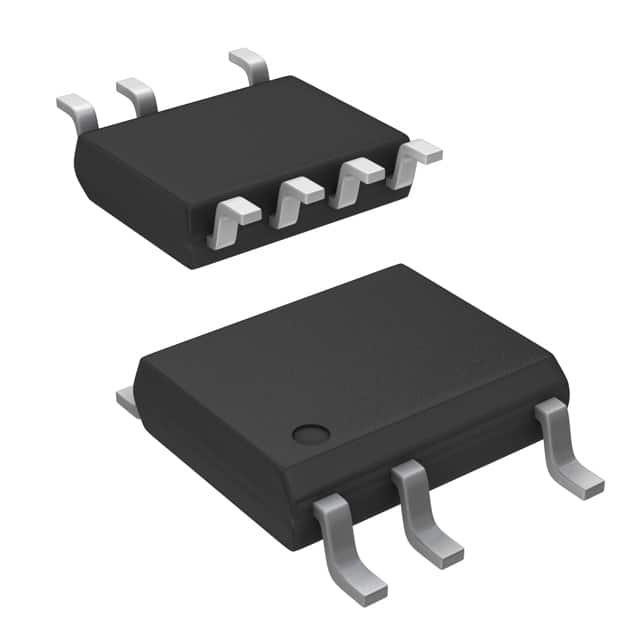
-
LNK304DN-TL Power Integrations
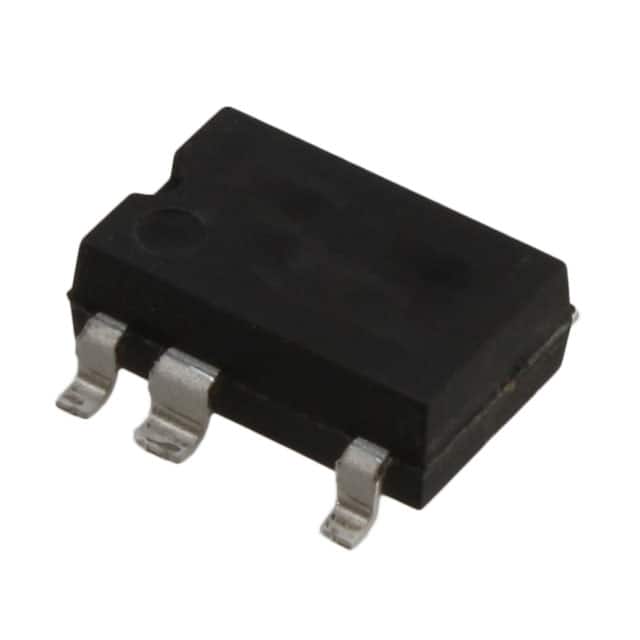
-
LNK304GN-TL Power Integrations
-
LNK304DG-TL Power Integrations
-
TNY277PN Power Integrations
-
TNY276PN Power Integrations
-
TNY278PN Power Integrations
-
TNY278GN-TL Power Integrations
-
TNY280GN-TL Power Integrations
-
TOP266KG-TL Power Integrations
-
TOP258PN Power Integrations
-
TOP253PN Power Integrations
-
TOP253PNAU Power Integrations

- 1500+ Daily average RFQ Volume

- 20,000.000 Standard Product Unit

- 1800+ Worldwide Manufacturers

- 15,000+ In-stock Warehouse