Nexperia USA Inc. BZT52H-C16,115

- Part No.:
- BZT52H-C16,115
- Manufacturer:
- Nexperia USA Inc.
- Category:
- Single Zener Diodes
- Package:
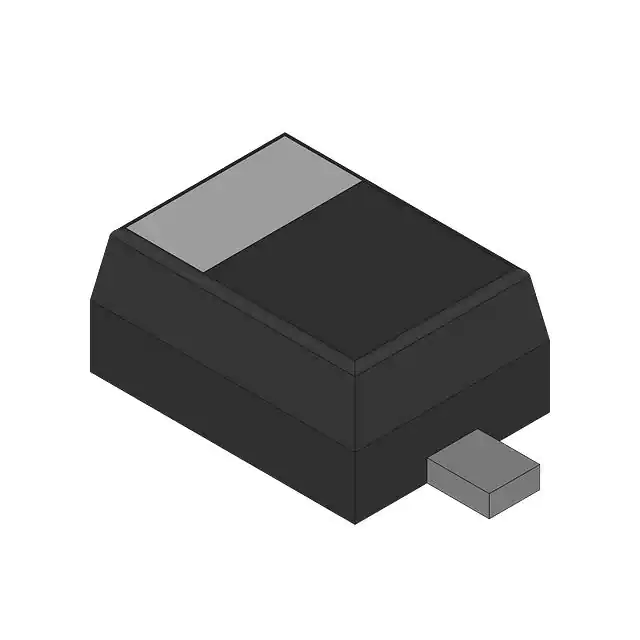
- SOD-123F
- Datasheet:
-
 BZT52H-C16,115.pdf
- Description:
- DIODE ZENER 16V 375MW SOD123F
- Quantity:
-
Unit Price:$0
Ext Price:$0
- Payment:
-

- Shipping:
-


BZT52H-C16,115 Information
- Specifications
- Product Details
- Comparison
- Tags
- Product attributes
- Attribute value
- Manufacturer:
- Nexperia USA Inc.
- Series:
- BZT52H
- Package/Case:
- SOD-123F
- Packaging:
- Tape & Reel (TR)
- Product Status:
- Active
- Voltage - Zener (Nom) (Vz):
- 16 V
- Tolerance:
- ±5%
- Power - Max:
- 375 mW
- Impedance (Max) (Zzt):
- 20 Ohms
- Current - Reverse Leakage @ Vr:
- 50 nA @ 11.2 V
- Voltage - Forward (Vf) (Max) @ If:
- 900 mV @ 10 mA
- Operating Temperature:
- -65°C ~ 150°C (TA)
- Grade:
- -
- Qualification:
- -
- Mounting Type:
- Surface Mount
- Supplier Device Package:
- SOD-123F
- Datasheet:
-
BZT52H-C16,115.pdf
BZT52H-C16,115 — 16V Zener Voltage Regulator Diode (SOD-123F)
The BZT52H-C16,115 is a 375mW 16V Zener from Nexperia in a SOD-123F package. This is the opposite end of the Zener spectrum from sub-5V parts: at 16V it operates in avalanche breakdown — sharp knee, near-zero leakage, 20Ω dynamic impedance.
The comparison that matters: a 2.4V Zener leaks 50µA at 1V. This part leaks 50nA at 11.2V — 1,000× less current at 10× the voltage. If low-voltage Zeners have burned you, this is what a Zener is supposed to behave like.
What Are the Technical Specifications of BZT52H-C16,115?
| Parameter | Value |
|---|---|
| Type | Single Zener Voltage Regulator Diode (avalanche) |
| Nominal Zener Voltage (VZ) | 16V @ IZT = 5mA (per Nexperia datasheet) |
| Tolerance | ±5% (C-grade); BZT52H-B (±2%) also available |
| Maximum Power Dissipation (Ptot) | 375mW standard / 830mW on 1cm² cathode pad |
| Maximum Zener Impedance (ZZT) | 20Ω @ IZT = 5mA (per Nexperia datasheet) |
| Reverse Leakage Current (IR) | 50nA max @ VR = 11.2V, 25°C (per Nexperia datasheet) |
| Forward Voltage (VF) | 900mV max @ IF = 10mA |
| Maximum Forward Current (IF) | 250mA |
| Voltage Temp Coefficient (αVZ) | +12.2mV/K (positive - VZ rises with temp; per Nexperia datasheet) |
| Junction Capacitance (Cd) | ~40pF typ @ VR = 0V, 1MHz |
| Non-repetitive Peak Reverse Power | 40W (tp = 100µs, square pulse) |
| Operating Junction Temperature (Tj) | −65°C to +150°C |
| Package | SOD-123F, 2-pin, 2.6 × 1.6mm (smaller than SOT-23) |
| Manufacturer | Nexperia (formerly NXP Semiconductors division) |
| Qualification | AEC-Q101 (automotive grade) |
Key numbers that matter: The 50nA leakage at 11.2V is the headline. That's 1,000× below the microamp-level leakage of sub-5V Zeners. In practice, a BZT52H-C16 on a pull-up line draws negligible current until it actually hits breakdown.
The 20Ω ZZT is 5× better than low-voltage Zeners' 100Ω, so bias changes cause smaller voltage shifts. The positive tempco (+12.2mV/K) means VZ rises with temperature — opposite to sub-5V Zeners with negative tempcos.
The dual power rating matters. On a standard footprint you get 375mW. Add a 1cm² copper pour to the cathode pad and it jumps to 830mW. This is the SOD-123F flat-lead advantage. For anything above ~300mW, the copper pour is mandatory.
When Should You Use (and NOT Use) the BZT52H-C16?
✅ Use BZT52H-C16 when:
- MOSFET gate overvoltage protection. 16V is the sweet spot for clamping a 12V gate drive — high enough to not conduct during normal 10–12V operation, low enough to protect a ±20V VGS(max). The 20Ω ZZT keeps the clamp voltage tight under transient current.
- 12V/24V rail transient absorption. On a 12V rail, a 16V Zener sits above normal tolerance (12V + 10% = 13.2V) and below the typical 18–20V absolute max of downstream ICs. For 24V systems, use two in series or step up to BZT52H-C27.
- Voltage reference for comparator thresholds. At 16V and 20Ω impedance, you get a stable reference for undervoltage lockout on 24V rails. The sharp avalanche knee means the transition from "off" to "on" is abrupt and predictable.
- Space-constrained designs. The SOD-123F is 30% smaller than SOT-23. When board real estate is tighter than a BZX84 can fit, the BZT52H slides into the same layout with room to spare.
❌ Don't use BZT52H-C16 when:
- You need a 16V rail regulator. A Zener regulates voltage by wasting current. For loads above a few mA, use a LM7815 or an adjustable DC-DC converter. The Zener is a reference, not a regulator.
- High-power clamping above 500mW. Even with the 830mW copper-pour rating, sustained clamping at half a watt will push the junction above 125°C in a 70°C ambient. For power clamping, step up to a 1.5KE18A TVS (1.5kW peak) or a SMB-packaged Zener.
- Below 5V rails. A 16V Zener on a 3.3V or 5V rail never reaches breakdown — it's just a tiny capacitor. Use the appropriate voltage for the rail you're protecting.
- Precision <1% voltage reference. ±5% tolerance plus +12.2mV/K tempco means a 50°C swing adds 610mV of drift. For precision, use a TL431 or a dedicated voltage reference IC.
What Are the Alternatives to BZT52H-C16,115?
| Model | Type | Key Difference | Best For |
|---|---|---|---|
| BZT52H-B16 | Zener, ±2% | Tighter tolerance, same VZ and package | Same application, tighter accuracy needed |
| BZX84-C16 | Zener, 16V | Same voltage, SOT-23 package, 250mW, 40Ω ZZT | If your layout uses SOT-23 and 250mW is enough |
| BZT52-C16 | Zener, 16V | SOD-123 (gull-wing leads), 500mW, similar specs | Higher power in same footprint family |
| 1SMA5923BT3G | Zener, 16V | 1.5W SMA package, 10Ω ZZT, lower impedance | Higher power clamping, ≥500mW sustained |
| TL431 | Shunt Regulator | Adjustable 2.495–36V, 0.22Ω dynamic Z, ±1% | Precision reference applications, not for clamping |
BZT52H-C16 vs BZX84-C16 — same voltage, different package. The BZX84-C16 in SOT-23 is more common, but the BZT52H-C16 gives 50% more power (375 vs 250mW), half the impedance (20Ω vs 40Ω), and a smaller footprint. Trade-off: flat leads are harder to hand-solder than gull-wing. For automated assembly, no difference.
BZT52H-C16 vs BZT52H-B16 — when does tolerance matter? C-grade gives 15.2–16.8V (1.6V window); B-grade narrows to 15.68–16.32V (0.64V). For gate clamping on 12V drive, both work — 15.2V lower limit is comfortably above 12V. B-grade matters for comparator thresholds where trip-point accuracy counts.
How Much Does BZT52H-C16,115 Cost and Is It in Stock?
| Quantity | Reference Price (per unit) |
|---|---|
| 1–99 | $0.02–$0.05 |
| 100–999 | $0.015–$0.03 |
| 1,000–9,999 (full reel) | $0.01–$0.02 |
| 10,000+ | $0.008–$0.015 |
Contact ICMASS for a same-day quote. 16V is a common Zener voltage, well-stocked across the BZT52H, BZX84, and BZT52 series. The BZT52H is a high-volume part with stable pricing and no significant allocation issues. We stock all three tolerance grades (A/B/C) and both SOD-123F and SOT-23 footprints for 16V Zeners.
What Are the Typical Applications of BZT52H-C16,115?
MOSFET Gate-Source Overvoltage Protection. Classic app: 16V Zener gate-to-source, cathode to gate. During normal 12V drive, the Zener is off. When a drain-gate transient couples through Crss, the Zener clamps VGS below the ±20V limit. The 20Ω impedance keeps it tight even with hundreds of mA of transient current.
24V Rail Undervoltage Lockout (UVLO). A resistive divider + comparator, referenced to a 16V Zener, trips when the 24V rail drops below ~18V. The sharp avalanche knee means the reference is stable right up to the trip point — no soft-threshold ambiguity. Standard in 24V automotive and industrial brownout protection.
Secondary-Side Overvoltage Protection in Flyback Converters. A 16V Zener across the output rail clamps excursions during load steps or primary-side faults. At 50nA leakage at 12V, it draws zero quiescent current until needed. A TVS diode at equivalent standoff voltage leaks microamps — 100× more.
Relay Coil Flyback Clamping. Across a 12V relay coil, a 16V Zener + series diode decays coil current faster than a diode alone. The Zener lets flyback voltage reach 16.7V instead of 0.7V, dumping stored magnetic energy quickly and cutting relay release time. The BZT52H handles the pulse easily at 40W peak.
Automotive 12V System Transient Protection. AEC-Q101 qualified. On a 12V battery rail, a 16V Zener sits above 14.4V charging voltage and clamps transients before they hit the 40V max of automotive ICs. Distributed BZT52H-C16s across the PCB give localized clamping where a single TVS at the connector isn't enough.
Why Buy BZT52H-C16,115 from ICMASS?
All three tolerance grades, both SOD-123F and SOT-23 footprints. A 16V Zener is a commodity, but the right tolerance + package combination isn't always on the shelf. We stock A, B, and C grades in both SOD-123F (BZT52H) and SOT-23 (BZX84). If your design can absorb C-grade tolerance, we'll tell you and save you money.
Genuine Nexperia parts, factory tape and reel. We source BZT52H series parts directly from Nexperia's authorized channel in sealed factory packaging. Every reel traceable to lot and date code.
Cross-reference: Zeners vs TVS vs shunt references. Need a 16V clamp but not sure whether you want a Zener, a TVS diode, or a TL431-based circuit? We stock all three and can walk you through the trade-offs for your specific waveform, power level, and accuracy requirement.
Shenzhen warehouse, same-day shipping. Orders placed before 15:00 CST ship same day. DHL/FedEx international delivery in 5–10 days.
Frequently Asked Questions About BZT52H-C16,115
Q1: Can BZT52H-C16 replace BZX84-C16 directly?
A: Yes — if your layout accepts the SOD-123F footprint. The BZT52H-C16 has better specs across the board: 375mW vs 250mW, 20Ω vs 40Ω, and a smaller package. But the SOD-123F has a different land pattern than SOT-23. If the PCB is already laid out for SOT-23, use the BZX84-C16. For new designs, the BZT52H-C16 is the better part.
Q2: Why is the leakage current so much lower than a 2.4V Zener?
A: Different physics. 16V Zeners use avalanche breakdown, which has a hard threshold. Below the breakdown voltage, almost no current flows. Sub-5V Zeners use quantum tunneling (Zener effect), which has a gradual onset and leaks significantly below rated voltage. This is why a 16V Zener leaks 50nA while a 2.4V Zener leaks 50µA — 1,000× difference. Above 6V, always prefer the higher-voltage Zener if your circuit allows it.
Q3: How much copper pour do I need for 830mW?
A: 1cm² on the cathode pad. The SOD-123F flat-lead design couples heat directly into the PCB. Nexperia specifies 830mW with a 1cm² copper area on the cathode side. In practice, connect the cathode pad to a ground or power plane with thermal vias and you'll get equivalent or better performance. At 375mW on a standard pad, the junction runs about 125°C in a 25°C ambient — hot but within spec.
Q4: Does the positive tempco (+12.2mV/K) cause thermal runaway?
A: No, not in a Zener. Positive tempco is self-correcting for voltage references. As the Zener heats up, VZ rises, which at constant current increases power dissipation (P = V × I) and raises temperature further — but the effect is small (+0.6V over a 50°C swing) and the power rating already accounts for it. Thermal runaway is a concern for BJTs and MOSFETs with negative tempco, not for avalanche Zeners.
Q5: BZT52H-C16 vs BZT52-C16 — what's the difference?
A: Package. BZT52H is SOD-123F (flat leads), BZT52 is SOD-123 (gull-wing). The "H" variant has flat leads that sit flush on the PCB for better thermal contact — hence the higher power rating (375/830mW vs 500mW for BZT52). Electrical specs are nearly identical. Choose BZT52H for thermal performance, BZT52 for easier hand-soldering.
Q6: Can I use this for 16V rail regulation instead of an LDO?
A: Only for very light loads, under ~15mA. A Zener regulates by shunting excess current to ground while the series resistor drops the remainder. At 16V with a 24V input, a 200Ω series resistor gives 40mA total. If your load draws 15mA, the Zener shunts 25mA, dissipating 400mW — near the 375mW limit. Above 15mA load current, use an LM7815 or a buck converter. The Zener is a voltage reference, not a power supply.
Q7: How fast does BZT52H-C16 respond to transients?
A: Sub-nanosecond. Avalanche breakdown has no charge storage delay. Unlike a rectifier diode with reverse recovery time, a Zener in avalanche turns on the moment voltage crosses VZ. The limiting factor is parasitic inductance in the PCB trace and package leads. Keep the Zener within 5mm of the protected node.
Q8: Do I need a series resistor for gate clamping?
A: Usually not, if the transient energy is small. For MOSFET gate clamping, the gate driver's own output impedance limits current into the Zener. A 12V driver with 2Ω output impedance trying to push 18V into a 16V Zener would deliver (18−16)/2 = 1A momentarily — well within the 40W peak rating (40W/16V = 2.5A). For repetitive transients or high-energy pulses, add a 10–47Ω series resistor to limit Zener current.
Related Products
- BZX84-C16,215 — 16V Zener in SOT-23, same voltage, different footprint
- BZT52H-B16,115 — ±2% tolerance version, same voltage and package
- BZT52H-C2V4,215 — 2.4V Zener, same series, opposite end of the spectrum
- 1.5KE18A — 1.5kW TVS diode for high-energy transient protection
- Zener Diode Selection Guide — BZX84 vs BZT52H vs BZX55C Series
| Image |
|

|
|
|
|
| Part Number | BZT52H-C6V2,115 | BZT52H-C3V3,115 | BZT52H-C5V6,115 | BZT52H-C5V1,115 | BZT52H-C15,115 |
| Manufacturer | Nexperia USA Inc. | Nexperia USA Inc. | Nexperia USA Inc. | Nexperia USA Inc. | Nexperia USA Inc. |
| Series | BZT52H | BZT52H | BZT52H | BZT52H | BZT52H |
| Package/Case | SOD-123F | SOD-123F | SOD-123F | SOD-123F | SOD-123F |
| Packaging | Tape & Reel (TR) | Tape & Reel (TR) | Tape & Reel (TR) | Tape & Reel (TR) | Tape & Reel (TR) |
| Product Status | Active | Active | Active | Active | Active |
| Voltage - Zener (Nom) (Vz) | 6.2 V | 3.3 V | 5.6 V | 5.1 V | 15 V |
| Tolerance | ±5% | ±5% | ±5% | ±5% | ±5% |
| Power - Max | 375 mW | 375 mW | 375 mW | 375 mW | 375 mW |
| Impedance (Max) (Zzt) | 10 Ohms | 95 Ohms | 40 Ohms | 60 Ohms | 15 Ohms |
| Current - Reverse Leakage @ Vr | 3 µA @ 4 V | 5 µA @ 1 V | 1 µA @ 2 V | 2 µA @ 2 V | 50 nA @ 10.5 V |
| Voltage - Forward (Vf) (Max) @ If | 900 mV @ 10 mA | 900 mV @ 10 mA | 900 mV @ 10 mA | 900 mV @ 10 mA | 900 mV @ 10 mA |
| Operating Temperature | -65°C ~ 150°C (TA) | -65°C ~ 150°C (TA) | -65°C ~ 150°C (TA) | -65°C ~ 150°C (TA) | -65°C ~ 150°C (TA) |
| Grade | - | - | - | - | - |
| Qualification | - | - | - | - | - |
| Mounting Type | Surface Mount | Surface Mount | Surface Mount | Surface Mount | Surface Mount |
| Supplier Device Package | SOD-123F | SOD-123F | SOD-123F | SOD-123F | SOD-123F |
User Guide
- Purchase & Inquiry
- Package
- Shipping Information
- Customer Review
You may place an order without registering to IC-MAX.COM
We strongly suggest you sign in before purchasing as you can track your order in real time.
For your convenience, we accept multiple payment methods in USD, including PayPal, Credit Card, and wire transfer.
RFQ (Request for Quotations)
It is recommended to request for quotations to get the latest prices and inventories about the part.
Our sales will reply to your request by email within 24 hours.
1. You'll receive an order information email in your inbox. (Please remember to check the spam folder if you didn't hear from us).
2. Since inventories and prices may fluctuate to some extent, the sales manager is going to reconfirm the order and let you know if there are any updates.
-
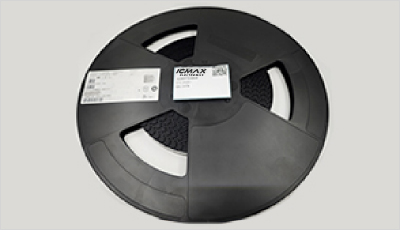
- Step1:Prepare product
-
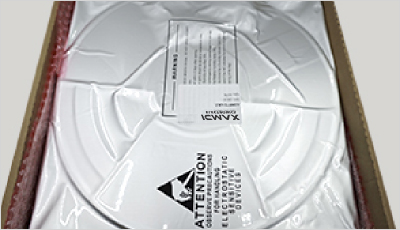
- Step2:Vacuum packaging
-
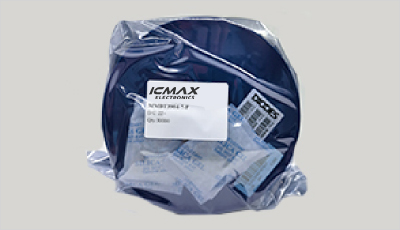
- Step3:Anti-static bag
-
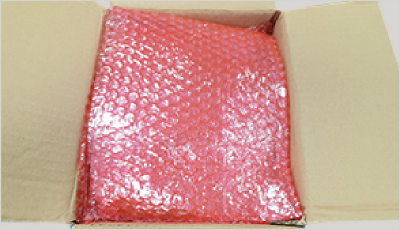
- Step4:Individual package
-
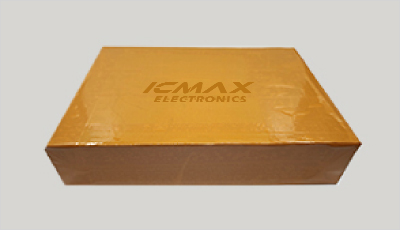
- Step5:Packaging box
-
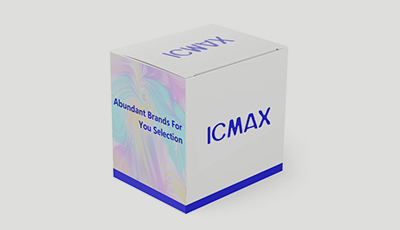
- Step6:Barcode shipping label
Shipping starts at $40, but some countries will exceed $40. For example (South Africa, Brazil, India, Pakistan, Israel, etc.)
The basic freight (for package ≤0.5kg or corresponding volume) depends on the time zone and country.
Currently, our products are shipped through DHL, FedEx, SF, and UPS.
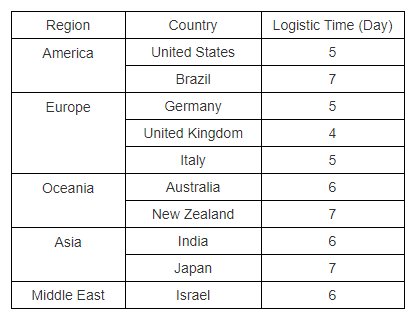
Delivery TimeOnce the goods are shipped, estimated delivery time depends on the shipping methods you chose:
FedEx International, 5-7 business days.
The following are some common countries' logistic time.
- Hot Sale
- Related Categories
- Include Parts
- Popular Search
The following parts include "BZT52H-C16,115" in Silicon Labs BZT52H-C16,115.
- Part Number
- Manufacturer
- Package
- Description
- MMBZ5240B-7-F Diodes Incorporated SOD-123F DIODE ZENER 16V 375MW SOD123F
- BZT52C5V6T-7 Diodes Incorporated SOD-123F DIODE ZENER 16V 375MW SOD123F
- MMSZ5231B-7-F Diodes Incorporated SOD-123F DIODE ZENER 16V 375MW SOD123F
- BZT52C15-7-F Diodes Incorporated SOD-123F DIODE ZENER 16V 375MW SOD123F
- BZX84C3V3LT1G onsemi SOD-123F DIODE ZENER 16V 375MW SOD123F
- MMSZ5245BS-7-F Diodes Incorporated SOD-123F DIODE ZENER 16V 375MW SOD123F
- MMSZ4682T1G onsemi SOD-123F DIODE ZENER 16V 375MW SOD123F
- BZT52C15S-7-F Diodes Incorporated SOD-123F DIODE ZENER 16V 375MW SOD123F
- MM5Z5V1ST1G onsemi SOD-123F DIODE ZENER 16V 375MW SOD123F
- SMAJ4744A-TP Micro Commercial Co SOD-123F DIODE ZENER 16V 375MW SOD123F
The following parts are popular search parts in Test and Measurement.
Inventory:15,680
Please send an inquiry. Send us your inquiry, and we will respond immediately.

- 1500+ Daily average RFQ Volume

- 20,000.000 Standard Product Unit

- 1800+ Worldwide Manufacturers

- 15,000+ In-stock Warehouse